Google surged by an astonishing 57% year-on-year to claim the world's most valuable brand title, dethroning Apple after four years at the top, according to More About Advertising. The dramatic shift highlights the rapid reordering of global brand power, where even established market leaders are vulnerable to accelerated obsolescence.
Established market leaders like Apple are losing their top positions, but new entrants and innovative players are rapidly ascending to unprecedented valuations. The 2026 Kantar BrandZ report reveals that this ascent of AI-driven tech giants is not merely reordering global brand power, but fundamentally accelerating the obsolescence of even recent market leaders, making trillion-dollar valuations the new battleground for innovation. The combined value of the Kantar BrandZ Global Top 100 brands reached a record $13.1 trillion, a 22% increase from the previous year, according to Kantar, signaling an era of intense competition among the most powerful luxury brands globally.
Companies must prioritize rapid innovation and adapt to evolving consumer values to maintain or grow their brand power in an increasingly volatile global market. The year's report underscores a dynamic global market where rapid innovation and strategic adaptation are crucial for brand ascendancy, even for established giants.
The Trillion-Dollar Club and New Challengers
Google has taken over as the world's most valuable brand, demonstrating a 57% year-on-year surge in brand value. Growth positions Google alongside Apple, Microsoft, and Amazon as the four brands to surpass the $1 trillion valuation threshold, as reported by More About Advertising. The emergence of multiple trillion-dollar brands illustrates the immense value creation occurring at the intersection of technology and consumer engagement, redefining what constitutes a top-tier brand in 2026.
Within the luxury sector, significant shifts are also evident, showcasing that brand power is not solely concentrated among tech giants. The Kantar BrandZ report 2026 highlights the evolving dynamics among the most powerful luxury brands globally.
Hermès
Brand Profile: Overtook Louis Vuitton to become the world's most valuable luxury brand, according to More About Advertising and Kantar. The shift demonstrates a recalibration within the luxury market.
Key Attribute: Exclusivity and consistent brand integrity, allowing it to surpass competitors in brand value. Hermès's ascent confirms that market recalibration extends beyond technology into sectors where heritage often dictates dominance.
Valuation Insight: Explicitly identified as the world's most valuable luxury brand, surpassing Louis Vuitton, based on the Kantar BrandZ report.
Louis Vuitton
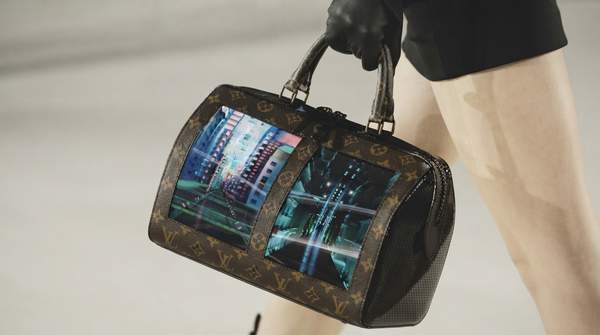
Brand Profile: Previously held the title of the world's most valuable luxury brand, now ranked second after being overtaken by Hermès. The shift signals changing consumer preferences within the high-end market.
Key Attribute: Broad appeal and extensive global presence, which previously drove its market leadership. Its current ranking reflects intense competition and the need for continuous innovation.
Valuation Insight: Ranked as the second most valuable luxury brand globally, having been surpassed by Hermès according to the Kantar BrandZ report.

Shifting Gears: Automotive Brand Power
The Kantar BrandZ 2026 report ranked Tesla as the world's most powerful automotive brand with a value of $112.097 billion, according to Revista Merca2.0. This valuation significantly outpaces traditional automotive manufacturers, signaling a complete market redefinition rather than incremental shifts. The automotive sector's brand valuations clearly demonstrate the market's pivot towards electric vehicles and innovative technologies, with traditional players facing significant challenges from disruptors.
| Brand | Brand Value (2026) | Key Market Position | Growth Indicator |
|---|---|---|---|
| Tesla | $112.097 billion | Most powerful automotive brand, EV leader | Disruptive growth |
| BYD | $20.362 billion | Rising EV challenger | 41% growth compared to previous year |
The stark valuation gap between Tesla and traditional automakers, as revealed by Kantar, confirms that entire industries are not merely evolving but being fundamentally redefined by disruptive technologies, leaving slow movers with significantly diminished brand equity. BYD's brand value reached $20.362 billion, marking a 41 percent growth compared to the previous year, according to Revista Merca2.0. The growth further underscores the rapid rise of electric vehicle specialists.
Luxury's New Leader and AI's Ascent
Hermès has overtaken Louis Vuitton as the top luxury brand, a notable shift within a traditionally stable sector. This change suggests evolving consumer preferences even in segments where heritage often dictates dominance, as indicated by More About Advertising. The luxury market, much like the broader global economy, is responsive to shifts in brand perception and strategic positioning.
The meteoric rise of AI-driven brands like Claude, debuting at nearly $100 billion, signals that traditional brand-building timelines are obsolete; market leadership is now won and lost on the speed of innovation and perceived technological edge. Claude debuted in the Global Top 100 at number 27 with a brand value of $96.6 billion, according to Kantar. The unprecedented speed of brand value creation, bypassing decades of traditional brand building, demonstrates the power of emerging technologies like AI.
While the trillion-dollar brand club expands, Apple's dethroning by Google proves that even the most dominant incumbents are vulnerable to rapid shifts in market favor, demanding constant reinvention beyond mere incremental growth. The rise of Hermès in luxury and the rapid debut of AI brands like Claude signal that innovation and evolving consumer preferences are reshaping brand value across all sectors. By Q4 2026, companies failing to integrate advanced AI capabilities or redefine their value propositions will likely experience significant erosion of their brand equity.
What is the Kantar BrandZ valuation methodology?
The Kantar BrandZ valuation methodology combines financial analysis with extensive consumer research to determine a brand's value. It assesses a brand's contribution to business performance by analyzing its financial strength, consumer perception, and future growth potential across 54 markets.
How does brand power affect luxury market share in 2026?
Brand power directly influences luxury market share by driving consumer preference and pricing power. Strong brand equity allows luxury companies to command premium prices and maintain customer loyalty, even as new entrants like Claude demonstrate rapid value creation in adjacent sectors. This influence is critical for sustaining competitive advantage.
What are the key attributes of the most powerful luxury brands in 2026?
The most powerful luxury brands in 2026 emphasize exclusivity, distinct craftsmanship, and a compelling brand narrative. Brands like Hermès maintain their position by consistently delivering on these attributes, fostering deep emotional connections with discerning consumers. Their perceived authenticity and quality differentiate them in a crowded market.