The personal luxury goods market is projected to shrink to $408 billion in 2025, a significant drop from $421 billion just two years prior, according to Hospitality Net. This contraction comes as designer bag prices have soared by 50-70% from 2019 to 2025, while product newness sharply decreased. Consequently, the number of luxury buyers diminished from 60% of potential consumers in 2022 to just 40-45% by 2025.
This market contraction presents a striking tension. Despite shrinking buyers and market size, luxury executives remain overwhelmingly optimistic about future performance. A significant majority, 66.9%, anticipate stable or growing revenues in 2026, with 70.7% expecting to maintain or improve margins. A disconnect reveals a fundamental flaw: traditional luxury brands are increasing exclusivity and price, alienating a significant portion of their potential customer base. They appear to be 'eating their young' by escalating prices and reducing innovation, a short-sighted strategy that risks accelerating market decline and eroding brand loyalty.
In response, companies are redefining luxury away from pure exclusivity. The focus shifts towards authenticity, unique experiences, and sustainability. A bifurcated market is suggested where traditional models struggle as innovative approaches thrive, polarizing luxury's definition in 2026 and challenging established notions of value.
The Rise of Ingredient-Led Authenticity
Indri Single Malt whisky exemplifies a new wave of luxury. It uses indigenous six-row barley and India's distinct climate, forging a global category that challenges the traditional Scottish benchmark, as reported by ET Hospitality. Modern luxury consumers now seek authenticity, provenance, and purpose; their focus shifts from external appearance to intrinsic story and ingredients. India is uniquely positioned to lead ingredient-led luxury due to its rich agricultural heritage and historical role as a global ingredient supplier. Indian spirits producers rediscover indigenous crops and ancient traditions to craft an authentic luxury identity, according to ET Hospitality. True luxury is increasingly rooted in unique stories, genuine provenance, and intrinsic value. Companies failing to embrace ingredient-led authenticity risk being outmaneuvered by emerging market players who redefine luxury from the ground up, rather than iterating on established, exclusive models. Evolving consumer preference prioritizes a deeper connection to product origins and ethical production.
Executive Optimism Amidst Strategic Pivots
Despite market contraction, 66.9% of luxury executives anticipate stable or growing revenues in 2026, according to Deloitte. Furthermore, 70.7% expect to maintain or improve margins in 2026. Significant optimism suggests a dangerous blind spot. Executives appear to overlook the fundamental shift in consumer values towards authenticity and provenance, exemplified by the rise of ingredient-led luxury from markets like India. Customer experience and loyalty are cited as strongest growth opportunities by 28.6% of executives, according to Deloitte. Executive confidence, despite market contraction, reflects a strategic pivot towards valuing customer experience and loyalty. It acknowledges the need for deeper engagement beyond mere product sales. Focus, while important for retaining existing clientele, may not counteract broader market trends without genuine product innovation.
Technology's Role in Evolving Luxury
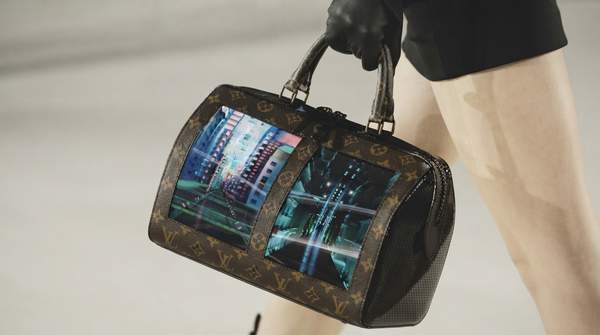
A notable 41.2% of companies implement Generative AI (GenAI) in selected areas, according to Deloitte. The adoption of GenAI marks a strategic move towards leveraging technology to personalize and optimize the luxury experience. Brands aim to cater to individual preferences, creating more bespoke interactions and streamlining operational efficiencies. Customer satisfaction and loyalty are enhanced. Such technological advancements allow brands to offer tailored product recommendations or custom design options, moving beyond generic offerings. An effort to use data-driven insights to deepen consumer relationships and adapt to evolving service expectations within the luxury sector is demonstrated.
Sustainability and the Circular Luxury Economy
The luxury sector also exhibits a growing commitment to sustainability. A significant 68.3% of companies offer repair or refurbishment services for pre-owned luxury goods, as reported by Deloitte. The widespread offering confirms clear industry recognition. Sustainability and longevity are becoming integral to luxury's definition, appealing to conscious consumers. Strategic emphasis on circularity extends the lifecycle of luxury items. It aligns with evolving consumer ethics that prioritize environmental responsibility alongside craftsmanship and exclusivity. Brands understand that a product's enduring value now includes its ecological footprint and potential for reuse, fostering a more responsible consumption model.
By Q3 2026, brands like Indri Single Malt, focusing on authentic, ingredient-led narratives, will likely compel traditional luxury houses to fundamentally re-evaluate their strategies. Their reliance on price inflation and diminishing product newness risks further alienating a shrinking buyer base and losing market share to more innovative, value-driven competitors.