Homes featuring carbon-neutral materials, net-zero energy systems, and advanced air quality controls command premium prices, often significantly higher than their traditional counterparts, according to Veranda. While often perceived as an expensive niche, sustainable luxury homes are rapidly becoming a mainstream investment, yielding significant financial returns and market desirability. Investing in sustainable design is not merely an ethical choice, but a financially astute one, as confirmed by market behavior. The market for these homes is poised for rapid expansion, driven by both environmental consciousness and clear financial incentives.
What Defines Sustainable Luxury Home Design?
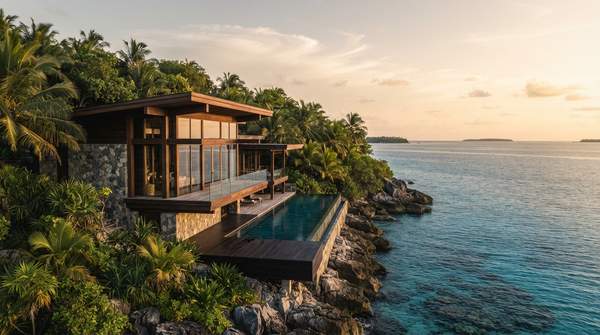
Sustainable luxury home design in 2026 transcends basic green features. It encompasses the entire lifecycle of materials—from responsible sourcing and manufacturing to installation and disposal—minimizing environmental impact, according to the Green Building Council Report. True sustainable luxury integrates high-performance building envelopes, smart home systems, and passive design strategies to optimize energy efficiency and indoor air quality, as noted by Architectural Digest Pro. An emphasis on durable, non-toxic materials reduces long-term maintenance and operational costs, according to Environmental Design + Construction. Furthermore, integrating local craftsmanship and materials supports regional economies and shrinks transportation-related carbon footprints, as reported by the Local Artisans Guild. A holistic approach ensures environmental responsibility aligns with sophisticated design and operational efficiency, elevating high-end living for both planet and occupant.
Beyond Solar Panels: Key Principles in Practice
Biophilic design, incorporating natural light, ventilation, and views, improves occupant well-being and reduces energy demand, according to the Environmental Psychology Journal. Biophilic design moves beyond basic energy solutions toward occupant-centric design. Advanced water recycling, rainwater harvesting, and drought-resistant landscaping can cut household water consumption by 50-70%, as detailed by the EPA WaterSense Program. Geothermal heating and cooling systems offer significant energy savings and drastically reduce carbon footprints compared to conventional HVAC, according to Department of Energy Research. Smart home technology provides precise control over energy, lighting, and climate, adapting to occupant needs, a trend highlighted by the TechCrunch Smart Home Report. These integrations prove luxury can be elevated through thoughtful, eco-conscious engineering, delivering superior comfort and efficiency without compromise.
Addressing the 'Green Premium' and Misconceptions
Initial investment costs for sustainable technologies, though 10-20% higher than conventional options, are often recouped through energy savings within 5-10 years, according to Construction Dive Analysis. Initial investment costs for sustainable technologies, recouped through energy savings within 5-10 years, directly challenge the perception of a long-term financial burden. Sourcing genuinely sustainable, ethically produced luxury materials demands specialized supply chains and diligent vetting to avoid 'greenwashing,' as noted by Ethical Consumer Magazine. Furthermore, misinformation often conflates 'sustainable' with 'rustic' or 'minimalist,' ignoring the potential for high-end aesthetics and advanced technology in eco-luxury design, according to a Luxury Home Magazine Survey. Long-term maintenance costs for sustainable homes are typically lower due to durable materials and efficient systems, offsetting any initial premium, based on Homeowner's Association Data. Despite initial hurdles, the clear financial benefits, escalating market demand, and evolving supply chains are making genuine sustainable luxury increasingly accessible and understood.
The Broader Impact: Why Sustainable Luxury Matters
The global building sector accounts for nearly 40% of energy-related carbon emissions, making sustainable construction critical for climate goals, according to the UN Environment Programme. Beyond this macro-environmental imperative, green building practices foster healthier indoor environments, reducing respiratory issues and improving cognitive function for occupants, as reported by the Harvard T.H. Chan School of Public Health. Sustainable development also fuels local economic growth through green job creation and less strain on public utilities, a benefit identified by the World Green Building Council. These luxury homes serve as exemplars, influencing broader market trends and encouraging wider adoption of eco-friendly building practices across all price points, as noted by Architectural Record. Embracing sustainable luxury thus contributes significantly to global environmental health, public well-being, and economic resilience.
Your Questions Answered: Navigating Sustainable Luxury
What are the key elements of eco-friendly luxury home design?
Certifications such as LEED, Passive House, and Living Building Challenge offer robust frameworks for verifying sustainable home performance and material choices, according to the USGBC Official Guide. These guide designers and builders in integrating high-performance envelopes, renewable energy, and non-toxic materials for a comprehensive approach.
How can I integrate sustainability into high-end home construction?
Integrating sustainable principles is most effective during the initial design phase; retrofitting proves more complex and costly, as advised by Green Home Builder Magazine. Engaging specialized architects and builders early ensures optimal integration of eco-conscious materials and systems from the outset.
What materials are best for sustainable luxury homes in 2026?
Premium sustainable materials include reclaimed wood, recycled steel, rapidly renewable bamboo, and advanced insulation technologies. Government incentives, tax credits, and energy-efficient mortgages, cataloged by the DSIRE Database, can help offset their initial investment.
The Future of Opulence: Luxury Redefined
The global green building market is projected for significant growth, signaling an accelerating shift towards sustainable construction, according to Grand View Research Report. The projected significant growth of the global green building market will redefine luxury standards.
Younger affluent buyers increasingly prioritize environmental responsibility, wellness, and smart technology in home purchases, a trend highlighted by the Knight Frank Wealth Report. Technological advancements continue to make sustainable materials and systems more efficient, aesthetically pleasing, and cost-effective, driving further adoption, as noted by MIT Technology Review.
As climate concerns intensify and energy costs fluctuate, the long-term resilience and self-sufficiency of sustainable luxury homes will become even more valuable, a point emphasized by the World Economic Forum. Sustainable luxury is not a fleeting trend; it is the defining standard for high-end living, merging opulence with responsibility to create intelligent, efficient, and future-proof homes. By 2030, this market segment is likely to dominate new high-end residential construction.