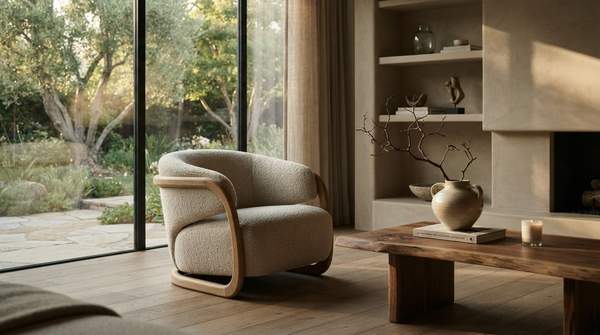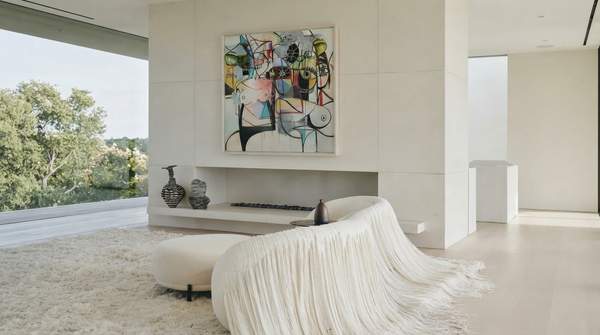
Successful art integration in a luxury home is a planning exercise, not a shopping trip. Designers consistently make the same point: wall finishes, lighting positions, furniture layouts, and display heights must work together, and every piece—from a statement painting in the living room to a sculptural installation in the foyer—should have a clear place within the overall design. This guide distills that thinking into a step-by-step framework covering room analysis, placement, lighting principles, and the full range of integration methods, from framed canvases to functional and architectural art.
The Foundation: Why Art Integration Matters in Luxury Design
Artwork possesses the remarkable ability to instantly shift a room's energy, as interior designer Susan Bednar Long observes of her own practice. In a bespoke interior, art is not decoration applied after the fact; it is one of the elements that sets the tone of a room and brings a sense of conversation, in the words of decorative-art specialists Pigmentti. A statement painting can anchor a living room; a serene landscape can foster tranquility in a bedroom; a dramatic abstract can inject energy into a gathering space.
The distinction matters because luxury interiors are built on cohesion. The KariGhars design team, writing on art integration in luxury homes, argues that successful integration requires more than choosing beautiful pieces: the surrounding architecture and furnishings must be planned with the art in view, so that rooms feel curated rather than crowded. That is the practical difference between a house with paintings on its walls and a home whose art feels like part of its structure.
Decision Framework: Planning Art Integration from Concept to Placement
The planning process begins with the room itself. Miami Living's guidance on contemporary art in luxury home design stresses that understanding your space is crucial: large, open areas with high ceilings call for bold, statement pieces such as oversized canvases, luxury artisan tiles, or sculptures, while intimate spaces are better suited to smaller, detailed artwork such as prints or mixed media. Scale, in other words, is the first decision, and it is dictated by the architecture rather than by preference alone.
The second decision is placement and focal emphasis. Art can serve as a focal point that draws attention and shapes the room's impact, and strategic placement can create that compelling focal point even in limited spaces. Sightlines matter: a piece positioned where the eye lands on entering the room carries more weight than one placed on a secondary wall. Display height and the surrounding furniture layout should be resolved together, so that a painting relates to the seating beneath it rather than floating ambiguously above it.
The third decision is lighting and wall preparation. Lighting positions and wall finishes must be planned alongside the art itself, since a piece's visibility—and, for sensitive works, its preservation—depends on both. General design best practice favors planning light sources at the same stage as placement; for valuable or light-sensitive collections, consulting an art conservator about light exposure and environmental conditions is advised. This article addresses lighting principles only, not electrical installation.