While a basic smart home setup might cost a few thousand dollars, fully connected luxury residences can demand an investment of up to $150,000 for integration alone, according to Homeadvisor. This substantial figure, dwarfing the $2,000 to $4,000 cost reported by Gearbrain for basic automation, establishes a clear divide in the smart home market. Affluent buyers invest in a product category fundamentally different from accessible DIY solutions.
Basic smart home automation is increasingly affordable and accessible. Yet, true value and demand in the luxury market lie in significantly more expensive, complex, and deeply integrated bespoke systems. The 'smart home' label encompasses two distinct offerings: off-the-shelf gadgets versus meticulously engineered residential ecosystems.
The luxury smart home market is poised for substantial growth. Affluent buyers increasingly prioritize comprehensive, personalized, and energy-efficient technological systems over simple device connectivity. This focus on seamless unification commands a premium up to 37.5 times the cost of basic automation, delivering an experience basic systems cannot replicate.
Understanding the Investment in Luxury Smart Homes
Luxury, fully connected residences often entail an investment of $10,000 to $150,000 for smart home integration, according to Homeadvisor. This figure, significantly higher than the $2,000 to $4,000 for basic automation reported by Gearbrain, reflects extensive engineering. The stark price disparity confirms luxury smart home integration represents an entirely different category of investment. For affluent clients, the true product is not merely the devices, but the bespoke engineering and seamless experience these high-end systems provide.
The Expanding Market for Ultra-Luxury Automation
The ultra-luxury home automation market is projected to grow from USD 11.1 billion in 2026 to USD 20.9 billion by 2035, according to Global Market Insights Inc. The market's substantial expansion reveals a clear and increasing appetite among the affluent for sophisticated, high-end smart home solutions. The market growth indicates a willingness among high-net-worth individuals to invest significantly in advanced residential technology.
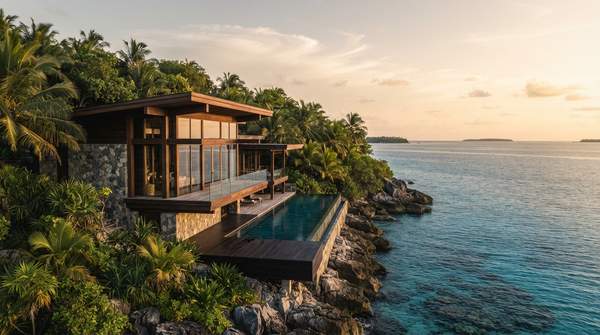
Companies focused on selling individual smart devices miss the multi-billion-dollar opportunity in this market. Affluent buyers pay a massive premium, up to $150,000 per home according to Homeadvisor, for unified, bespoke integration rather than piecemeal automation. The market trajectory shows a strong shift towards comprehensive technological experiences.
Seamless Integration: The Core of Luxury Living
Affluent buyers increasingly seek smart home systems that unify various technologies, including lighting, climate control, security, and entertainment. This desire for cohesive operation is a top trend for luxury properties, as reported by Buchan. True convenience for luxury homeowners stems from a single, intuitive system that orchestrates all aspects of their living environment.
This pursuit of unified control eliminates fragmented systems and multiple applications, which can detract from the luxury experience. Instead, a well-integrated system provides an invisible layer of technology, working silently in the background. The value lies in the effortless interaction with the home, rather than managing individual devices.
Customization: Tailoring Technology to Lifestyle
Customization and personalization of smart home systems are key for affluent buyers, allowing them to tailor systems to their unique preferences and lifestyle, Buchan reports. Beyond mere functionality, luxury smart homes are defined by their ability to adapt precisely to individual habits and aesthetic desires.
This level of personalization creates a truly bespoke environment, where technology anticipates needs and responds to subtle cues. Homeowners expect their smart systems to reflect their individual taste and daily routines. This extends to custom interfaces, specific lighting scenes, and tailored climate settings that activate automatically.
Energy Efficiency: A Cornerstone of Modern Luxury
Energy-efficient home automation solutions, including smart thermostats, solar panels, and energy monitoring systems, are becoming a cornerstone of luxury living, according to Buchan. An evolving value system where responsible resource management aligns with opulence is revealed. Modern luxury extends beyond lavishness to include sustainable practices.
Advanced energy-efficient automation is therefore a crucial status symbol and practical investment. These systems not only reduce environmental impact but also offer long-term operational savings. The integration of such features transforms a 'smart' home into a sustainable, high-end residence.
Navigating Your Luxury Smart Home Investment
Prospective buyers should prioritize a holistic design approach when considering luxury smart home integration. Engaging experienced integrators early in the design phase ensures a truly personalized and unified smart home system. This upfront planning prevents costly rework and ensures all desired functionalities are seamlessly incorporated.
Working with specialists who understand complex system architecture is vital. These professionals can design a system that grows with future technological advancements and lifestyle changes. Such strategic investment ensures the smart home remains relevant and sophisticated for years to come.
Common Questions About High-End Smart Home Systems
What are the benefits of smart homes in luxury properties?
Luxury smart homes offer unparalleled convenience, security, and personalization, extending beyond basic automation to provide a deeply integrated living experience. For example, a single command can secure the entire estate, adjust ambient lighting, and set the perfect climate for arrival, all tailored to the homeowner's specific preferences.
How does smart home tech enhance luxury living?
Smart home technology enhances luxury living by creating an intuitive and responsive environment that anticipates needs and minimizes effort. It allows for discreet control of sophisticated entertainment systems, advanced health monitoring, and personalized wellness routines, all managed through a unified interface. This elevates daily routines into seamless, effortless experiences.
What are the key considerations for smart home integration in high-end homes?
Key considerations for high-end smart home integration include scalability, cybersecurity, and future-proofing the system against technological obsolescence. Homeowners should also evaluate the reputation and long-term support offered by the integration firm, as continuous maintenance and updates are essential for optimal performance and security of complex systems.
The Future is Integrated: A Growing Luxury Standard
If current market projections hold, comprehensive, bespoke smart home integration will likely solidify as a fundamental standard for luxury residences by 2035, moving beyond amenity to essential infrastructure.