What actually separates an exclusive private dining experience from an expensive one? The evidence points to a consistent pattern: exclusivity today is built from where you eat, how few people can join you, how personally the meal is created for you, and how many of your senses the experience commands. From a scent-diffused, projection-wrapped dining room at a secret Shanghai address to a bamboo nest suspended in a Maldivian forest canopy, the world's most sought-after private dining is defined by seven recognizable hallmarks—each of which you can use to judge whether a venue is offering genuine exclusivity or simply a high price.
Hallmark 1: Unique and Inaccessible Environments
The first and most visible hallmark is the setting itself. The most exclusive private dining does not happen in a beautiful room; it happens in a place that is difficult or impossible to reach on your own. Honest Cooking's survey of standout private dining experiences begins with dinner on a private island in Mexico, at a beach resort on the Riviera Nayarit that the publication describes as an "edgy, yet laid-back escape" honoring the area's indigenous influences and surf culture. The exclusivity here is geographic: the ocean, not a maître d', controls the guest list.
Inaccessibility can also be historic rather than remote. Winged Boots, a luxury travel publication, highlights Le Taillevent in Paris—a two-Michelin-starred restaurant the publication calls a "historical landmark," positioned moments from the Arc de Triomphe and just off the Champs-Elysées. In this model, the venue's prestige and address do the work of exclusion. A table there is scarce because the room and its reputation are fixed and finite.
The same publication documents a third variant: elevation as intimacy. At Terra, diners can book one of seven treetop bamboo nests or cocoons set in a tropical forest canopy, gazing out toward the ocean and the surrounding lush greenery. Seven structures in a forest is a hard physical cap on capacity—exclusivity engineered directly into the architecture. Across all three examples, the common thread is that the environment cannot be scaled, replicated, or simply purchased elsewhere.
Hallmark 2: Extreme Personalization and Direct Chef Interaction
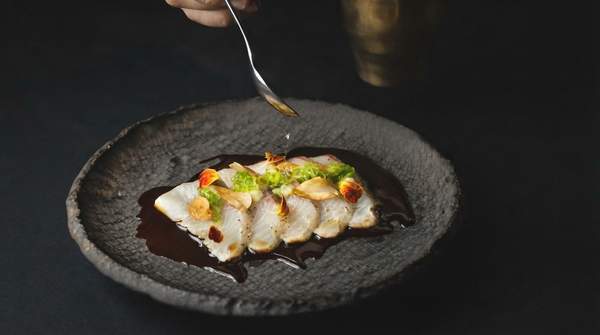
The second hallmark is that the meal is built for you, not merely served to you. At Terra, the treetop experience is paired with what the venue's description calls a bespoke seven-course menu, meaning the format is designed around the couple in the nest rather than drawn from a standard à la carte offering. This is the difference between privacy and personalization: a private room can be impersonal, while a bespoke menu cannot.
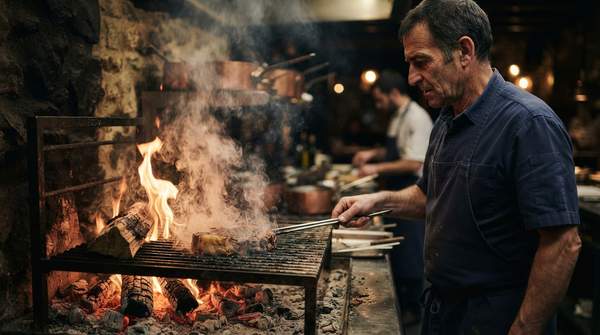
Direct chef interaction is the intensified form of this hallmark. When the chef who designed your menu is the person cooking it in front of you—explaining choices, adjusting courses, responding to the table—the meal becomes a collaborative event rather than a transaction. This is the tier of private dining where the culinary direction, not the wallpaper, is the product. It is also the hallmark most often counterfeited: a "chef's table" that is simply a seat near the kitchen offers proximity without the bespoke curation that defines the real thing.