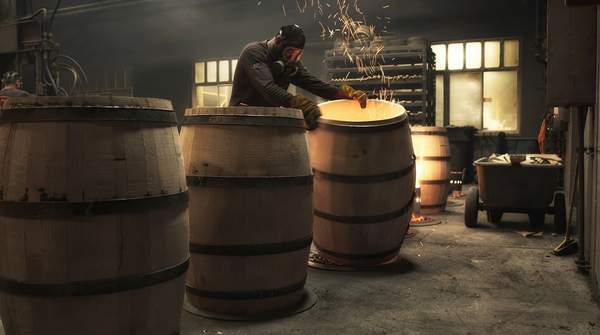
Every premium whiskey or cognac you taste is the product of four controllable variables: the wood of the barrel, the char on its interior, the climate of the warehouse, and the years the spirit spends inside. Understanding how these forces interact turns flavor descriptions on a bottle from marketing language into a readable record of decisions a producer actually made. Here is how each variable works, and how to trace them back to what you taste.
The Alchemy of Aging: How Barrels Shape Spirits
A newly distilled spirit is, as one distillery puts it, fiery and unrefined—"whiskey in its awkward teenage years." The transformation happens through sustained contact with oak. As the spirit rests, it soaks up flavors like vanilla, caramel, spice, and smoke, while taking on the amber color we associate with a mature pour; the rough edges mellow, the texture smooths, and the flavor deepens into something layered. This is why aging is best understood not as storage but as an active chemical negotiation between liquid and wood, one that the distiller steers through the choices examined below.
The Core Chemical Processes: Extraction, Oxidation, and Concentration
Three processes run simultaneously inside the barrel. Extraction is the pulling of compounds out of the wood into the spirit—tannins, wood phenolics, and aromatic molecules that give oak its character. Oxidation happens because barrels breathe: oxygenating the spirits is, as one barrel-aging specialist describes it, the primary goal of any aging process, releasing volatiles and integrating the ethanol with the wood's flavor and aroma compounds. Concentration comes from evaporation—the poetically named "angel's share"—which removes water and alcohol over the years and intensifies what remains.
These processes do not proceed at the same pace. As Timber Creek Distillery explains, over-oaking typically happens when extraction outruns integration: tannins and wood phenolics pull quickly, but the smoothing chemistry needs time. A well-aged spirit is one where all three processes have reached balance rather than one where any single one has dominated.
Wood Type: The Foundation of Flavor
Oak is the standard because of what it yields. American white oak is prized for assertive flavors—vanilla, caramel, and coconut, the last driven by oak lactones (cis- and trans-methyl-γ-octalactone), which contribute coconut, woody sweetness, and fresh oak character. French oak offers a different register, and barrel makers note that blending spirits aged in both types of oak allows producers to harness the best of both worlds, crafting profiles with depth, complexity, and harmony.
Alternative woods are also drawing scientific attention. A review of phenolic and flavor compounds in beverages aged with alternative woods highlights balsam, a tropical wood rich in resinous compounds such as nerolidol, which contributes pine- and spice-like aromas and a distinctive aromatic layer; its phenolic acids also enhance color stability. The same review cautions that woods with high extraction potential require strict control over aging duration to avoid an overwhelming dominance of those aromas that could unbalance the final sensory profile.