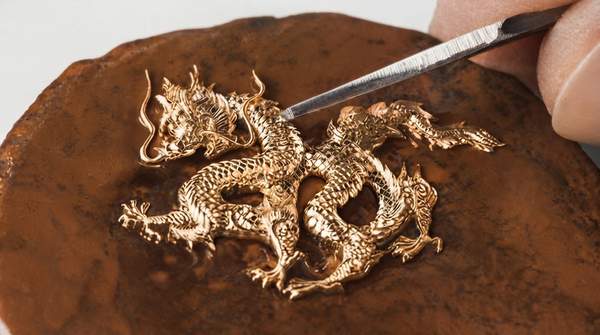
Hand-engraving in haute horlogerie falls into three visually distinct families: intaglio, which cuts fine recessed lines into metal; damascening, which inlays precious metal into a chiselled base; and relief engraving, which carves away the background so the design stands raised above the surface. Each technique follows a different logic — incising, inlaying, or sculpting — and each leaves a signature a careful observer can learn to recognize on a dial, case, or movement.
The Art of Hand-Engraving in Haute Horlogerie
Within the decorative arts practiced by luxury watchmakers, engraving occupies a privileged position because it works directly with the watch's own material. Rather than adding a separate layer of decoration, the engraver shapes the metal itself, whether on an external component or an internal one, transforming a functional surface into a composed one.
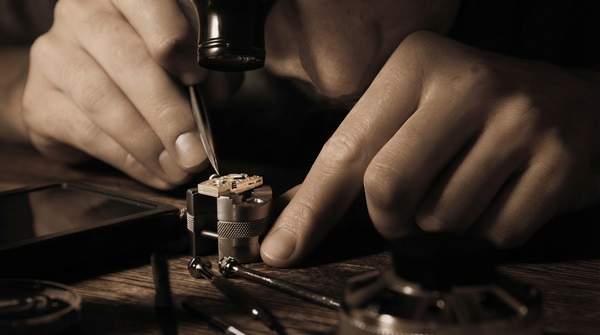
The craft rests on deceptively simple tools. According to Blancpain, which maintains its own Métiers d'Art ateliers, the engraver works with variously shaped blades that make it possible to trace fine lines and build up textures that bring a design to life. The precision demanded is considerable: the surfaces involved are small, the metal is unforgiving, and a misplaced cut cannot be undone.
Writing in Revolution Watch, Lee Sheng draws a useful distinction between two broad temperaments within the field. Standard line engraving, in his phrase, is "akin to executive calligraphy for metal, conveying professionalism and precision," while modeled engraving "places artistry at the forefront," turning metal into miniature sculptures that capture the texture of leaves or figures. Crucially, he notes, the standard line technique serves as the foundation for other forms, including relief engraving and mixed methods. This distinction — line-based versus modeled — maps closely onto the specific techniques below.
Intaglio Engraving: Recessed Beauty
Intaglio is the line-based tradition at the root of the engraver's art. The technique involves cutting into the metal surface with a shaped blade so that the design sits recessed below the original surface, rather than standing above it. The result reads as incised work: the eye follows grooves and textures carved into the plate itself.
Blancpain describes this as the technique by which its artists trace fine lines and create the textures that animate a design. Because the marks are cut rather than raised, intaglio tends toward precision and restraint — the "executive calligraphy" character Sheng attributes to standard engraving. On a watch, this is the engraving you recognize by running light across the surface and watching thin recessed lines catch shadow: the design lives below the plane of the metal, and its expressiveness comes from the density, direction, and depth of the cuts rather than from any sculptural volume.