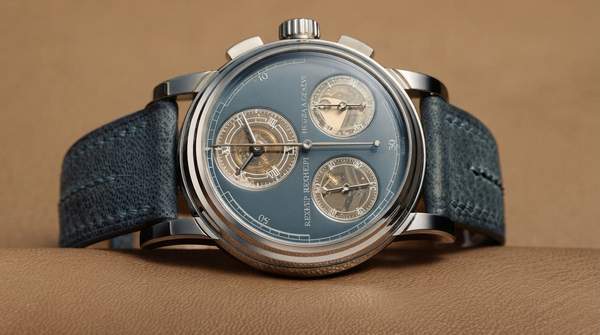
Geneva crowned its winners on November 7, 2026, at the 26th Grand Prix d'Horlogerie de Genève, and the night's highest honor went to independent watchmaker Rexhep Rexhepi for his Chronograph Flyback. But the GPHG is more than a single trophy: it layers a "Best in Show" prize over a set of category awards and discretionary special prizes, each carrying a different weight. Understanding that structure is what separates an informed reading of the results from a flat list of names.
Understanding the Grand Prix d'Horlogerie de Genève (GPHG) Awards
Often described in coverage as the "Oscars of the watch industry," the GPHG convenes the international watchmaking community in Geneva each year to recognize the most remarkable watches, watchmakers, and achievements in horology. The 2026 edition, as reported by WatchTime's Sabine Zwettler, celebrated originality, ingenuity, and exceptional craftsmanship across the year's releases. This year's ceremony carried an added cultural dimension: according to PEAK Singapore's Yanni Tan, the Director-General of UNESCO attended, honoring the craft's place within the intangible cultural heritage of humanity.
The awards are governed by official rules published by the GPHG foundation, which define both the competition categories and the prizes themselves. Those rules distinguish sharply between prizes awarded within categories, one overall prize drawn from all of them, and discretionary honors that sit outside the competition entirely — a distinction that matters when weighing the significance of any given win.
The 'Aiguille d'Or' Grand Prix: Watchmaking's Highest Honor
Per the GPHG's own 2026 rules, the "Aiguille d'Or" Grand Prix "rewards the best overall timepiece among all categories (Best in Show), also deemed the most representative of the watch industry as a whole." It is a single prize, and it is not tied to any one technical domain: a chronograph, a time-only dress watch, or a mechanical clock can all, in principle, take it.
Revolution Watch's report on the 2026 winners emphasizes what that means in practice: the Aiguille d'Or "recognises a complete watch rather than a single technical achievement." In Rexhepi's case, the winning RRCHF — the independent watchmaker's first flyback chronograph — was credited with bringing "movement architecture, proportion, craft and design together with remarkable coherence." For a young independent atelier, winning watchmaking's biggest prize with a debut complication is a career-defining moment.
Category Prizes: Recognizing Excellence in Specific Domains
Beneath the Aiguille d'Or sit the category prizes, awarded by the GPHG Jury and Academy within defined competitive fields. The 2026 edition's official category list includes Time Only, Essential Complication, Chronograph, Tourbillon, Calendar and Astronomy, Mechanical Exception, Gemset, Sports, Jewellery, Artistic Crafts, and Chronometry, alongside special categories such as the "Petite Aiguille," the Challenge — reserved for watches with a retail price equal to or under CHF 4,500 — and Mechanical Clock, which excludes wristwatches. One-of-a-kind models are not eligible for the Challenge category.
These categories let very different kinds of excellence compete on their own terms: a CHF 4,500 steel watch is measured against accessible-watch peers, not against haute horlogerie. Among the 2026 category results reported by Revolution Watch, Ferdinand Berthoud took the Chronometry Prize with the Naissance d'une Montre 3 — a watch the publication notes was conceived around the preservation of traditional watchmaking knowledge. Watchonista's full winners list also names Blancpain among the maisons that distinguished themselves, alongside Audemars Piguet, Chopard, Grand Seiko, Piaget, and others.
Special Discretionary Prizes: Beyond the Categories
The third tier operates differently. Under the GPHG's 2026 rules, the Jury may award special prizes at its discretion, and these are "not subject to the same rules as the other categories." The rules state that such a prize may honor a brand — whether or not it is entered in the competition — for a significant development opening new avenues for the art of watchmaking, or for an exemplary approach to ethics or sustainability. Crucially, the rules specify that this prize "may not under any circumstances be awarded to a timepiece."
In 2026, the Special Jury Prize went to Patek Philippe for its Watch Art Grand Exhibition. Watchonista describes the award as recognizing "an exceptional commitment to watchmaking culture," and Revolution Watch notes the exhibitions expose a wider audience to watchmaking history, craft, and production at a scale few other manufactures attempt. The ceremony also recognized Matt Jorgensen and Yuma Miyai with the Young Student Prize 2026, which sits outside the main 20-prize competition and spotlights the next generation entering the field.
GPHG Award Hierarchy Explained
Use this framework to place any GPHG result — from 2026 or future editions — in its proper context. The classification follows the GPHG's official 2026 rules, which separate the overall prize, the category competition, and discretionary honors.
| Award type | What it recognizes | 2026 winner |
|---|---|---|
| Aiguille d'Or Grand Prix | The best overall timepiece among all categories — a complete watch, judged for overall coherence rather than a single technical achievement. | Rexhep Rexhepi, Chronograph Flyback (RRCHF) |
| Category Prizes | Excellence within a defined field: Time Only, Chronograph, Tourbillon, Chronometry, Mechanical Exception, and others, including the Challenge (watches at or under CHF 4,500) and Mechanical Clock. | Ferdinand Berthoud, Naissance d'une Montre 3 (Chronometry); Blancpain among the distinguished maisons |
| Special Prizes | Discretionary honors outside the category competition; may recognize a personality, institution, or initiative — never a timepiece. | Special Jury Prize: Patek Philippe Watch Art Grand Exhibition; Young Student Prize: Matt Jorgensen and Yuma Miyai |
The reasoning behind the hierarchy is straightforward: the Aiguille d'Or is drawn from across every category, so it outranks any single category win; category prizes certify excellence within a peer group; and special prizes honor contributions to watchmaking culture that a watch competition cannot capture. A category win tells you a watch beat its direct peers; the Aiguille d'Or tells you the jury judged it the year's most representative timepiece overall.
GPHG 2026: The Pinnacle of Horological Achievement
Placed within that framework, the 2026 results tell a coherent story. Rexhepi's Chronograph Flyback claimed the top prize as the independent's first flyback chronograph — a win Revolution Watch frames as a significant moment for the watchmaker. Ferdinand Berthoud's Chronometry Prize rewarded a watch built around preserving traditional knowledge, while the broader winners' circle, as compiled by Watchonista, spanned independents and maisons alike: Audemars Piguet, Chopard, Daniel Roth, Grand Seiko, Konstantin Chaykin, Louis Vuitton, Parmigiani Fleurier, Piaget, and more, with timepieces the publication credits for pushing "the boundaries of micromechanics, technical poetry and artistic crafts."
Patek Philippe's Special Jury Prize, meanwhile, sat outside the watch competition entirely — a recognition of cultural contribution rather than a winning timepiece. The ceremony's UNESCO dimension underscored the same theme: watchmaking celebrated not only as engineering, but as heritage.
Navigating the World of Horological Excellence
For discerning collectors, understanding the GPHG award hierarchy is crucial for evaluating the true significance of winning timepieces and identifying the pinnacle of contemporary watchmaking. An Aiguille d'Or signals the jury's judgment of a complete watch as the year's most representative; a category prize certifies dominance within a specific domain; a special prize honors contributions beyond any single watch. The measurable indicator of this article's value: readers will be able to correctly categorize and explain the importance of future GPHG award announcements — starting with the next edition's prize list, where the first question worth asking of any winner is not just what it won, but which tier it won in.
Sources
- Rules, 2026 Edition — GPHG
- Grand Prix d’Horlogerie de Genève 2026: The Complete List of Winners — WatchTime
- Best watches of 2026: GPHG award winners — PEAK Singapore
- The 20 Winners of the 2026 GPHG Awards — Revolution Watch
- The Full List of Winning Watches from the 2026 Grand Prix d’Horlogerie de Genève (GPHG) - Watchonista