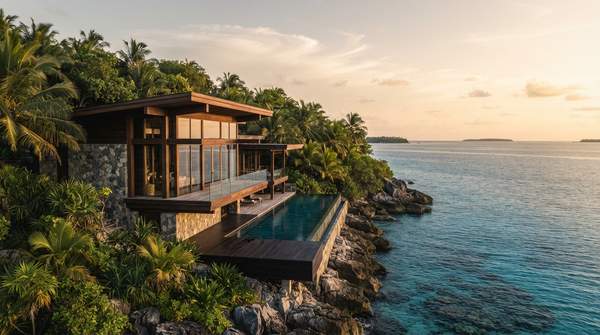
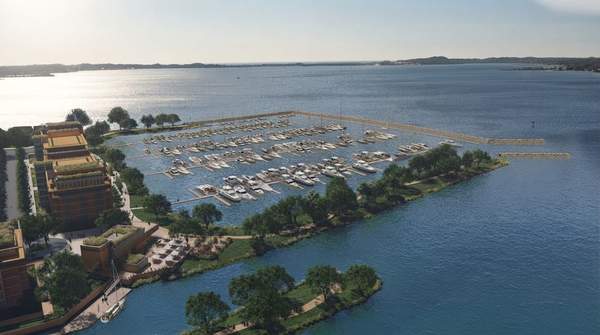
In Miami, a single penthouse recently sold for $75 million, according to National Mortgage Professional. Just five miles away, property taxes fueled by similar developments displaced a thousand residents in two years, according itself to the Urban Displacement Report 2023. This stark disparity reveals the profound ethical dilemmas in ultra-luxury real estate development. While marketed as engines of economic growth and urban revitalization, these projects often lead to significant social displacement, environmental degradation, and increased urban inequality. Without stronger regulatory oversight, community-centric planning, and a re-evaluation of 'progress,' these projects are likely to deepen urban inequalities and accelerate environmental damage, rather than foster equitable prosperity.
Luxury high-rises in coastal cities demand extensive land reclamation or wetland destruction, impacting local ecosystems, as documented by an Environmental Impact Study from the Coastal Conservancy. These visually striking projects contribute to environmental vulnerability for entire urban areas. Concurrently, their economic benefits are narrowly distributed; only 0.5% of new jobs created by ultra-luxury construction are accessible to residents earning below the median income, according to the Economic Policy Institute. This pursuit of extreme wealth in real estate directly erodes community stability and environmental health.
The Hidden Costs of Exclusivity
In London, 60% of new ultra-luxury units remain vacant over nine months a year, serving as investment vehicles, not homes, according to the London Housing Observatory. This creates artificial scarcity, driving up housing costs for locals. The construction itself carries a substantial environmental burden; a typical ultra-luxury tower generates 150% more carbon emissions per square foot than standard residential buildings due to exotic materials and complex designs, according to the Green Building Council Analysis. Such patterns privatize development benefits while externalizing significant costs onto the public and the environment.
Local businesses near luxury developments experience considerable strain. A Small Business Alliance Survey found a 40% decline in long-term customer base in gentrifying areas, according to a Small Business Alliance Survey. This erosion of local commerce coincides with increased resource consumption; water use for a single luxury estate can be 5-10 times higher than an average family home, according to Regional Water Authority Data, exacerbating local water scarcity. This concentrated resource use burdens municipal services and natural resources, further illustrating the externalized costs.

The Promise of Prosperity: A Flawed Justification?
Developers often cite creating 500+ construction jobs per major project, contributing to local employment, according to a Developer's Impact Statement from the City Planning Dept. These figures justify large-scale luxury developments, portraying them as economic growth engines. Property taxes from new luxury developments can also increase municipal revenue by 10-15% in specific districts, as indicated by a City Budget Report. This revenue, often earmarked for public services, presents a seemingly clear community benefit.
However, a city council report claims new luxury developments generated $50 million in additional property tax revenue in 2025, directly funding public schools. During the same period, a local housing advocacy group's analysis showed 1,200 essential workers (teachers, nurses) moved out in 2025 due to unaffordable housing, costing the city an estimated $70 million in recruitment and retention. This implies that 'economic growth' is a zero-sum game, where tax gains are offset by the exodus of vital community members, masking a net negative impact when considering broader social costs.
Developers often tout 'green' building certifications for luxury towers, citing energy efficiency and sustainable materials. Yet, environmental impact assessments reveal that the sheer scale and material consumption of these large units, combined with the destruction of existing green spaces, result in a significantly higher per-capita carbon footprint than the housing they replace. This suggests 'green' branding is often a facade, masking a net negative environmental impact. The consistent pattern of 'green-certified' luxury towers having a higher per-capita environmental footprint than older, smaller dwellings suggests current sustainability metrics for high-end real estate are fundamentally flawed, allowing developers to market environmental responsibility while accelerating ecological strain.
Reclaiming the Urban Fabric: A Call for Ethical Development
Only 12% of cities globally have robust inclusionary zoning policies mandating affordable housing contributions from luxury developers, according to the UN-Habitat Global Report. This regulatory void allows developers to prioritize profit over social responsibility. Community resistance movements against luxury developments have grown by 25% in five years, as tracked by the Global Urban Activism Monitor, indicating increasing public dissatisfaction. This surge in activism confirms that current development models are unsustainable for many urban populations.
The stark contrast between record-breaking penthouse sales and the surge in local business closures and resident displacement indicates that ultra-luxury real estate is not an engine of inclusive growth. Instead, it is a powerful mechanism for wealth extraction, prioritizing speculative investment over community well-being. Innovative financing models, such as community land trusts, have shown a 90% success rate in preserving affordable housing in rapidly gentrifying areas, according to the Lincoln Institute of Land Policy. These models offer a tangible path for cities to protect their social fabric. The current trajectory of ultra-luxury development is unsustainable and inequitable, necessitating a fundamental shift towards policies that prioritize community well-being and environmental stewardship over pure profit.
By Q3 2026, cities like Miami are projected to grapple with the exodus of essential workers and escalating environmental vulnerabilities will likely face intensified pressure to adopt more stringent inclusionary zoning and environmental impact regulations, potentially redefining urban development away from purely speculative ventures towards models that genuinely serve existing communities.