The Prestige Edit
Luxury FashionWatches & JewelryTravel & ExperiencesLuxury Living
Trending
Luxury TravelFine DiningLuxury FashionSustainabilityFashion IndustryLuxury GoodsGastronomyInterior Design
The Prestige Edit—Curating the Finest in Luxury Living
Luxury FashionWatches & JewelryTravel & ExperiencesLuxury LivingPremium Brands|WritersContactPrivacyTerms

© 2026 The Prestige Edit. All rights reserved.

  1. Home
  2. /Luxury Living
  3. /What Are Sustainable Luxury Home Design Principles and Why Do They Matter?
Luxury Living

What Are Sustainable Luxury Home Design Principles and Why Do They Matter?

A single luxury home can carry an embodied carbon footprint equivalent to driving a car for over 1 million miles, a hidden environmental cost often overlooked in high-end construction, according to th

CP
Charles Pembroke

July 21, 2026 · 5 min read

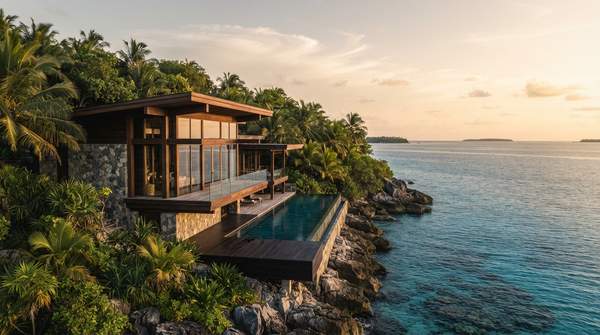
An ultra-modern luxury home with expansive windows and living green walls, nestled harmoniously within a vibrant, natural landscape.

A single luxury home can carry an embodied carbon footprint equivalent to driving a car for over 1 million miles, a hidden environmental cost often overlooked in high-end construction, according to the Carbon Leadership Forum. This impact, largely from materials and construction, makes initial building choices a dominant environmental burden. Buildings and construction activities account for nearly 40% of global energy-related carbon emissions, as reported by the UN Environment Programme.

Embodied carbon—emissions from material extraction, manufacturing, transport, and construction—can represent 20-50% of a building's total carbon footprint over its lifetime, states the World Green Building Council. This 'hidden' embodied carbon is not merely an environmental cost; it appears to be an unpriced financial liability that future regulations or market shifts will expose, potentially devaluing non-compliant properties.

Luxury homeowners increasingly seek unique, high-quality residences, but many remain unaware of how deeply their material choices contribute to global carbon emissions. While buyers desire bespoke uniqueness, current material choices often yield generic environmental impact, failing to deliver true differentiation where sustainability defines ultimate luxury. Based on growing market demand for ESG-aligned properties and advancements in eco-friendly materials, sustainable luxury design appears poised to become the new standard for high-end residential development, shifting from niche to mainstream expectation.

Beyond Green: Defining Sustainable Luxury Design

Sustainable luxury design extends beyond basic energy efficiency, encompassing occupant well-being, material lifecycle, and radical energy demand reduction. Biophilic design, integrating natural elements, reduces stress and improves cognitive function, according to a Terrapin Bright Green study. This connection between natural systems and human health is now a key aspect of modern luxury living.

Material choices are crucial. Cradle-to-Cradle certified materials ensure products are designed for continuous cycles, aiming to eliminate waste, as noted by the Cradle-to-Cradle Products Innovation Institute. Passive House design principles can further reduce a home's energy demand by up to 90% compared to standard construction, reports the Passive House Institute. These principles collectively redefine premium living, moving beyond simple energy efficiency to encompass occupant well-being, material lifecycle, and radical energy demand reduction.
Materials of Tomorrow: Innovation in Eco-Friendly Construction

Innovative materials and construction techniques achieve high performance and luxury aesthetics with significantly lower environmental impact. Bamboo, a rapidly renewable resource, grows up to 3 feet per day and sequesters significant carbon, states the Bamboo Industry Association, offering a faster-regenerating alternative to traditional timber. Recycled steel production uses 75% less energy than virgin steel, drastically reducing its embodied carbon, according to the American Iron and Steel Institute.

Cross-laminated timber (CLT) stores approximately one ton of CO2 per cubic meter, acting as a carbon sink, notes WoodWorks. High-performance insulation from recycled denim or sheep's wool reduces heating and cooling loads by 30-50%, reports Green Building Advisor. Such materials prove luxury can be constructed with a lighter environmental footprint.

Advanced material science develops self-healing concrete and transparent wood, pushing eco-friendly construction boundaries, as highlighted by MIT research. The Environmental Building Council's report indicates that traditional luxury, rooted in exotic, high-impact materials, is becoming an unsustainable and devaluing proposition. The aesthetic definition of luxury is on a collision course with its environmental imperative, forcing a re-evaluation of what 'premium' truly signifies.

Luxury Redefined: How Sustainability Elevates the Home Experience

True luxury increasingly provides superior health, comfort, and intelligent efficiency without compromising aesthetics. VOC-free paints and natural finishes improve indoor air quality, a key amenity for health-conscious buyers, according to Green Seal.

Smart home systems optimize energy use by learning occupant patterns, reducing waste by up to 20%, as shown in a Nest Labs report. Geothermal heating and cooling systems cut energy consumption by 25-50% compared to conventional HVAC, states the U.S. Department of Energy.

A well-designed green roof reduces the urban heat island effect, improves stormwater management, and extends roof lifespan, according to Green Roofs for Healthy Cities. Integrating such sustainable elements elevates the luxury experience through enhanced comfort, health benefits, and cutting-edge technology.

The Smart Investment: Environmental and Financial Returns

Investing in sustainable luxury design offers significant long-term financial returns, aligning with a growing market trend towards responsible wealth. Homes with green certifications, such as LEED or Passive House, command 8-15% higher resale values on average, reports McGraw Hill Construction.

The market for green building materials is projected to reach $425 billion by 2027, according to Grand View Research. Demand for luxury properties with strong ESG credentials grows among affluent buyers, as highlighted by the Knight Frank Wealth Report.

Water-efficient fixtures and rainwater harvesting systems reduce household water consumption by up to 40%, states EPA WaterSense. While a Luxury Home Builders Association report suggests sustainable materials add 10-15% to construction costs, making them a niche, a Green Property Analytics study indicates homes with certified eco-materials sell for a 20% premium and spend 30% less time on the market. This implies that despite higher upfront costs, the market rewards sustainable luxury, making it a viable, not niche, investment.

Based on emerging data from Green Property Analytics, companies delivering luxury homes without transparent embodied carbon reporting are building liabilities, not assets, for their clients. The perceived upfront cost of eco-luxury materials is rapidly being offset by emerging green financing options and insurance premium reductions, making the long-term ROI significantly more attractive than traditional high-end builds.

Addressing Common Concerns: Cost, Availability, and Aesthetics

What is the upfront cost of sustainable luxury features?

The initial cost of sustainable luxury features can be 5-15% higher than traditional construction, according to the National Association of Home Builders. However, these investments often pay back within 5-10 years through significant energy and operational savings, making the initial outlay a strategic consideration.

Are there challenges to adopting sustainable luxury design?

A lack of standardized education for builders and designers remains a barrier to widespread adoption, as indicated by a Green Building Council survey. Overcoming this requires industry-wide training and certification programs to accelerate sustainable practice integration.

Do sustainable materials compromise luxury aesthetics?

The perception that sustainable materials compromise luxury aesthetics is diminishing as innovative products gain traction, notes Interior Design Magazine. Manufacturers now offer eco-friendly options that rival traditional luxury finishes in appearance and performance, ensuring aesthetic appeal is not sacrificed for environmental responsibility.

The Future of High-End Living: Sustainable by Design

The convergence of design innovation, market demand, and environmental imperative positions sustainable luxury as the definitive standard for future high-end homes. Many high-end architects now specialize in sustainable design, integrating aesthetics with performance, as shown in an Architectural Digest survey.

Global investment in sustainable real estate is projected to grow significantly, driven by regulatory pressures and investor demand, reports JLL Global Real Estate Outlook. AI and data analytics enable more precise material selection and waste reduction in sustainable luxury projects, according to Autodesk Research.

The market's current valuation of luxury properties largely ignores embodied carbon, creating an arbitrage opportunity for early adopters to build future-proof assets before market correction. By Q3 2026, developers like LuxBuild Innovations, prioritizing verifiable embodied carbon reduction and certified eco-materials, will likely capture a larger segment of the discerning luxury market, setting new benchmarks for value and environmental stewardship.

Related Coverage from Luxury Living

  • What is the Nancy Meyers home aesthetic's slipcovered layered look?
  • What is Luxury Smart Home Technology for Hotels in 2026?

Tags

Sustainable DesignLuxury HomesEco Friendly ArchitectureGreen BuildingInterior DesignHigh End HomesEmbodied CarbonConscious Living
CP

Charles Pembroke

High Society & Real Estate Writer

Charles Pembroke covers high society trends and luxury real estate for The Prestige Edit, offering readers an inside look at exclusive estates and elite lifestyles. He approaches each story with a sophisticated eye for detail, analyzing the luxury market and concierge services.

More from Luxury Living

Donald Trump speaking at a rally, repeating debunked claims of election fraud, with a backdrop suggesting a divided nation.

Trump Repeats False Election Fraud Claims Despite Evidence

In a recent rally, Donald Trump again asserted the 2020 election was 'rigged,' a claim consistently debunked by over 60 court cases and numerous state audits.

Charles Pembroke· Jul 21
A bright and airy living room featuring a large, comfortable slipcovered sofa with layered pillows and throws, embodying the Nancy Meyers aesthetic.

What is the Nancy Meyers home aesthetic's slipcovered layered look?

The signature Nancy Meyers home aesthetic, with its ample space and pristine neutrals, projects effortless comfort.

Sebastian Duval· Jul 20
A futuristic luxury hotel room showcasing integrated smart home technology with personalized lighting, climate control, and interactive displays.

What is Luxury Smart Home Technology for Hotels in 2026?

Guests are willing to pay up to 20% more for rooms with advanced smart features like personalized lighting, climate, and entertainment, according to Skift Research .

Sebastian Duval· Jul 19
A luxurious living room with abundant natural light, indoor plants, and a living wall, showcasing biophilic design principles for enhanced well-being.

What are biophilic design principles for luxury homes and well-being?

Residents in biophilically designed homes reported a 25% reduction in stress levels and a 15% increase in cognitive function compared to conventional luxury residences.

Sebastian Duval· Jul 18

Trending Now

1
An exquisitely plated, innovative dish with vibrant colors and unique textures, served in a modern Michelin-starred restaurant, symbolizing groundbreaking culinary artistry and luxury dining.

7 Innovative Michelin-Starred Restaurants for Unique Culinary Experiences

Fine Dining· 41 views
2
Elegant guests in formal attire at a luxurious high society gala, subtly engaging in conversation amidst opulent decor and sparkling chandeliers, embodying refined social etiquette.

A High Society Etiquette Guide: How to Navigate Exclusive Galas and Social Circles

High Society· 18 views
3
Interior of a futuristic luxury residence showcasing integrated smart home technology with adaptive lighting and seamless control interfaces.

Top 9 Smart Home Technologies for Luxury Residences in 2026

Luxury Living· 19 views
4
A luxurious, futuristic living room with adaptive lighting, biophilic design, and integrated smart home technology, creating a serene and health-focused environment.

The Rise of the Sentient Home: How Wellness Design is Redefining Luxury Interiors for 2026

Luxury Living· 10 views
5
A visual metaphor for the quiet luxury paradox, showing minimalist fashion giving way to vibrant, expressive styles, symbolizing a new era in high fashion trends.

The Quiet Luxury Paradox: Why Its Mainstream Moment Signals a New Era

Luxury Fashion· 7 views
6
A group of models showcasing avant-garde Belgian fashion designs, featuring intricate textiles and bold silhouettes, in a dramatic, industrial-chic setting with spotlights.

The 7 Most Influential Belgian Fashion Designers to Know

Luxury Fashion· 7 views