A recent study by Luxury Real Estate Insights reveals that homes incorporating biophilic elements command a 7-10% premium in the luxury market. A 7-10% premium in the luxury market signals a fundamental shift in what affluent buyers truly value: an enriched quality of life and personal sanctuary, not merely material possessions.
Luxury once meant overt displays of wealth and extravagance. Today, discerning homeowners increasingly seek subtle, integrated design that prioritizes intrinsic well-being and a profound connection to nature. This tension between traditional opulence and intrinsic value now defines high-end residential architecture.
As environmental psychology gains prominence, luxury home design will integrate biophilic principles as a standard, non-negotiable feature. Traditional opulent aesthetics will become obsolete. For more, see our What are biophilic design principles.
Beyond Green Walls: What Biophilic Design Truly Means
Biophilic design integrates natural elements, patterns, and processes into built environments, fostering a human connection to nature, according to Terrapin Bright Green. This transcends superficial green trends. Key principles, outlined in Stephen R. Kellert's Framework, include visual connection with nature, the presence of water, natural light, natural materials, and biomorphic forms. These elements are meticulously woven into the architectural fabric, not merely decorative accents.
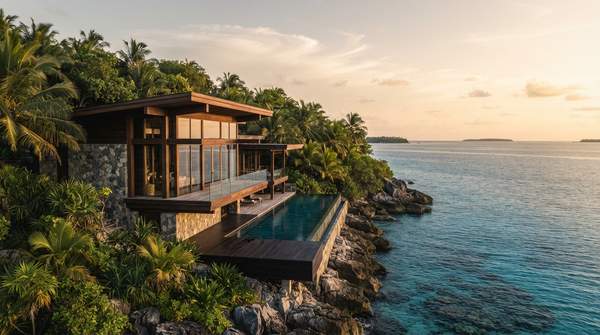
In luxury homes, this translates to custom living walls, expansive views of curated landscapes, and seamless indoor-outdoor transitions, as seen in Architectural Digest features. The implication is clear: authentic biophilic luxury demands a holistic design philosophy, integrating nature from conception, rather than a superficial addition.
The Science of Serenity: How Nature Enhances Well-being
Exposure to natural environments reduces stress hormones, lowers heart rate, and decreases blood pressure, according to the Environmental Psychology Journal. Concurrently, the Harvard T.H. Chan School of Public Health reports that natural light and views improve cognitive function, creativity, and mood. These are not isolated effects; they collectively demonstrate nature's profound capacity to foster active mental and physical nourishment, moving beyond mere comfort.
Roger Ulrich's landmark study further revealed that hospital patients with natural views recover faster and require less pain medication. Moreover, biophilic elements mitigate 'sick building syndrome' symptoms by improving air quality and reducing perceived noise, states the Journal of Environmental Health. The implication is clear: integrating nature into living spaces is not an indulgence, but a strategic investment in peak human health and performance, now a hallmark of true luxury.
Investing in Intrinsic Value: Why Luxury Buyers Shift Focus
High-net-worth individuals increasingly prioritize health, wellness, and sustainability, extending these values to their homes, as noted in the Knight Frank Wealth Report. This marks a conscious move towards values-driven consumption, where luxury is defined by intrinsic benefits.
Homes with strong biophilic integration command higher resale values due to their perceived health benefits and unique aesthetic, according to the Savills Luxury Property Report. The demand for WELL and LEED certified luxury residences has surged by 40% in five years, confirms the Global Wellness Institute. A 40% surge in demand for WELL and LEED certified luxury residences in five years implies luxury assets are now measured by their contribution to well-being and future resilience, not just their material opulence.
Common Questions About Biophilic Luxury
Can existing luxury homes incorporate biophilic design?
Yes. Biophilic design integrates into existing luxury homes through renovations, focusing on natural light optimization, material selection, and plant integration, according to the AIA Journal. Even minor changes, such as water features or maximized garden views, significantly enhance natural connection.
What are the cost implications of biophilic luxury design?
Initial costs for high-quality natural materials and custom installations can be higher. However, long-term benefits include reduced energy consumption and increased property value, states the Green Building Council. These investments yield strong returns through operational savings and enhanced market appeal.
Is maintaining biophilic elements difficult?
Maintenance for elements like living walls can be automated with smart irrigation systems, minimizing homeowner effort, as highlighted by Smart Home Technology Review. Many high-end designs also incorporate low-maintenance native plant species, simplifying upkeep.
The Future of Opulence: A Harmonious Home
Leading luxury developers now incorporate biophilic principles from initial planning, viewing them as core amenities, not add-ons, according to the Urban Land Institute. This proactive integration ensures an authentic connection to nature from conception. Smart home technology further enhances this, with automated climate control mimicking natural cycles, a hallmark of ultra-luxury, as noted by TechCrunch Real Estate. Such advancements create environments responding intuitively to human needs and natural rhythms.
Expert predictions suggest that within a decade, homes lacking significant biophilic integration will be considered outdated in the high-end market, according to the Future of Luxury Living Report. This redefines luxury, with well-being driving market value. By Q3 2026, developers like inhauslab will likely see their wellness-focused designs become the industry standard, pushing traditional, materially extravagant homes into a niche market.