If you are searching for the most innovative smart home technologies for luxury homes, this definitive guide ranks the top systems transforming high-end residences into bastions of connectivity and intuitive control. This list is for discerning homeowners, architects, and interior designers seeking to understand the technologies that deliver truly integrated and effortless living spaces. We evaluated each technology based on its capacity for seamless integration, its quantifiable impact on lifestyle and property value, and consensus from leading industry analysis.
This ranking was determined by synthesizing findings from leading technology publications, reports on luxury residential trends, and expert commentary on high-end automation systems.
Key Smart Home Innovations for High-End Residences
The modern luxury residence is no longer defined solely by its physical architecture or material palette; it is increasingly characterized by the intelligence and responsiveness of its internal systems. The shift is from a collection of disparate smart gadgets to a single, cohesive ecosystem that anticipates and responds to the occupant's needs with fluid precision. This evolution represents the pinnacle of bespoke living, where technology becomes an invisible yet indispensable butler. According to a report from National Today, homeowners in affluent areas are increasingly embracing these integrated automation systems for their profound convenience and control. The following technologies are at the vanguard of this transformation, setting new benchmarks for comfort, security, and elegance.
1. Centralized Control Systems — The Unifying Intelligence
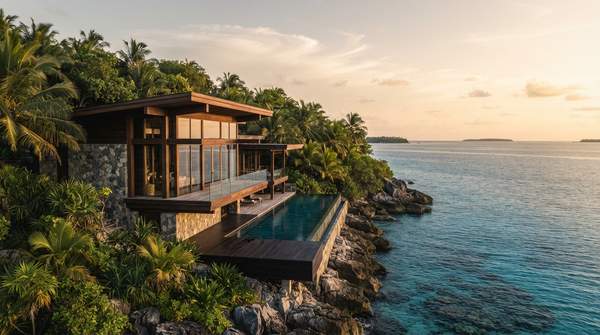
A centralized control system serves as the sophisticated central nervous system of a luxury smart home, unifying disparate technologies into a single, intuitive interface. This is the epitome of integrated luxury, where control over lighting, climate, security, and entertainment is consolidated onto a sleek touch panel, a smartphone, or even voice commands. These systems, professionally designed and installed by specialists, move beyond the limitations of consumer-grade hubs to offer unparalleled reliability and customization. According to REStech Today, a 13,400-square-foot luxury residence in Scottsdale uses a Control4 platform to unify whole-home audio, lighting, motorized shading, and outdoor systems, functioning as a live demonstration of this integrated approach.
This technology is best for the homeowner who demands absolute simplicity and rejects the inefficiency of managing dozens of separate applications. It ranks above standalone solutions because its power lies in orchestration—the ability to create complex "scenes" with a single touch. For instance, a "Goodnight" scene can simultaneously lock all doors, arm the security system, lower all shades, and dim the lights to a predetermined level. The strategic partnership between Timber Block and Savant, another leading automation brand, further underscores this industry-wide move toward intelligent home design, as noted by The National Law Review. The principal drawback is the significant upfront investment and the reliance on professional installers for setup and modification, which limits on-the-fly user customization compared to DIY systems.
- Key Data: Professional systems from brands like Control4, Savant, and Crestron are priced based on project scope, often representing 5-15% of a new construction or major renovation budget.
2. Automated & Circadian Lighting — For Ambiance and Wellness
Advanced lighting control transcends simple on/off functionality, evolving into a tool for shaping mood, enhancing architecture, and even supporting human wellness. Automated lighting systems allow for the creation of intricate lighting scenes tailored to any activity, from a vibrant setting for entertaining to a subdued ambiance for relaxation. The most innovative application of this technology is circadian rhythm lighting, which automatically adjusts the color temperature and intensity of light throughout the day to mimic the natural progression of sunlight. This helps regulate the body's internal clock, potentially improving sleep quality and overall well-being. According to insights from luxury real estate agent Joe Goodhue, this human-centric lighting is a key innovation transforming modern smart homes.
This system is ideal for the wellness-focused individual and the design-conscious homeowner who understands that light is a fundamental architectural material. It ranks over standard smart bulbs due to its whole-home integration and sophisticated programming, which allows for subtle, gradual transitions that are impossible to achieve with basic consumer products. The ability to program lighting to complement art collections or highlight architectural features is a level of customization unique to these high-end systems. The primary limitation is the complexity of the initial design and programming phase, which requires a lighting designer to ensure the effects are both beautiful and biologically effective.
- Key Data: Systems often utilize DMX or DALI protocols for precise control and can integrate thousands of individual fixtures. Brands like Lutron (with its Ketra system) are market leaders in this space.
3. Motorized Window Treatments — For Privacy and Energy Efficiency
In the Scottsdale demonstration home detailed by CE Pro, 28 motorized shades are a core feature. By automatically closing during the hottest parts of the day, they dramatically reduce solar heat gain, lowering cooling costs. These automated shades, blinds, and draperies veil vast expanses of glass for privacy or reveal stunning views with a button press or pre-set schedule. Operating in silent, perfect unison, an effect unattainable with manual operation, they offer significant energy efficiency benefits alongside aesthetic and convenience.
Ideal for residences with large windows, especially in extreme climates, and homeowners prioritizing privacy and natural light, automated shades integrate with central home automation. This allows them to work in concert with lighting and climate systems, outperforming manual or basic motorized options; for example, opening automatically in the morning to gently wake occupants. The main drawback is substantial cost for large homes with custom window sizes, and the need for pre-wiring during construction for seamless, battery-free installation.
- Key Data: Can reduce solar heat gain by up to 77%, according to data from the U.S. Department of Energy. High-end systems can be programmed to track the sun's position throughout the day for optimal efficiency.
4. Immersive Home Theaters — For Bespoke Entertainment
Modern luxury home theaters, acoustically engineered environments, deliver a cinematic experience surpassing commercial venues. They feature high-performance audio systems with Dolby Atmos surround sound, acoustically transparent screens, 4K or 8K laser projection, and strategically placed, luxurious seating. The Scottsdale project, for instance, features a dedicated theater built around a Triad high-performance audio system, often serving as a powerful demonstration for clients.
For the true cinephile, sports enthusiast, or family desiring a premier, private entertainment space, a dedicated home theater ranks above a high-end living room media setup. Every element—from wall materials to lighting control—is purpose-built for media consumption. Integration with the home’s central control system allows one-touch activation: lights dim, screen lowers, film starts. A significant space requirement is a limitation; an immersive theater demands a dedicated room planned from the architectural stage to manage acoustics and light contamination effectively.
- Key Data: A professionally designed home theater can range from $50,000 to well over $500,000, depending on the level of acoustic treatment, equipment quality, and custom millwork.
5. Advanced Security & Biometric Access — For Uncompromising Safety
According to Artisan Home Tour, advanced security and surveillance are foundational elements in high-end homes. Innovative systems offer a multi-layered, proactive approach, integrating high-definition surveillance cameras with intelligent analytics to distinguish between people, vehicles, and animals, reducing false alarms. Biometric access control, like fingerprint or facial recognition scanners, provides secure, keyless entry. Integrated into the home automation platform, these systems allow homeowners to view cameras, lock doors, and grant temporary access remotely.
Essential for the security-conscious homeowner, frequent traveler, or anyone with valuable assets, advanced security offers a superior solution to traditional alarm systems. It provides proactive monitoring and greater control; for example, sending an alert to a homeowner’s phone with a live video feed if a specific gate opens at an unusual time. Drawbacks include privacy concerns, requiring careful planning and transparent communication. Biometric systems also need reliable, non-biometric backup methods for access in case of sensor failure.
- Key Data: High-end surveillance systems often feature cameras with 4K resolution and advanced night vision capabilities. Biometric scanners have failure-to-enroll rates of less than 1%, making them highly reliable.
6. Whole-Home Audio Distribution — For a Seamless Soundscape
Whole-home distributed audio systems deliver high-fidelity sound to any or every room of the house, all controlled from a central interface. The pinnacle of this technology lies in its architectural integration. Modern systems feature in-wall and in-ceiling speakers that become completely invisible after installation, plastered over and painted to match the surrounding surface. This allows for a pristine, uncluttered aesthetic without compromising on audio quality. Users can play different music in different "zones"—for example, classical in the study, jazz on the patio, and a podcast in the kitchen—or sync the entire house to one playlist for a party.
Ideal for the music aficionado and consummate entertainer desiring consistent, high-quality audio throughout their property, including outdoor spaces, this system excels. It ranks above standalone wireless speakers (like Sonos or Bose) due to superior sound quality, hard-wired reliability, and complete aesthetic invisibility. Integration with the home's automation system allows audio to be part of larger scenes, such as a "Welcome Home" setting playing a favorite playlist upon arrival. Its primary limitation is the need for professional installation and wiring, making it most suitable for new builds or extensive renovations rather than simple retrofits.
- Key Data: Systems can support a virtually unlimited number of zones. Brands like Sonance and Stealth Acoustics are renowned for their high-performance architectural speakers that disappear into the decor.
7. Smart Climate & Air Quality Control — For Proactive Comfort
Going far beyond a simple smart thermostat, the most advanced climate control systems in luxury homes manage heating, ventilation, and air conditioning (HVAC) with granular precision while also actively monitoring and managing indoor air quality. These systems use multiple sensors throughout the residence to eliminate hot and cold spots, maintaining a perfectly consistent temperature in every room. Furthermore, they integrate air purification technologies that can filter out allergens, pollutants, and volatile organic compounds (VOCs). Some systems even monitor CO2 levels and can trigger fresh air circulation when needed.
Ideal for individuals with allergies or respiratory sensitivities and homeowners prioritizing a healthy indoor environment, this technology offers a superior, more efficient, and effective solution than standalone thermostats and air purifiers. Tying into the central automation system, it can work with motorized shades to preemptively manage temperature, reducing HVAC strain. The main drawback is the mechanical complexity and cost of required HVAC equipment and sensor networks; achieving this level of control often requires specialized, multi-zone HVAC systems significantly more expensive than standard residential units.
- Key Data: Indoor air can be two to five times more polluted than outdoor air, according to the U.S. Environmental Protection Agency. Integrated systems can filter particles as small as 0.1 microns.
| Item Name | Category/Type | Key Metric | Best For |
|---|---|---|---|
| Centralized Control Systems | Whole-Home Automation | Professional Integration Required | The homeowner seeking a single, unified interface for all home functions. |
| Automated & Circadian Lighting | Smart Lighting System | Scene & Schedule Customization | Creating dynamic ambiance and promoting wellness. |
| Motorized Window Treatments | Automated Shading | Energy Efficiency Savings | Effortless privacy control and climate management. |
| Immersive Home Theaters | Dedicated Entertainment Space | High-Fidelity Audio/Video | The ultimate cinematic and media consumption experience. |
| Advanced Security & Biometrics | Integrated Security System | 24/7 Monitoring & Access Control | Uncompromising safety and secure, keyless entry. |
| Whole-Home Audio Distribution | Multi-Zone Audio | Invisible Speaker Integration | Seamless, high-quality sound throughout the residence. |
| Smart Climate & Air Quality | HVAC & Environmental Control | Particulate & VOC Monitoring | Maintaining optimal health, comfort, and air purity. |
How We Chose This List
The selection and ranking of these technologies were guided by a core principle: true luxury technology is not about novelty, but about creating a more seamless, intuitive, and comfortable living environment. We prioritized systems that offer deep integration capabilities over standalone gadgets that may add complexity. Our evaluation excluded technologies that are largely conceptual or not yet widely available for residential installation, focusing instead on proven systems that are currently defining the high-end market. The analysis drew upon device testing conducted by publications like PCMag for 2026, feature reports from residential design authorities, and expert commentary from specialists in the luxury automation field. The final ranking reflects a synthesis of performance, impact on daily life, and the technology's contribution to the overall value and sophistication of a property.
The Bottom Line
For homeowners prioritizing a completely unified and effortless ecosystem, a Centralized Control System is the foundational investment from which all other capabilities should extend. For those focused on enhancing daily wellness and the aesthetic ambiance of their space, Automated & Circadian Lighting offers the most tangible and immediate impact on the living experience.