In Milan, the Bosco Verticale towers stand as a testament to urban nature, featuring over 900 trees and 20,000 plants. These structures, designed by Stefano Boeri, reduce noise pollution by 30% and produce 1,600 tons of oxygen annually, according to Hart Design Selection. Such integration of living ecosystems redefines high-rise luxury, establishing high-performance environmental solutions as a benchmark for elite property valuation.
Luxury homes once prioritized extravagant, man-made features and opulent materials. Yet, the most coveted properties now integrate natural elements, offering measurable health and investment benefits. The integration of natural elements challenges traditional notions of high-end design; while pure extravagance once defined luxury, the innate human connection to nature is now paramount in property development.
As awareness of well-being and sustainable living grows, biophilic design will likely become a standard expectation, rather than a niche feature, in the high-end real estate market.
Beyond Green Walls: Defining Biophilic Luxury
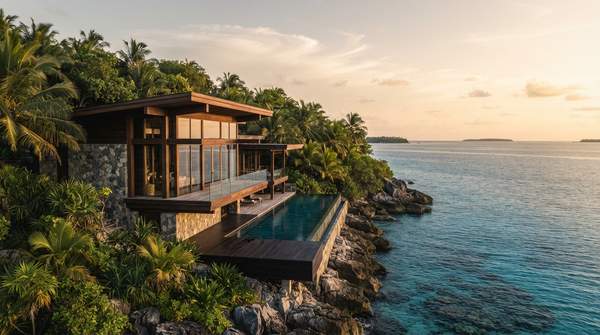
Biophilic design transcends mere plant arrangements, aiming for a deep, architectural integration of nature. This method employs organic aesthetics, fluid curves, and complex geometric forms that mimic natural fractals, moving away from rigid lines, according to Hart Design Selection. Water features, from wall cascades to interior pools, serve as central decorative elements, offering both visual appeal and ambient sound. The biophilic design philosophy mirrors nature's inherent beauty and complexity, fostering a profound connection that actively counters urban stressors. The implication is clear: luxury is no longer about isolating oneself from the environment, but rather about creating immersive, restorative sanctuaries that enhance occupant well-being at a fundamental level.
The Science of Serenity: How Nature Nurtures Well-being
Scientific evidence confirms that exposure to natural elements—plants, light, and water—reduces stress and improves well-being, as detailed by The Berkeley Palm Beach. Scientific evidence confirms that exposure to natural elements underpins biophilic design's ability to transform interiors into sanctuaries that replenish body and mind, a point echoed by Maison Blanc Design. The integration of natural elements is not merely decorative; it is a deliberate strategy leveraging proven psychological and physiological benefits. Luxury homeowners are thus investing in measurable health outcomes and environmental contributions, not just status. Luxury homeowners investing in measurable health outcomes and environmental contributions marks a profound re-evaluation of luxury, where health and environmental sustainability hold increasing value, even at the highest income brackets.