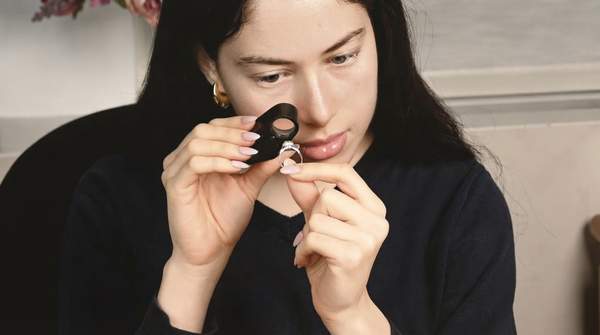
A diamond's visual appeal—its captivating sparkle—is determined more by its cut than any other factor. While the outline of a stone is its shape, the arrangement and angling of its facets define its cut style. This intricate architecture dictates how the diamond interacts with light, creating a unique display of brightness, color, and movement that varies significantly from one cut to another.
Understanding Diamond Sparkle: Brilliance, Fire, and Scintillation
A diamond's sparkle is not a single quality but a combination of three distinct optical effects. Understanding these components is the first step in choosing a cut that aligns with your personal aesthetic. The overall visual effect is a dynamic interplay between these three elements.
The light performance of a diamond is composed of:
- Brilliance: This refers to the return of white light from the diamond. A well-cut stone with high brilliance appears bright and lively, effectively reflecting light back to the viewer's eye.
- Fire: When white light enters a diamond, it disperses into a spectrum of colors, much like a prism. This effect, known as fire, creates flashes of rainbow colors that add depth and vibrancy to the stone's appearance.
- Scintillation: This is the overall sparkle effect, encompassing the pattern of light and dark areas within the diamond and the flashes of light that occur as the stone, the light source, or the observer moves. Scintillation can be further described by its speed, with some cuts producing rapid, glittering flashes while others create slower, broader flashes of light.
Brilliant vs. Step Cuts: How Facet Structure Shapes Sparkle
The arrangement of a diamond's facets fundamentally determines the character of its sparkle. According to the Gemological Institute of America (GIA), two stones with the same shape can appear vastly different based on their cut style. The two primary styles are brilliant cuts and step cuts, each designed to showcase light in a distinct way.
Brilliant cuts, such as the classic Round Brilliant and Oval, feature numerous small, angular facets. This complex pattern is engineered to maximize light return, creating what is often described as "fast-moving scintillation," where light appears to jump quickly from one facet to another. This style is known for producing a high degree of both brilliance and fire, resulting in a vibrant, fiery sparkle.
In contrast, step cuts, like the Emerald and Asscher, are defined by long, parallel facets arranged in a step-like pattern. This structure produces "slow-moving scintillation," creating broad, mirror-like flashes of light rather than a rapid twinkle. Step cuts emphasize a diamond's clarity and luster, offering a more subtle and architectural display of light. Modified brilliant cuts, such as the Radiant and Cushion, combine elements of both styles to create unique visual effects.