US private jet travel demand surges, straining capacity

NetJets, the world's largest private jet operator, is set to accept delivery of around 100 new aircraft in 2024.

LF
Lucia Ferraro

June 7, 2026 · 4 min read

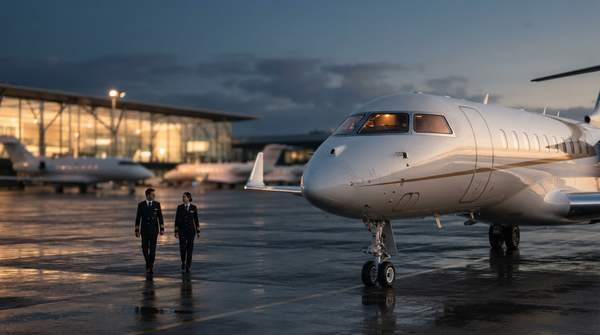
A luxurious private jet parked on an airport tarmac at sunset, symbolizing the surge in US private jet travel demand and strained capacity.

NetJets, the world's largest private jet operator, is set to accept delivery of new aircraft. The aggressive expansion represents a multi-billion dollar bet on sustained, high-end demand. The company also holds options for 1,700 additional aircraft with Textron, Bombardier, and Embraer, according to Forbes. The commitment to 1,700 additional aircraft signals a profound, long-term shift beyond temporary demand increases, reshaping the landscape of luxury air travel.

Private jet charter costs are rising sharply. Capacity is tightening across the industry. Yet, the leading player invests billions in an unprecedented fleet expansion. Rising private jet charter costs, tightening capacity, and billions invested in fleet expansion reveal a market in flux.

The private jet travel market is segmenting further. Ultra-high-net-worth individuals secure guaranteed access at premium prices. Others face increasing barriers and diminishing availability.

The Unprecedented Scale of Private Aviation's Boom

  • In 2025, NetJets flew 719,086 flight hours in North America. This is two-and-a-half times more than its nearest competitor, according to Forbes.
  • Over the past two years (2024-2025), NetJets grew by over 105,000 flight hours. This figure alone would rank it fourth among charter and fractional operators.

NetJets' sustained, rapid growth, including 719,086 flight hours in 2025 and over 105,000 flight hours growth in 2024-2025, confirms a fundamental and expanding demand for private air travel. It outpaces competitors. NetJets isn't merely expanding; it actively consolidates the ultra-luxury air travel market. The company could establish a near-monopoly on guaranteed, high-end private jet access, based on its 1,700 aircraft options and current growth rate.

Soaring Costs and Capacity Crunch

Private jet charter costs have increased by 15% to 20% compared to 2025 trips, according to Amalfijets. Simultaneously, Jet A fuel prices have risen 30% since March 1, 2025, Amalfijets stated. Jet A fuel prices rising 30% and charter costs increasing 15-20% translate directly into higher prices for consumers. Higher prices for consumers solidify private aviation's status as an exclusive luxury.

Significant price increases for private jet charters, coupled with NetJets' aggressive expansion, reveal a trend. For the truly ultra-wealthy, private air travel has become an indispensable utility, not a discretionary luxury. They appear impervious to cost escalation.

NetJets' strategy of ordering new jets annually is a calculated bet. The current capacity crunch and rising fuel costs will only further entrench its market position. NetJets' strategy of ordering new jets annually squeezes out smaller, less capitalized competitors, ensuring NetJets' dominance.

The Price of Exclusivity: What Private Travel Costs Now

Private jet charter costs typically range from $3,500 to over $18,000 per flight hour in 2026, according to Blackjet. Private jet charter costs ranging from $3,500 to over $18,000 per flight hour confirm that even the 'more affordable' private options remain a significant luxury. The market is segmented by wealth. The wide range of private jet charter costs, from $3,500 to over $18,000 per flight hour, also shows how different service levels command varying price points.

While general charter offers a wide range, NetJets firmly occupies the premium segment. It commands higher prices for its specific service model. This premium reflects guaranteed availability and brand prestige, rather than just raw flight time.

Jet Cards: The Entry Point to Ultra-Luxury Travel

NetJets' 25-hour jet card on the Phenom 300 is priced at $215,000 as of January 2025, according to Privatejetcardcomparisons. NetJets' 25-hour jet card on the Phenom 300, priced at $215,000, effectively makes the cost $8,600 per hour. The $8,600 per hour price point confirms that the ultra-wealthy pay for guaranteed access and reliability. The service becomes less price-elastic than typical luxury goods.

Jet card programs represent a significant financial commitment. They establish private jet travel as a premium, pre-paid service for the consistently affluent. Jet card programs, representing a significant financial commitment, ensure access, even as general charter costs fluctuate and capacity tightens across the market.

Understanding the Private Jet Market

What is driving the increase in private jet travel?

The increase in private jet travel is driven by ultra-high-net-worth individuals and corporations. They prioritize guaranteed access and flexibility. They view private air travel as an indispensable utility, making them largely impervious to rising costs. NetJets operates around 1,400 flights per day, demonstrating continuous operational demand.

How much has private jet demand grown in the US?

While specific overall growth percentages vary, the market faces significant capacity absorption due to major events. Capacity, according to Amalfijets. This figure indicates a robust, existing demand base for private air travel, suggesting that even without NetJets' expansion, the market would struggle to meet peak needs.

NetJets' continued fleet expansion, with hundreds of new aircraft integrated, will likely solidify its dominant position. This ensures the ultra-luxury travel segment remains a domain of guaranteed access for those willing to pay a premium, further segmenting the market for years to come.