
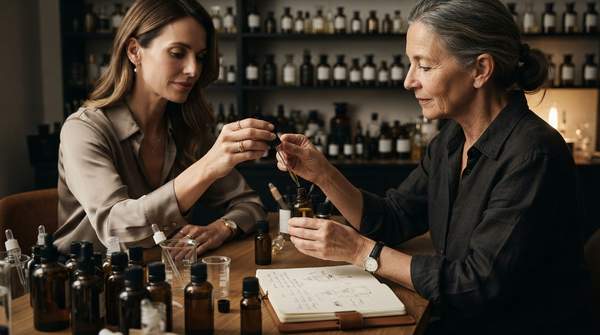
Commissioning a bespoke fragrance is not merely a purchase; it is an intimate collaboration that transforms personal history and abstract desires into a unique, wearable scent. According to The Olfactory Art Studio, a bespoke fragrance is "a personal archive in liquid form," created exclusively for one individual through a structured, multi-stage process. This journey involves in-depth consultation, meticulous laboratory work, and iterative refinement, culminating in a final formula that is archived and remains the sole property of the client.
Bespoke Fragrance Creation: A Client's Journey Framework
The creation of a custom scent follows a deliberate path from conversation to final composition. This process, which can take months or even years, is typically divided into three distinct phases, each requiring active participation from both the client and the perfumer.
Stage 1: The Consultation
The journey begins with an in-depth consultation that serves as the foundation for the entire project. The Olfactory Art Studio describes this as a "narrative exploration" rather than a simple questionnaire. The client is guided to share personal history, emotional connections to certain smells, and specific materials they are drawn to or repelled by. This conversation also covers lifestyle, cultural influences, and the context in which the fragrance will be worn. The perfumer's role is to translate these abstract concepts and memories into a tangible creative framework. A crucial part of this stage, as perfumer Karen Gilbert notes, is managing expectations. The perfumer must educate the client on what is achievable, as some requests—such as a light, long-lasting floral scent made exclusively from natural materials—may present technical challenges.
Stage 2: Creation and Formulation
Following the consultation, the perfumer moves to the laboratory to begin translating the client's brief into a physical composition. This phase balances olfactory aesthetics with the molecular structure of the ingredients to ensure longevity and projection on the skin. According to Pairfum London, the perfumer works with small quantities, precisely weighing and blending selected ingredients to achieve the perfect balance. This is where the initial concept, whether inspired by nature, memories, or emotions, starts to take shape. The perfumer may create several initial trials or modifications before presenting them to the client for the next stage.
Stage 3: Maturation and Refinement
A fragrance needs time to develop its full character. The Olfactory Art Studio likens this phase to the maturation of fine wine. The initial blends are rigorously tested, often by applying them to both scent strips and the client's skin to evaluate how the scent performs and evolves over time. This iterative process is vital for success. The client's role is to live with the trial scents and provide detailed feedback, allowing the perfumer to make precise adjustments. This collaborative loop of testing and refinement continues until the fragrance is perfected and meets the client's vision, ensuring the final product is a true signature scent.
The Art of Raw Material Selection
The uniqueness of a high-end bespoke fragrance is deeply rooted in the meticulous selection of its raw materials. Perfumers consider several key factors that influence an ingredient's character. Geographic origin is paramount; as detailed by Adar, a jasmine essence from India possesses a dramatically different molecular profile and scent than one harvested in Egypt. Soil and climate conditions create subtle but significant variations.
The extraction method also plays a critical role in preserving the integrity of botanical essences. Furthermore, seasonal variations can alter the aroma profile of natural ingredients, requiring the perfumer to have an intimate understanding of their materials. Perfumers select essential oils, absolutes, and resins not just for their individual scents but for how they will interact to create a complex, multi-dimensional experience that evolves on the skin.
Navigating the Bespoke Journey: The Client's Role
A successful bespoke commission is an intimate collaboration that relies on clear communication and realistic expectations. The client's ability to articulate their desires, memories, and sensory responses is the primary driver of the creative process. While the perfumer provides the technical skill and artistic interpretation, the client provides the essential inspiration and feedback.
It is also important for clients to understand the inherent constraints of perfumery. As Karen Gilbert explains, the desire for certain outcomes, like extreme longevity in a very light, all-natural fragrance, can be difficult to achieve. An open dialogue with the perfumer helps bridge the gap between a client's vision and the technical realities of fragrance composition. This partnership ensures the final creation is not just a beautiful scent, but an authentic extension of the wearer's identity.
Deciding on Your Bespoke Fragrance Journey
Consider commissioning a bespoke fragrance if you seek a truly unique, personal scent experience and are prepared for an iterative, collaborative process. The journey is for those who view scent not as a simple accessory, but as a profound form of self-expression. The ultimate success of the commission is not just in the bottle, but in the wearer's deep-seated connection to the final creation. The client feels a strong connection to the final scent, perceiving it as a 'second skin' that reflects their individuality.
Sources
- The Art of Bespoke Perfume: How a Private Fragrance Commission Works — Theolfactoryartstudio
- Creating Bespoke Fragrances — Karen Gilbert - Online Perfume School
- The Art of Fragrance Creation: From Dream To Bottle — Pairfum London
- Understanding Artisanal Perfume Making: A Deep Dive — Adar
- What Is Niche Perfumery? — Rook Perfumes London | Unique Unisex Fragrance


