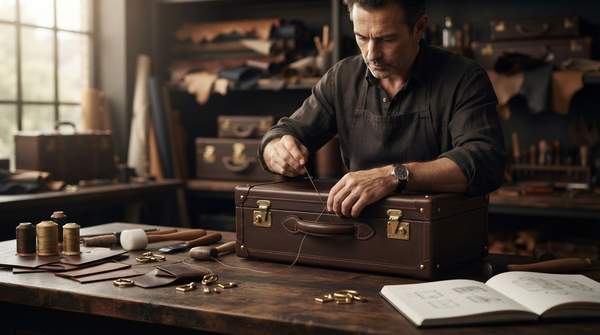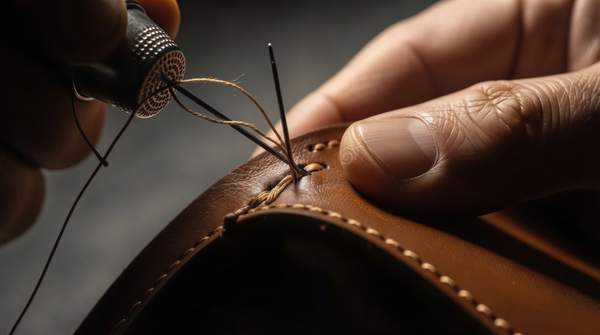
Luxury houses preserve traditional craftsmanship through three broad and clearly distinguishable strategies: buying up the ateliers and training the artisans who hold rare skills; leaning on heritage and storytelling rather than overt branding to define their appeal; and weaving those ancient techniques into contemporary designs and digital channels without losing their distinctiveness. Together, these approaches explain why handcraft has become, as one industry observer puts it, "not merely heritage but a competitive advantage" in an age of automation.
The Enduring Allure of Hand-Craftsmanship in Luxury
Across haute couture, leather goods, watchmaking and automotive interiors, luxury's defining techniques remain stubbornly human. Reporting on the rare crafts sustaining Paris couture notes that groups such as Chanel and LVMH have invested heavily in preserving historic ateliers, and that as technology advances, the contrast between automated production and hand craftsmanship becomes sharper rather than blurrier. The same reporting observes that for today's luxury consumers, rarity is no longer defined solely by price, but by the time, expertise and human touch embedded in an object.
Why Hand-Craftsmanship Remains a Competitive Advantage
The business case rests on three interlocking qualities. The first is non-replicability: many of the techniques that make haute couture and fine watchmaking exceptional cannot be reproduced by machines. The second is authenticity, the sense that an object carries a genuine lineage of skill rather than a factory output. The third is scarcity, deliberately cultivated rather than incidental. As commentary on luxury's identity in the social media age observes, when logos and posts flood digital spaces, the desire for a brand can fade; reintroducing scarcity into marketing and sales is how heritage houses protect the prestige that underwrites their pricing.
Comparative Strategies for Craftsmanship Preservation
The table below categorizes the three principal approaches, contrasting their goals, methods and the brands that exemplify them.
| Strategy | Primary Goal | Method | Example Brands/Crafts |
|---|---|---|---|
| Vertical Integration & Skill Guardianship | Secure the supply of specialized components and ensure the continuity of rare artisanal skills | Acquiring historic ateliers and formal, rigorous in-house training of new artisans | Chanel's acquisition of French weavers, jewellers, embroiderers and plumassiers; LVMH's investment in ateliers; Rolls-Royce apprenticeships covering bespoke interiors |
| Heritage-Focused Marketing | Build brand identity and exclusivity around artisanal roots | Let the quality and story of craftsmanship speak for itself, often with subtle branding, rather than relying on celebrity-driven promotion | Loro Piana returning to craftsmanship, heritage and design storytelling; Bottega Veneta stepping away from social media entirely |
| Balancing Tradition with Modern Relevancy | Appeal to new generations while safeguarding core identity | Integrate heritage crafts into contemporary collections and use digital platforms for storytelling, adapting presentation without compromising the craft itself | Dior translating client insights into collections that pair its heritage with contemporary themes; Louis Vuitton's celebrity-endorsed social presence aimed at Gen Z |
The comparison shows that preservation is not one activity but a spectrum: Chanel pursues supply-chain security through ownership, Loro Piana pursues mystique through restraint, and Dior pursues relevance through adaptation. Some houses, such as Loewe and Celine, blend the artisanal focus with digital visibility, sitting between the second and third columns.
Strategy 1: Vertical Integration and Skill Guardianship
The most direct route is ownership. Chanel has acquired a network of local French weavers, jewellers, embroidery specialists and plumassiers, an approach aimed at financially supporting small artisan workshops that might otherwise lack the resources to survive. Notably, Chanel does not interfere with their production or management, allowing the ateliers to continue creating for other fashion houses, a guardianship model rather than an exclusivity lockdown. According to coverage of apprenticeship schemes in luxury manufacturing, Rolls-Royce similarly maintains structured training programs transmitting skills such as bespoke interior work to a new generation of artisans.
Strategy 2: Heritage-Focused Marketing and Storytelling
A second strategy treats the craft narrative itself as the marketing. Bottega Veneta has famously opted out of social media entirely, relying on quality and craftsmanship over conventional marketing, an approach that, as one fashion commentator observes, enhances the brand's mystique and sets it apart from competitors. Loro Piana represents a parallel move: a return to traditional luxury pillars such as craftsmanship, heritage and design storytelling to preserve distinctiveness in a saturated market. The method substitutes intrinsic product value and provenance for external marketing signals, reinforcing exclusivity through restraint.
Strategy 3: Balancing Tradition with Modern Relevancy
The third strategy accepts that heritage must be renewed, not frozen. Louis Vuitton maintains a strong social media presence, leveraging celebrity endorsements and product drops to attract Gen Z and Millennial audiences while, in that analysis, remaining true to its brand DNA. Dior offers a subtler example: the house gathers insights through global activations and close relationships with its highest-value clients, then feeds those insights directly into collections, understanding that its customers seek craftsmanship, cultural relevance and personal expression rather than goods alone. The resulting work balances Dior's rich heritage with contemporary themes, keeping the brand both timeless and relevant.
Showcasing Preserved Artisanal Techniques
Preservation becomes tangible in specific named crafts. In fine watchmaking, one maison's preservation work spans three principal areas: the art of fire, encompassing cloisonné, champlevé and grisaille enamelling; the art of metalwork, including granulation and filigree; and the art of composition, in which wood, straw, gold leaf and even flower petals form watch dials. The maison frames its mission as a threefold commitment to preservation, innovation and transmission, ensuring rare artistic crafts remain part of contemporary watchmaking. In couture, plumassierie, the handling of feathers, and specialist embroidery are among the trades that Chanel's atelier acquisitions have, in some cases, saved outright.
Craftsmanship: A Timeless Investment for Luxury Brands
For luxury brands, the strategic decision is to continue investing in and promoting heritage craftsmanship as a core differentiator and value driver, adapting preservation methods to market demands while safeguarding authenticity. The measurable indicators are already visible in the evidence: continued investment in artisan training programs, further acquisitions of specialized ateliers, and marketing campaigns that highlight the story and human touch of handcrafted goods. Houses like Chanel, LVMH, Hermès-linked leather training traditions and Rolls-Royce demonstrate that ownership plus transmission secures the supply of rarity itself; Loro Piana and Bottega Veneta show that restraint can be its own marketing. For the discerning consumer, the practical takeaway is a framework: ask whether a product's value comes from secured skills, a protected narrative, or a deliberate marriage of both.
Sources
- Preserving Traditional Craftsmanship Within Luxury Manufacturing — STUDIO 104
- The Return of Decorative Arts: How Luxury Brands Are Reviving Craftsmanship Through Design - Outlook Luxe
- Reclaiming Luxury’s Identity in an Age of Access — Vogue College of Fashion
- How Leading Luxury Brands Are Preserving Craftsmanship - JustLuxe
- What heritage fashion brands get right (and why retail should pay attention) - Style Arcade — Stylearcade