The modern luxury home is no longer defined by its size, its marble floors, or the grandeur of its entrance. According to consistent observations across real estate and design commentary, today's high-end buyers increasingly judge a property by how it supports daily life: wellness, convenience, privacy, and long-term lifestyle goals. What that means in practice is assessable. A property's "luxury status" can be evaluated against four observable pillars—experiential and lifestyle integration, wellness and biophilic design, seamless technology, and sustainability—each of which can be checked during a viewing.
The Shifting Definition of Luxury Living
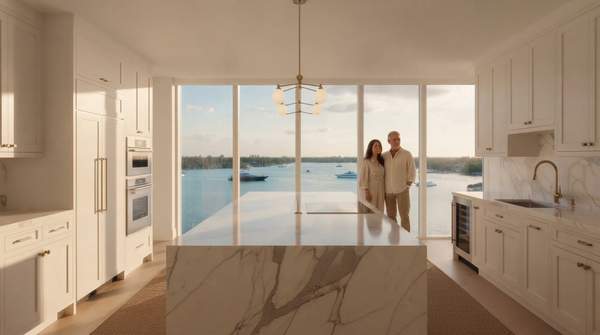
Luxury once meant size, as Marie-Noelle Metseye, a luxury real estate writer, puts it plainly: larger homes, grand entrances, marble floors, bigger kitchens, more square footage. Those elements still matter, she notes, but they are no longer the sole determinants of a property's standing. Today's affluent buyers increasingly define luxury "by experience rather than excess," seeking homes that improve how they live daily.
This is more than a stylistic preference. Writing on the convergence of residential development and hospitality, the design firm MAWD describes the change as "a fundamental shift in what buyers, residents, guests, and developers expect from the places they invest in." In that framing, "luxury is no longer measured solely by finishes, square footage, or exclusive amenities," but by how a building functions, how it makes people feel, and how effortlessly it supports everyday life.
Real estate commentary echoes the same reorientation. Motiaz, an Indian developer writing about modern residential spaces, observes that luxury living today "is no longer limited to expensive interiors or large living areas," instead representing a thoughtfully designed lifestyle combining comfort, convenience, aesthetics, and long-term value. The practical consequence for buyers is a change in the central question of a property search: from "what does this home have?" to "how will this home improve my life?"
Experiential & Lifestyle Integration: Beyond Amenities
The clearest expression of the new definition is the blurring line between residential development and hospitality. MAWD points to developments that resist traditional categories: a residential tower offering hotel-style concierge services and wellness programming, a branded residence where every arrival feels like checking into a five-star resort, or a mixed-use destination where residents, guests, and the surrounding community share spaces for dining, work, wellness, and entertainment.
For an individual buyer evaluating a standalone home rather than a branded tower, the same principle scales down. The question becomes whether the property functions as a complete lifestyle destination—whether its spaces support wellness, social connection, recreation, and leisure, rather than merely enclosing square footage. A home designed around experiences answers that with its layout and its relationship to its setting, not just its finishes.
Flexibility is a core component. High-end buyers increasingly prioritize flexible living spaces alongside wellness, privacy, smart-home technology, and lifestyle-driven design, as Metseye's survey of buyer priorities describes. In practice, that means rooms that adapt—spaces that can serve remote work, changing family dynamics, or entertaining without requiring renovation. When touring a property, the test is whether the plan anticipates how life changes, or only how it looks in photographs.
Integrated Wellness & Biophilic Design: A Sanctuary for Well-being
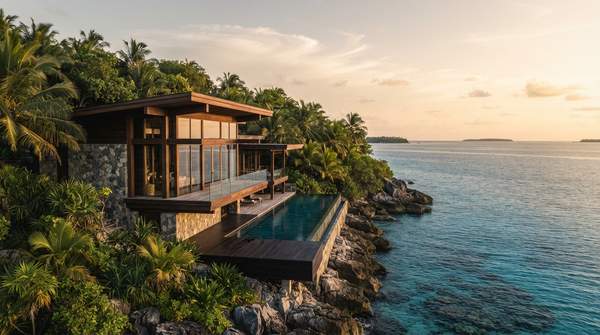
Wellness has moved from a marketing adjective to a set of concrete, checkable features. Pangburn & Company, a luxury home builder, describes the current approach as incorporating natural materials, abundant greenery, and strong connections to outdoor environments, with local luxury builders integrating these principles to create calming, wellness-focused living spaces.
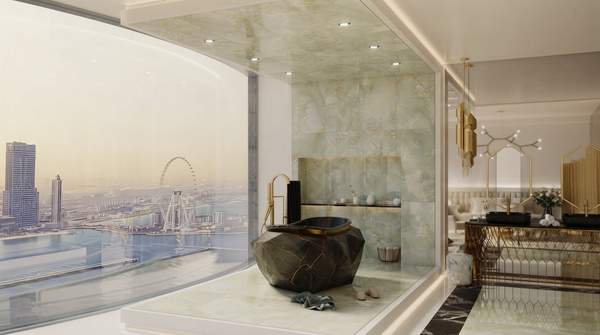
The same source identifies the specific amenities now becoming common: dedicated fitness rooms, meditation spaces, spa-inspired bathrooms, and advanced air purification systems—features that support healthy lifestyles while enhancing daily comfort. These are observable during a viewing: a buyer can see whether a home has a genuine quiet space, whether bathrooms are designed as restorative environments, and whether air quality has been engineered rather than ignored.
Wellness also connects to the sensory and material quality of a home. The trend toward minimalist luxury—clean lines, uncluttered spaces, carefully curated design elements—described by Pangburn & Company reflects the same priority: a sophisticated yet comfortable atmosphere rather than excessive ornamentation. A home that supports well-being is one whose materials, light, and acoustics have been considered together, not one that simply accumulates expensive surfaces.
Seamless Technology & Convenience: Invisible Intelligence
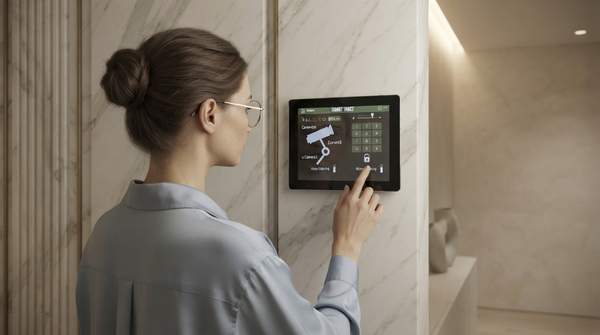
Technology earns its place in the modern luxury home only when it disappears. Smart-home systems that control lighting, climate, security, and entertainment through intuitive interfaces are now expected by high-end buyers, as both Metseye's account of buyer priorities and Pangburn & Company's feature survey indicate. The key qualifier is aesthetic integration: technology should enhance convenience without overwhelming the design.
This sets a higher bar than a collection of gadgets. A property with genuine technological luxury has systems that a resident operates without friction—lighting and climate that respond predictably, security that reassures rather than complicates, entertainment that works in every room. The distinction matters because visible, fussy technology dates quickly, while integrated systems support the "effortless everyday life" that MAWD identifies as central to the experiential definition of luxury.
When evaluating a property, the practical test is interaction: can you operate the core systems without instruction, and do they improve how the space feels? Convenience, in the modern definition, is not an added amenity but the mechanism by which a home supports the life lived inside it.
Sustainability & Efficiency: Responsible Luxury
Sustainability has shifted from a niche concern to a defining feature of high-end residential design. Metseye lists sustainability among the priorities of today's luxury buyers, alongside wellness, privacy, and flexible spaces. Motiaz similarly frames eco-friendly materials and sustainable practice as part of the modern definition of luxury living rather than an optional extra.
The claims here are measurable, and the most concrete benchmark is certification. According to the U.S. Green Building Council, LEED-certified homes on average use 20 to 30 percent less energy than non-green homes, with some saving up to 60 percent. The council also notes that LEED certification operates through a carefully managed, independent, third-party verification system, affirming that project teams deliver on their design plans and goals.
For buyers, certification converts a vague promise of "green building" into a verifiable standard with independent oversight. A property that carries such certification, or that can document comparable energy performance, offers something a marble countertop cannot: evidence. Responsible luxury, in this sense, is not a compromise of comfort but an extension of the same discernment that defines the rest of the modern category.
Modern Luxury Home Evaluation Checklist
Use this framework during viewings to assess a property's modern luxury quotient—how well it integrates features that support well-being, convenience, personal growth, and responsible living, rather than physical size alone. For each pillar, check for the presence and quality of the specific features listed.
| Pillar | What to look for | Evidence-based benchmark |
|---|---|---|
| Experiential & Lifestyle Integration | Does the home function as a lifestyle destination—spaces for wellness, social connection, recreation, and leisure? Are rooms flexible enough for remote work and changing family dynamics? Hospitality-style services or shared amenities? | Buyers increasingly prioritize flexible living spaces and lifestyle-driven design; the residential-hospitality boundary is described as increasingly fluid. |
| Wellness & Biophilic Design | Natural materials, abundant greenery, strong connection to outdoor environments; dedicated fitness or meditation spaces; spa-inspired bathrooms; advanced air purification; calming, uncluttered minimalist design. | These wellness-centered amenities are described as increasingly common in luxury builds. |
| Seamless Technology & Convenience | Integrated systems controlling lighting, climate, security, and entertainment through intuitive interfaces; technology that enhances convenience without overwhelming the design. | Smart-home technology is a stated priority of high-end buyers, with aesthetic integration as the qualifier. |
| Sustainability & Efficiency | Documented energy performance or green building certification with independent third-party verification, such as LEED for residential projects. | LEED-certified homes average 20–30 percent less energy use than non-green homes, with some saving up to 60 percent. |
Score each pillar qualitatively—absent, present, or well integrated. A property strong on traditional metrics but weak across all four pillars is trading on an older definition of luxury; one that scores well here supports the life a buyer actually intends to live.
Making an Informed Luxury Home Decision
When evaluating a luxury property, prioritize how the home and its community will enhance your quality of life and support your desired experiences, rather than solely focusing on square footage or premium finishes. The evidence across sources is consistent on this point: the elements that once defined the category still matter, but they no longer determine it.
A property's alignment with modern luxury is indicated by the integration of wellness amenities, adaptable living spaces, intuitive technology, and demonstrable sustainable practices. Each of these is observable at a viewing, and the sustainability pillar in particular can be verified through documented certification rather than taken on a developer's word. That verifiability is the practical advantage of the new definition: it replaces taste and square footage with checkable evidence of how a home will perform for the life lived inside it.
Sources
- Luxury Living Redefined: What Today’s High-End Buyers Want, and What Luxury Sellers Need to Know - Marie-Noelle Metseye
- The Future of Luxury Living Is Where Residential Development Meets Hospitality — MAWD
- What Defines Luxury Living in Modern Residential Spaces — MOTIAZ
- \r\n \n The Features That Define a True Luxury Home Today\n \r\n — Pangburnandcompany
- LEED certification for residential — USGBC