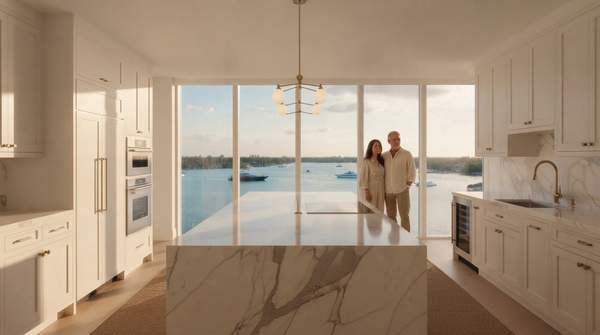
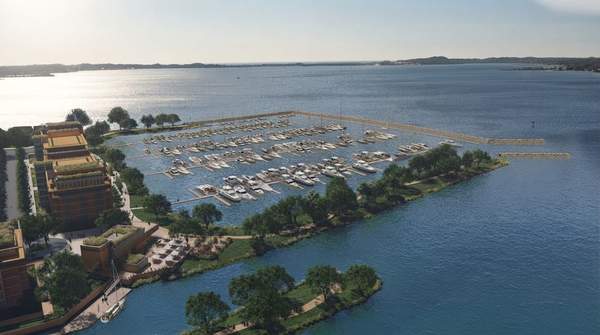
Just months after his death, artist Klaus Rinke's Venice property, acquired for $175,000 in 1987, has gone under contract for nearly $3.5 million. This notable sale follows Rinke's passing earlier this year at 86, as reported by Robb Report. The substantial appreciation of this personal residence, which Rinke considered an extension of his art, reveals a critical, often underestimated, dimension of an artist's financial legacy.
Klaus Rinke's artistic legacy is defined by conceptual works exploring time and process. Yet, his most immediate and quantifiable financial impact post-mortem stems from the dramatic appreciation of his physical real estate. He famously referred to his cactus collection as his 'living sculptures,' integrating his natural surroundings into his artistic philosophy.
This sale suggests that for certain artists, the value of tangible assets, particularly prime property, can eclipse or at least significantly complement the market for their art, especially in highly desirable locations.
What Defined Klaus Rinke's Artistic Approach?
Klaus Rinke's artistic approach was characterized by a profound engagement with ephemeral concepts and a deliberate blurring of traditional artistic boundaries.
- His output frequently explored time and process.
- His practice often involved complex, multi-part photographic sequences.
- He consistently challenged conventional definitions of a singular art object.
- Rinke famously blurred the lines between art and life, as seen in his 'living sculptures' of cacti.
- The 'Projects' exhibition, for instance, featured over 300 photographs, yet was categorized as only nine works, according to Artforum.
Such conceptual depth, while intellectually rigorous, inherently presented unique valuation challenges within the traditional art market.
Real Estate's Tangible Return for Conceptual Artists
The nearly 20-fold appreciation of Klaus Rinke's Venice property, acquired for $175,000 in 1987 and now under contract for nearly $3.5 million, starkly illustrates a crucial financial truth for conceptual artists. A strategically chosen real estate investment can yield a more potent and predictable financial legacy than the often-volatile market for their ephemeral work. This substantial return on a traditional asset stands in sharp contrast to the complex valuation inherent in conceptual art, where market liquidity and consensus can be elusive.