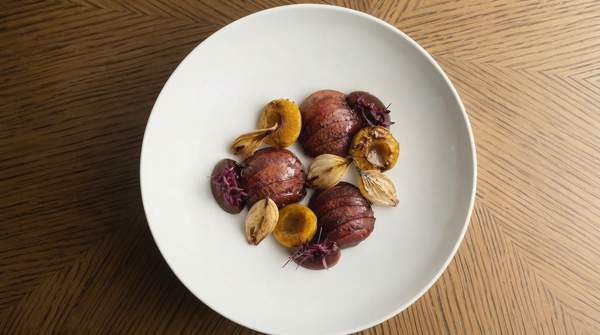
If you want to know which Michelin-starred vegan restaurant deserves your next reservation, the honest answer is that it depends on what kind of experience you are chasing. Eleven Madison Park in New York pursues radical, comparison-defying innovation; Bonvivant Cocktail Bistro in Berlin builds everything around seasonal, local, "leaf-to-root" cooking; and Légume in Seoul refines Korean vegetarian traditions into contemporary vegan gastronomy. Here is how their philosophies, signature offerings, and Michelin recognition differ.
The Rise of Plant-Based Fine Dining
Plant-based fine dining has moved well past the era of vegetable plates posing as afterthoughts. A growing global group of Michelin-starred restaurants now runs fully vegan kitchens, and the pace of change is striking: Berlin's Bonvivant, as PETA's Sara Oliver reports, is "the latest Michelin-starred restaurant to go vegan, joining this growing global group." The shift is not confined to one continent or one culinary tradition.
What makes this cohort interesting is not merely that they exist, but that they represent genuinely distinct answers to the same question: what should fine dining look like when animals are off the menu entirely? Some, like Eleven Madison Park, treat veganism as a canvas for invention. Others, like Bonvivant, treat it as a natural extension of sustainability. Still others, like Légume, see it as a way to elevate long-standing vegetarian traditions already embedded in a national cuisine. This article compares those three, drawing on food journalism and the Michelin Guide's own listings rather than chef interviews or restaurant statements.
Understanding Michelin: Red Stars vs. Green Stars
Before comparing the restaurants, it helps to know what Michelin's awards actually measure, because the two relevant honors answer different questions. As Helen Greaves explains at Vegan Food & Living, "the red Michelin star is a mark of culinary excellence, based almost entirely on the quality of the food and the expertise of the chef," while "the green star looks at the bigger picture, recognising restaurants for their eco-friendly practices and ethical standards."
There is no fixed formula for the Green Star, but Michelin-recognized practices include sourcing ingredients seasonally and locally—working with local farmers, growing regenerative crops, or foraging—and reducing food waste, such as using all parts of a product or reusing leftover ingredients. Greaves points to one long-running example: a culinary couple who envisioned "botanical gastronomy" back in 2008, earned a Green Michelin Star in 2021, and added their first Red Star in 2023, with botanical mixology central to their strict zero-waste philosophy. None of the three restaurants featured below is documented in the available reporting as holding a Green Star, so their recognition discussed here is Red Star recognition.
Eleven Madison Park: Redefining Vegan Luxury
Eleven Madison Park occupies a category of one. As food writer David Katz notes, it is "the only Michelin three-star restaurant whose menu is exclusively vegan." The transformation was dramatic: before the pandemic, the restaurant was not vegan and was widely considered the best in New York, even topping the World's 50 Best Restaurants list. In 2020, chef Daniel Humm closed it and devoted his energy to preparing over a million meals for frontline pandemic workers and underserved communities. Eighteen months later, he reopened with an entirely plant-based menu—and, as Katz dryly observes, "It would be understatement to say critics didn't like it."
The critical friction is instructive. We usually rank dishes by comparison—this risotto against other risottos, this chocolate cake against other cakes. But at Eleven Madison Park, comparison is deliberately off the table. "The creative offerings of EMP defy comparison, and intentionally so," Katz writes. "They aim for unique preparations of excellent but often unfamiliar ingredients." For diners, that means no familiar benchmark dishes; the pleasure lies in encountering preparations you cannot benchmark against anything else.
Bonvivant Cocktail Bistro: The 'Leaf-to-Root' Ethos
Where Eleven Madison Park pursues the unprecedented, Bonvivant Cocktail Bistro in Berlin pursues the complete. The restaurant is built around a "leaf-to-root" philosophy, transforming seasonal, locally sourced ingredients into dishes that celebrate every part of the plant. In Oliver's description, "Vegetables take center stage here—not as sides, but as culinary stars in their own right."
The leaf-to-root approach is essentially zero-waste cooking elevated to a fine-dining register: if the plant is local and seasonal, and every part of it is used, the menu changes with what the surrounding region produces. The reporting describes Bonvivant as Michelin-starred, though it does not specify a precise Red Star count. What is clear is the identity: this is a restaurant for diners who want their meal to reflect a tight, traceable relationship between the kitchen and nearby growers, with the ingredient itself—rather than technique for its own sake—as the organizing principle of the plate.
Légume: Modern Korean Vegan Gastronomy
Légume, located in Seoul's Gangnam district, takes a third path: it treats veganism not as a rupture with tradition but as a refinement of it. The Michelin Guide's listing praises chef Si-woo Sung, saying that "his deep understanding of vegetarian cooking, combined with a distinctive personal vision, has shaped a menu with a clear identity," one that "refines contemporary cuisine while highlighting the breadth of Korean vegetarian traditions."
According to the Guide, Légume holds the distinction of being Asia's first Michelin-starred fully vegan restaurant. The menu makes the philosophy concrete. Greaves reports that chef Sung opened Légume to highlight the versatility of Korean vegetables, creating dishes that diners with all kinds of dietary needs could enjoy. A newer dish named simply "seaweed" pairs savoury custard with a rich laver sauce, topped with diced jicama, water parsley, ginkgo nuts, and black chanterelle mushrooms. Oliver's guide highlights a juicy mushroom steak and desserts like hojicha and red bean ice cream, and notes that knowledgeable, English-speaking staff explain each plate—making the experience accessible to international visitors. A signature truffle and hazelnut sorbet can be added to the tasting menu at lunch or dinner for an additional charge.
Comparative Table: Plant-Based Fine Dining at a Glance
The table below juxtaposes the three restaurants' culinary philosophies, signature offerings, and Michelin recognition side by side, so the distinct identity of each becomes visible at a glance.
| Restaurant | Culinary Philosophy | Signature Dish/Concept | Michelin Recognition |
|---|---|---|---|
| Eleven Madison Park (New York) | Exclusively vegan; aims to set a new standard for plant-based fine dining through unfamiliar ingredients and unique preparations | Creative offerings that intentionally defy comparison; no benchmark dishes named in the reporting | Three Red Stars; the only Michelin three-star restaurant with an exclusively vegan menu |
| Bonvivant Cocktail Bistro (Berlin) | "Leaf-to-root": seasonal, locally sourced ingredients, using every part of the plant | Vegetables as culinary stars in their own right; specific dishes not named in the reporting | Michelin-starred; exact Red Star count not specified in the reporting |
| Légume (Seoul) | Traditional Korean cuisine meets contemporary gourmet vegan fare, highlighting Korean vegetables | Mushroom steak; "seaweed" dish with laver sauce, jicama, water parsley, ginkgo nuts and black chanterelles; truffle and hazelnut sorbet; hojicha and red bean ice cream | Red Star; described as Asia's first Michelin-starred fully vegan restaurant |
Read side by side, the comparison reveals three non-overlapping value propositions: radical innovation at Eleven Madison Park, sustainable localism at Bonvivant, and tradition-refined Korean vegetable cookery at Légume. None of the three competes on the same axis, which is precisely why the choice comes down to preference rather than ranking.
Choosing Your Plant-Based Culinary Journey
Readers can select a Michelin-starred vegan restaurant that aligns with their personal dining preferences, whether seeking radical culinary innovation, a sustainable "leaf-to-root" experience, or modern Korean plant-based gastronomy. If you want to be surprised by ingredients you cannot compare to anything else, Eleven Madison Park's three-star kitchen is built for exactly that. If your priority is a tight, seasonal, waste-conscious relationship between kitchen and land, Bonvivant's leaf-to-root ethos fits. If you want a fully vegan tasting experience rooted in Korean vegetarian traditions—with named dishes you can anticipate, from mushroom steak to truffle and hazelnut sorbet—Légume is the match.
One caveat before you book: this comparison draws on food journalists and the Michelin Guide's listings, not on chef interviews or official restaurant statements, and it does not cover pricing, reservation availability, or full tasting menus. The measurable indicator of success is simple: a reader's choice of restaurant for a future reservation based on the comparative insights above. Whichever philosophy you choose, the next step is checking current availability directly with the restaurant before committing to the journey.
Sources
- Your Guide to Michelin-Recommended Vegan Restaurants in the U.S. (and Abroad!) — PETA
- 7 Michelin-Star vegan restaurants that even carnivores book months ahead — Vegan Food & Living
- Eleven Madison Park: The Triumph of Vegan Fine Dining - Gastromondiale
- GUIDE: Michelin Guide's listing praises
- GUIDE: According to the Guide