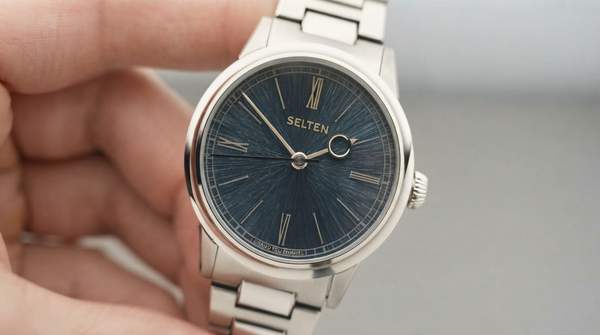
At Watches and Wonders Geneva 2026, Bulgari unveiled a 37mm Octo Finissimo Automatic, a significant downsize from its typically larger counterparts. This introduction marked a quiet revolution in luxury watch dimensions, emphasizing wearability and classic proportions, even for previously bold designs, according to monochrome-watches. The introduction of the 37mm Octo Finissimo Automatic underscores a broader industry shift towards refined aesthetics, where smaller case watches and vintage appeal are central themes in 2026.
The luxury watch market is experiencing unprecedented growth, yet leading brands paradoxically shrink the dimensions of their most iconic models. This tension suggests market expansion is driven by a deeper appreciation for design nuance, not an endless pursuit of physical size.
The industry appears to be collectively embracing a new era of understated elegance and ergonomic comfort, potentially redefining desirable luxury timepieces for the foreseeable future.
A Booming Market with Evolving Tastes
The global luxury watch market is set to nearly double, demonstrating robust health despite evolving design trends. Valued at USD 57.83 billion in 2025, it is projected to reach USD 119.48 billion by 2034, growing at an 8.47% Compound Annual Growth Rate (CAGR) from 2026 to 2034, according to Fortune Business Insights. Europe held the largest market share in 2025 at 41.77%, with mechanical watches dominating at 71.87%. The market's substantial expansion to USD 119.48 billion by 2034, coupled with the dominance of mechanical watches at 71.87%, confirms a thriving sector keen on craftsmanship and heritage. It suggests an environment where refinement takes precedence over sheer scale, proving consumers will invest in luxury timepieces regardless of case dimensions.
Brands Embrace Restrained Dimensions
Leading brands are actively reducing case sizes in new releases and reissues, providing concrete evidence of a widespread industry trend. Watches and Wonders Geneva 2026 showcased numerous new integrated bracelet watch models, often evolutions of existing designs, according to monochrome-watches.
| Brand | Model/Collection | Case Size Trend | Key Enhancement |
|---|---|---|---|
| Cartier | Santos de Cartier Chronograph | From XL to LM case | Improved comfort, smaller proportions |
| Chopard | Alpine Eagle 41 XPS | Slimmer profile | Reworked bracelet, enhanced ergonomics |
| Bulgari | Octo Finissimo Automatic | Introduced 37mm option | More versatile, maintains thinness |
Attribution: monochrome-watches
Examples from major watchmakers like Cartier, Chopard, and Bulgari confirm the trend towards smaller, more ergonomic designs is widespread and intentional. Cartier's updated Santos de Cartier Chronograph, moving from an XL to an LM case, and Chopard's Alpine Eagle 41 XPS with its slimmer profile, exemplify a collective industry pivot. Brands are consciously redesigning for enhanced comfort and improved wearability, driven by functional imperatives beyond mere aesthetics.
The Allure of Vintage Proportions
Collectors are rediscovering smaller case sizes, such as 36mm Oyster cases and 34mm dress watches, drawn by vintage proportions. The rediscovery of smaller case sizes by collectors reveals a growing appreciation for classic aesthetics and ergonomic comfort in luxury timepieces, according to Forbes. The enduring appeal of vintage designs, with their modest dimensions, influences current market preferences.
Cartier's successful 2017 relaunch of the Panthère watch, a key moment in redefining the brand's identity, proved the commercial viability of smaller, heritage-inspired designs, as reported by GQ. This convergence of collector nostalgia for classic sizes and strategic brand re-introductions fuels the resurgence of smaller watches, driven by a desire for timeless elegance rather than imposing wrist presence.
Winners and Losers in the New Era
The luxury watch industry's pivot towards smaller proportions is creating clear winners. Cartier has become the second-biggest watch manufacturer by revenue in Switzerland, according to GQ. Cartier's rise to become the second-biggest watch manufacturer by revenue in Switzerland stems from its recent focus on smaller proportions, exemplified by the Santos de Cartier Chronograph moving to an LM case and the successful relaunch of the Panthère.
Cartier's significant rise to prominence exemplifies the commercial success of this aesthetic shift. Brands prioritizing oversized, bulky designs risk missing a significant market segment. Consumers increasingly value heritage and wearability over sheer wrist presence, forcing competitors to re-evaluate their design philosophies or risk losing market share.
The luxury watch market appears poised for a sustained era where understated elegance and ergonomic comfort, rather than imposing size, will define desirability, likely solidifying the position of brands that champion classic proportions.