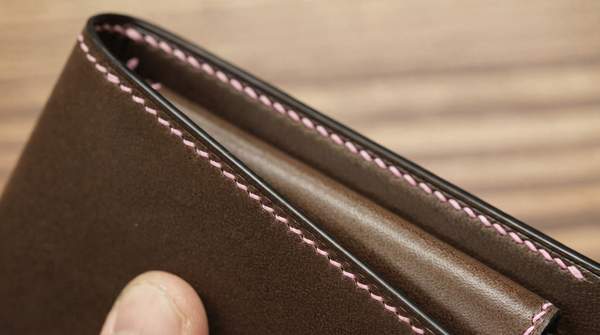
What separates a luxury leather bag from a mass-market one is not the logo but three concrete, observable features: full-grain leather that retains the hide's entire natural grain layer, hand-sewn saddle stitching in which two needles lock each stitch from opposite sides, and meticulously finished edges that have been beveled and burnished smooth. These techniques, described consistently by leatherworkers and craft-focused publications, are what create the durability, feel, and appearance that justify a premium price. Understanding them turns "artisanship" from marketing language into a checklist you can apply in a store.
Beyond 'Artisan': Defining Luxury Leather Craftsmanship
Luxury leather goods are frequently sold on vague appeals to heritage and handwork, but the makers themselves describe craftsmanship in specific, mechanical terms. Writing for the leather workshop Tanner Bates, Rick Burns-Howell defines it as a combination of technical skill and artistic sensibility: understanding the material, knowing its strengths and limitations, and using that knowledge to create a product that is both functional and aesthetically pleasing. He identifies the core elements as careful selection of leather, precision in cutting and stitching, and attention to finishing details.
Leathercraft Masterclass, a craft education publication, frames the same idea from the maker's bench, listing observable signs that distinguish fine leatherwork—among them hand stitching, dyed-through leather, lined interiors, and slim edges. Perfitalia, a bag retailer, similarly locates the essence of luxury in materials and construction rather than branding. The consensus across these sources is that quality is built in a sequence: material selection, cutting, assembly, edge finishing, and final details, each stage compounding the last.
Stage 1: The Foundation – Material Selection and Precision Cutting
Every quality leather good begins with the hide. Full-grain leather is widely described as the highest grade: because it retains the entire natural grain layer, it preserves the hide's most robust and resilient section. San Rocco Italia, writing on Italian leather traditions, notes that this material is prized for exceptional strength and a unique ability to develop a rich, distinctive patina over time, making each piece individual. Perfitalia ranks full-grain as the strongest and most authentic leather, with natural texture and patina.
Cutting is the second half of the foundation. The bootmaker TXTURE describes precision cutting as the basis of leather crafting: artisans use tools such as rotary cutters or head knives to make clean, deliberate cuts that ensure the symmetry and fit of each piece. A precise cut improves the final appearance and prevents waste—critical when working with premium leather—and respects the natural grain of the material. Poor cutting, by contrast, misaligns pattern pieces and squanders the hide's strongest fibers.
Stage 2: The Core – Hand-Stitching and Assembly
Once panels are cut, they must be joined, and this is where luxury construction diverges most sharply from mass production. The defining technique is the saddle stitch, which TXTURE explains involves two needles passing through the same hole from opposite sides, creating a strong, symmetrical bond that outlasts machine stitches. The mechanical advantage is decisive: because each stitch is individually locked, a broken thread compromises only that stitch rather than unraveling the seam.
This is the crucial difference from a machine lockstitch, where a single broken thread can allow the seam to progressively come undone. Leathercraft Masterclass notes that hand stitching carries heritage from saddle making and functions as a genuine selling point for high-priced goods—though the publication adds an honest caveat that it is often other leather crafters, rather than clients, who find the stitch itself impressive. The buyer's benefit is nonetheless functional: a seam that holds its strength over years of use.
Stage 3: The Refinement – Edge Finishing Techniques
Edge finishing is, in TXTURE's words, "one of the defining features that separates amateur leather goods from luxury craftsmanship." The process typically begins with beveling, which trims the sharp edges of the leather, followed by burnishing—rubbing the edges with tools or wax—to give them a smooth, glossy finish. Painted edges serve a similar protective and aesthetic role.
The contribution is both visual and structural. Burnished edges give a piece polish and elegance, but they also strengthen the leather, making it more resistant to wear and moisture. Leathercraft Masterclass points to slim, refined edges as a marker of finesse, contrasting them with bulky goods "designed with finesse" absent—wallets that look like club sandwiches belong to a more rugged niche. A well-finished edge is therefore a reliable signal that the maker invested time in the parts of the product most people overlook.
Stage 4: The Completion – Lining and Final Details
The interior is the final test of intent. Leathercraft Masterclass describes lining as more than decoration: it allows pockets, card holders, and pouches to be added without stitches showing on the outside of a bag, and it conceals any stiffening materials used in construction. Linings may be textile, such as linen, or leather, such as suede—and, as the publication puts it, placing a hand inside a soft lined bag is simply a more luxurious experience.
That experience costs something. Lining consumes more time, skill, and expense, which is precisely why it characterizes what Leathercraft Masterclass calls apex leather goods. An unlined or roughly finished interior does not necessarily mean a bad product, but it does indicate where the maker drew the line on labor. Combined with the earlier stages, the lining completes a construction sequence in which each decision—hide, cut, stitch, edge, interior—either reinforces or undermines the next.
The Four Stages of Luxury Leather Good Construction
The table below assembles the evidence into a single model of how a luxury leather item is built, stage by stage, so that abstract claims of craftsmanship can be traced to concrete, observable features.
| Stage | Key Technique(s) | Contribution to Quality | Observable Sign |
|---|---|---|---|
| Material selection & cutting | Full-grain leather selection; precise pattern cutting with rotary cutters or head knives | Retains the hide's strongest, most resilient fibers; ensures symmetry, fit, and minimal waste | Natural, unprocessed grain surface; aligned panels; leather that develops patina |
| Panel assembly & stitching | Hand-stitching, specifically the saddle stitch with two needles from opposite sides | Each stitch is individually locked, so a broken thread does not unravel the seam; stronger than machine stitching | Uniform, slightly angled hand stitches; seam integrity even if one thread is cut |
| Edge finishing | Beveling, then burnishing with tools or wax, or edge painting | Strengthens edges against wear and moisture; delivers a polished, elegant profile | Smooth, glossy, sealed edges with no fraying or bulky cross-section |
| Lining & final details | Interior lining in linen, suede, or similar; concealed internal construction | Hides stiffening materials and interior stitching; adds comfort and finishing labor | Soft lined interior; no exposed stitches or raw interior edges |
Identifying Quality: What to Look For
Each stage leaves a trace you can inspect. On the material, look for a natural, unblemished grain surface—full-grain leather is not sanded or corrected, and its willingness to develop a distinctive patina over time is part of its value. On the seam, examine the stitching: saddle stitches appear uniform and slightly angled, and because each stitch locks independently, cutting a single thread should not cause the seam to unravel the way a machine lockstitch can.
On the edges, run a finger along the profile. A beveled and burnished edge feels smooth and sealed, with a subtle gloss, while an unfinished edge is rough, absorbent, and prone to fraying. Leathercraft Masterclass adds two further checks: dyed-through leather, which will not look worn after years of use because the dye penetrates the entire hide, and slim edges, which indicate design finesse rather than bulk. None of these signs requires expertise—only the willingness to look closely before paying.
Assessing Value: Signs of Enduring Quality
When evaluating a luxury leather good, prioritize items made with full-grain leather, featuring hand-sewn saddle stitches, and meticulously finished edges, whether burnished or painted. These three features are repeatedly identified by makers and craft educators as the mechanical and material basis of durability, not merely its decoration.
The measurable indicator is concrete: look for a natural, unblemished leather surface that promises to develop a unique patina, uniform and slightly angled hand-stitches that do not unravel if a single thread is cut, and smooth, sealed edges that resist fraying. A bag or wallet that passes these three inspections has the construction attributes the evidence links to long-term strength and value; one that fails them is selling the language of craftsmanship without its substance.
Sources
- Luxury Leather Bags: Timeless Craftsmanship, Style & Durability — Perfitalia
- The Art of Leather: A Closer Look at Precision and Craftsmanship-Tanner Bates
- Fine Leathercraft. The 7 Signs Of Luxury — Leathercraft Masterclass
- History of Italian Leather Goods Explained: Origins to Icons — San Rocco Italia
- 5 Fundamental Leather Craftsmanship Techniques for Premium-Quality Creations — TXTURE Boots