Tom Kundig designs resilient homes against climate change threats.

In Malibu, California, a Tom Kundig-designed home survived a major wildfire largely intact, its steel and concrete construction defying the inferno that consumed surrounding properties.

SD
Sebastian Duval

May 26, 2026 · 4 min read

A Tom Kundig-designed steel and concrete home in Malibu, California, remains intact after a wildfire that destroyed neighboring properties.

In Malibu, California, a Tom Kundig-designed home survived a major wildfire largely intact, its steel and concrete construction defying the inferno that consumed surrounding properties. This robust design offered essential protection against escalating environmental threats, contrasting sharply with the destruction of neighboring structures.

Yet, the desire for beautiful homes integrated with nature now conflicts with increasingly hostile environments. This creates a fundamental tension for luxury living: how to achieve expansive views and seamless outdoor connection while ensuring robust fortification.

Based on the increasing frequency of climate disasters and the proven efficacy of resilient design, a shift towards 'tough love' architecture, prioritizing durability and adaptability, appears likely to become the new standard for high-value properties and at-risk regions. This challenges conventional notions of luxury, proving that raw, industrial aesthetics are not just practical but desirable.

The Rising Cost of Vulnerability

  • Rebuilding costs after US climate disasters now exceed $100 billion annually, according to Cotality. Concurrently, insurance companies withdraw coverage or raise premiums in high-risk areas like coastal Florida or wildfire-prone California, reports the Wall Street Journal. These escalating financial burdens and market withdrawals reveal that traditional building methods and unmitigated risk are no longer insurable or sustainable.
  • Building codes in many regions lag behind current climate realities, focusing on historical rather than projected risks, according to a FEMA Report. This regulatory gap leaves properties ill-prepared.

The current approach to home construction and regulation is proving financially and structurally unsustainable. Homeowners remain exposed to substantial losses, demanding updated building practices and policies.

Kundig's 'Tough Love' Approach to Design

Tom Kundig's designs often feature large, manually operable shutters or screens, quickly securing a home against storms or extreme heat, according to the Olson Kundig Portfolio. This active protection adapts structures to immediate threats. A study by the Insurance Institute for Business & Home Safety found that homes built to wildfire-resistant standards have a 70% higher chance of survival. Kundig's integration of active protective elements and fire-resistant materials directly translates to proven survival rates, demonstrating that thoughtful design is a primary defense against environmental threats.
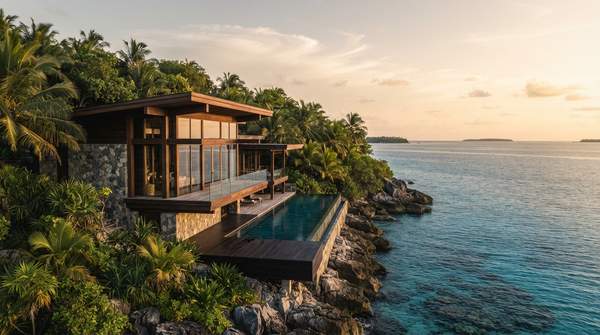
Kundig advocates for site-specific design, understanding local climate patterns, and using materials that age gracefully with minimal maintenance in harsh conditions, as detailed in 'Houses of the Pacific Northwest'. This philosophy ensures buildings are intrinsically suited to their environment, offering grounded permanence.

Truly resilient homes endure extreme weather events by integrating robust, site-specific, and adaptable features from the outset. This redefines 'high-performance' architecture beyond mere energy efficiency.

A Shifting Market and Policy Landscape

Demand for architects specializing in resilient design has increased by 40% in five years, according to an AIA Survey. Affluent clients recognize the long-term value in protective construction. Homeowners in disaster-prone areas will pay up to 15% more for certified climate-resilient features, reports the National Association of Realtors. This combined market data confirms that resilience has transitioned from a niche concern to a quantifiable luxury premium, driven by client demand for long-term security.

The concept of 'retreat and adapt' also gains traction, with communities considering managed relocation or significant retrofitting for climate resilience, according to the Environmental Policy Journal. Such policy shifts point to a broader societal move toward proactive climate adaptation.

Growing awareness and market demand are pushing architecture and real estate towards prioritizing climate resilience, even as policy frameworks struggle to keep pace. Endurance against catastrophe is becoming a key selling point.

Designing for an Uncertain Future

Kundig argues that good design integrates resilient features seamlessly, making them desirable, not just utilitarian, according to a Design Magazine Interview. Robust shutters or concrete walls become integral to a home's beauty. His firm also uses recycled or locally sourced materials, reducing construction's carbon footprint, according to the Green Building Council. Kundig's philosophy proves that environmental responsibility and robust design are not mutually exclusive; they enhance a home's aesthetic and value, making resilience an inherent virtue.

Retrofitting an existing home for basic climate resilience, such as installing hurricane straps or elevating utilities, costs $10,000 to $50,000, according to HomeAdvisor. These investments offer substantial long-term protection against increasingly frequent extreme weather events.

Investing in resilient design is becoming a necessary, attractive long-term strategy for homeowners and communities. Architects who cling to conventional luxury risk designing beautiful but unsustainable homes.

The market's growing appreciation for Kundig's rugged aesthetic signals a fundamental shift in homeowner priorities: a home's ability to endure environmental catastrophe is now as crucial a selling point as its view or square footage. As of 2026, 'tough love' materials like weathering steel and board-formed concrete appear poised to become the mainstream standard for high-end residential construction in climate-vulnerable regions, moving beyond niche products to essential components.