A Texas couple transformed their covered patio into a 'wellness hut' with a sauna and cold plunge for under $8,000, illustrating how the pursuit of longevity now reshapes homes from ultra-luxury estates to accessible DIY projects. The initiative, reported by Business Insider, reveals a potent consumer drive to integrate health-optimizing features directly into personal living spaces, reflecting a broader societal shift towards proactive well-being.
The desire for longevity-focused wellness amenities expands rapidly across all buyer segments. Yet, the most comprehensive and integrated solutions remain primarily accessible within the escalating luxury real estate market. A significant tension is created: widespread consumer aspiration confronts the economic realities of advanced wellness infrastructure. While grassroots efforts show ingenuity, the scale of integration in high-end properties remains distinct.
As health and home become increasingly intertwined, the market will likely see a continued surge in demand for wellness-integrated properties. Developers are pushed to innovate while also challenging the accessibility of these 'future-proofed' living spaces. The commodification of longevity now reshapes luxury real estate, transforming high-end homes into sophisticated personal health fortresses.
The Wellness Boom: Luxury Real Estate's New Frontier
- 33% — Mentions of 'wellness' in Zillow listings increased by 33% last year, according to Business Insider.
- 2.9% — Luxury home sales increased by 2.9% from January through October 2025, outpacing the traditional market's 1.7% growth, according to Forbes.
- 4.3% — Pending sales of luxury homes rose 4.3% year over year during the three months ending April 30, according to NAR.
- $1.2 million — The national entry point to the luxury market, defined as the top 10% of listings, has leveled, holding steady near $1.2 million, according to NAR.
These figures confirm a robust and expanding market for wellness-integrated properties. Luxury segments lead this charge, setting new benchmarks for home value. The 33% increase in 'wellness' terminology within Zillow listings, coupled with rising luxury sales — 2.9% for luxury homes versus 1.7% for the traditional market, and 4.3% for pending luxury sales — indicates these features are now significant market differentiators. A fundamental shift in consumer priorities is signified, where homes actively supporting health and well-being command a premium. The market's entry point, holding steady near $1.2 million for the top 10% of listings, suggests that while the elite push boundaries, the broader luxury sector is solidifying wellness as a standard expectation.
Beyond Square Footage: Defining the Longevity Home
| Characteristic | Luxury Homes / Buyer Priority | Comparison / Context |
|---|---|---|
| Average Square Footage | 4,250 sq ft | 2,364 sq ft for traditional single-family homes (according to Forbes) |
| Bedrooms (5 or more) | 63.7% of inquiries | Indicates demand for extensive personal space (according to Forbes) |
| Minimum Beds/Baths | 37.4% non-negotiable | Reflects specific functional requirements (according to Forbes) |
| Integrated Wellness Amenities | Cold plunges, saunas, cryotherapy chambers | Increasingly incorporated by health-obsessed homebuyers (according to Business Insider) |
Source: Forbes, Business Insider
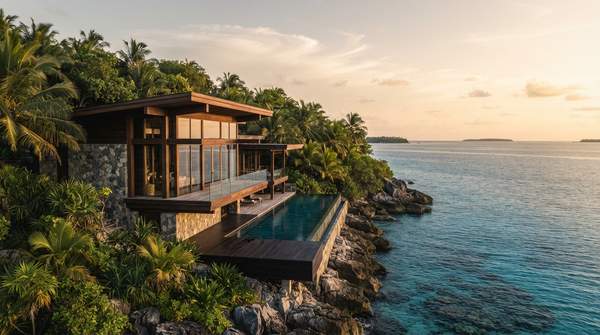
Luxury buyers seek not just expansive space, but highly specified, health-centric environments. They integrate advanced wellness amenities as essential features, marking a shift from optional extras to core home functionality. The demand for five or more bedrooms and non-negotiable bathroom counts suggests a desire for comprehensive personal zones, often including dedicated spaces for health optimization. The incorporation of amenities like cold plunges and saunas directly into residential design highlights an evolving definition of luxury. Here, a home functions as an active participant in health maintenance. This redefinition moves beyond traditional metrics of property value, establishing integrated well-being as a primary driver. The implication is clear: luxury is no longer merely about size, but about a home's active contribution to its occupants' vitality.
The Drivers: Aging in Place Meets Future-Proofed Living
Ultra-high-net-worth buyers increasingly seek homes supporting aging in place. Concurrently, younger buyers prefer pre-'future-proofed' residences, according to the New York Post. This convergence accelerates demand for homes designed for long-term well-being. The trend of wellness rooms with saunas and cold plunges reshapes homes, turning spare rooms and garages into spaces for tech-enabled optimization, as reported by Business Insider.
The threshold for the top 1% of listings climbed from $5.4 million in September 2025 to $5.6 million to start 2026, according to NAR. This elevation in value for the most exclusive properties directly correlates with the integration of advanced longevity amenities. The market bifurcates: the ultra-high-end rapidly escalates in value and features, while the broader luxury entry point (top 10%) remains stable. This suggests that truly integrated wellness solutions are becoming a hallmark of the absolute elite, further solidifying the link between advanced health infrastructure and premium valuation. However, the widespread 33% increase in 'wellness' mentions in Zillow listings, coupled with accessible DIY wellness projects, shows that the demand for longevity-focused homes is not a fleeting luxury trend but a fundamental shift in consumer priorities across all income brackets. Real estate developers must recognize that homes are evolving from mere shelters into essential health infrastructure, making integrated wellness a non-negotiable feature for future value and desirability.
What's Next for Longevity Living?
Luxury real estate companies that fail to integrate comprehensive, 'future-proofed' wellness ecosystems risk being outpaced. The consistent outperformance of luxury home sales — 2.9% growth versus 1.7% for the traditional market — and the rising threshold for top 1% listings (from $5.4 million to $5.6 million) confirm a clear market preference for properties that proactively address health and longevity. The financial performance shows that integrated wellness features are no longer optional amenities but essential components driving value and buyer interest. The widening gap between traditional and luxury market growth makes the urgency for innovation in this sector clear.
The widespread 33% increase in 'wellness' mentions in Zillow listings, alongside accessible DIY wellness projects like the Texas couple's $8,000 'wellness hut,' shows that the demand for longevity-focused homes extends beyond the ultra-wealthy. This fundamental shift in consumer priorities creates a massive, untapped market. It presents opportunities for builders and innovators across all price points to integrate more accessible wellness solutions. The market for health-supporting homes is far broader than just the elite, suggesting significant potential for growth in mid-tier and entry-level housing if cost-effective solutions can be developed.
If current trends persist, the luxury real estate sector will likely see continued innovation in integrated wellness, with properties that actively support longevity commanding a significant and growing premium by late 2026.