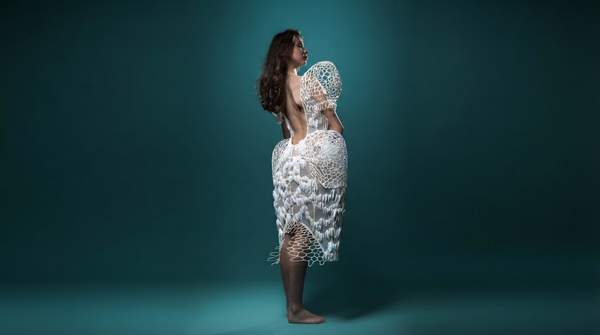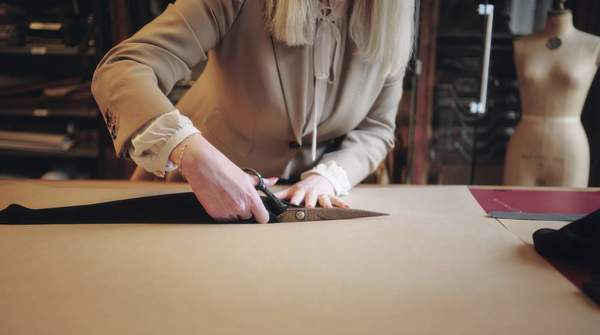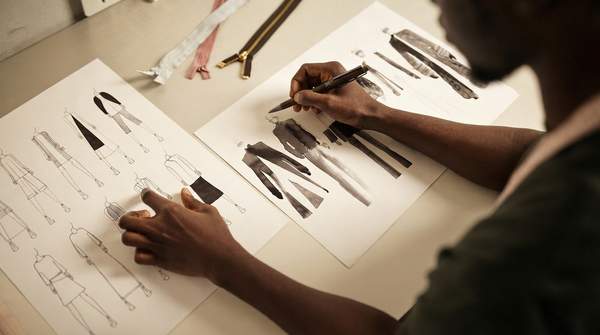
Haute couture garments begin as flat drawings, but they become wearable sculpture through two specialized patternmaking techniques used in sequence: draping, which shapes fabric directly on a three-dimensional dress form, and flat pattern making, which translates that sculpted form into precise two-dimensional paper pieces. Between them sits the toile—a muslin test garment that lets the patternmaker perfect fit and design before a single centimeter of precious fabric is cut. Understanding how these stages connect is the key to understanding couture's precision.
The Art of Haute Couture Patternmaking: From Sketch to Garment
A designer can draw a beautiful, avant-garde sketch, but as fashion journalist Marilyn Kirschner observes, it is the patternmaker who translates that 2D sketch into a 3D, wearable garment. Patternmaking, she writes, is "the architectural blueprint that dictates how fabric actually behaves, moves, and hangs on a human body," and patternmakers themselves are "the functional architects of fashion." Without them, fashion remains nothing more than a drawing on paper.
The craft rests on a deceptively simple premise. As the apparel manufacturing platform Sewport explains, pattern making is the art of translating a designer's basic idea into a real piece of apparel that fits the human body in a flattering way. The starting point is a flat drawing that establishes the basic outline and measurements—but at that stage, the 2D illustration cannot yet accommodate the curves and attributes of body shape. The entire patternmaking process exists to close that gap, and in couture it does so through an iterative, hands-on dialogue between form, fabric, and paper.
Draping: Sculpting the Design in Three Dimensions
Draping—sometimes called moulage—is the technique that first gives the sketch physical dimension. As Rocky Mountain College of Art + Design explains, draping requires the use of a three-dimensional form: material is shaped directly on that form, or sometimes on the client herself, with the designer making adjustments until the silhouette looks and feels just right. The fabric is quite literally sculpted into place, pinned, folded, and eased until the drawn line becomes a real volume.
RMCAD notes that this can be a painstaking process, but it allows for experimentation and can accommodate each client's unique contours to achieve a desired fit. That combination of freedom and fidelity is what makes draping especially valuable in couture work, where complex designs, frills, flounces, and intricate collars demand a three-dimensional understanding that a flat drawing alone cannot supply. The draper is not copying the sketch; she is discovering, in real fabric, how the design must actually be built.