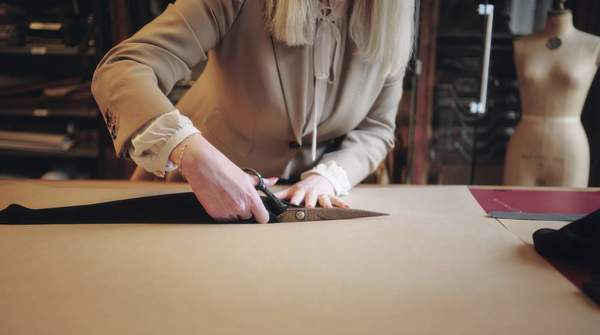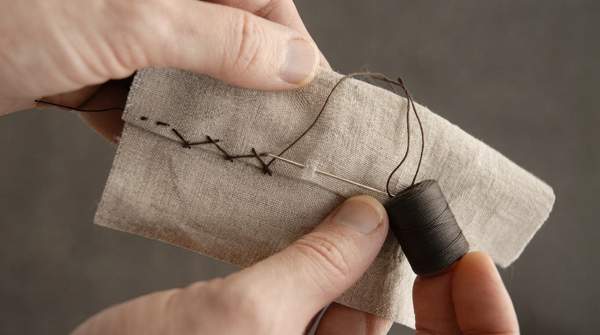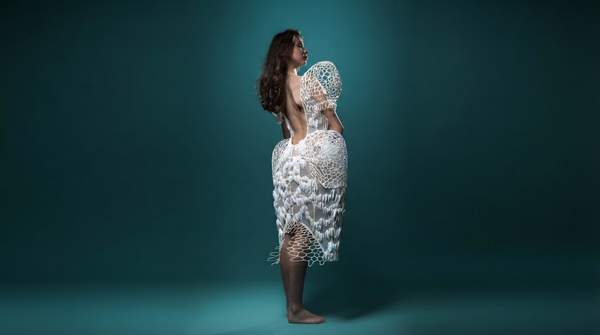
Haute couture’s revival is being shaped less by nostalgia than by machinery. Contemporary couturiers are pairing the hand skills of the atelier with 3D printing, laser cutting, robotics and unconventional materials such as latex, silicone and embedded LED lights — a fusion that fashion educators and industry observers describe as “digital craft.” The result, they argue, is not the replacement of the artisan but an expansion of what the artisan can achieve: forms that no seamstress, however skilled, could sew by hand.
The New Atelier: How Technology and Tradition Weave Together
To see this clearly, it helps to sort the innovation into three stages of the couture process. The framework below organizes where digital tools enter the workflow and what each entry point changes about the final garment. The fashion school IFA Paris, writing about bespoke “Haute Couture 2.0,” locates the shift primarily in fabrication; contemporary collections show materials carrying an equally large share of the change.
| Stage of the process | Technology involved | What it changes | Documented example |
|---|---|---|---|
| Digital design and modeling | Computer-aided design of bespoke garments | Allows sculptural forms to be planned before any fabric is cut | Underpins the “bespoke digital craft” described by IFA Paris |
| Advanced fabrication | 3D printing, laser cutting, robotics | Produces constructions beyond the limits of hand sewing | Iris van Herpen’s 3D-printed designs |
| Innovative materials | Latex, silicone, LED lights, liquid paint | Bridges fashion with technology, sculpture and illusion | Schiaparelli’s FW26 couture under Daniel Roseberry |
Read across the rows, the framework makes one point visible: technology is not a separate tool bolted onto couture but an integrated layer of it, entering at multiple points from sketch to runway. Each of the following sections takes one category in turn.
Advanced Fabrication: Precision Meets Artisanship
The most concrete shift is in how garments are physically built. IFA Paris, in its 2019 commentary on bespoke digital craft, frames the change bluntly: “3D printing, laser cutting, and robotics are making haute couture that no human seamstress, however skilled, could ever sew.” The school’s framing is careful not to dismiss the atelier — it credits the intricate work of les petites mains, the skilled hands of the Paris workshops, as “incredible” — but it observes that “the human hand has its limits.”
Digital fabrication is what moves past those limits. Three-dimensional printing allows a garment to be grown in structures — lattice-like, interlocking, organic — that a needle and thread cannot replicate. Laser cutting brings repeatable precision to patterns that would be prohibitively slow to execute by hand. Robotics extends precision into assembly. In each case, the technology does not abolish the artisan; it changes what the atelier can attempt. The couturier still decides the form, the drape and the effect — the machine simply makes previously impossible ideas executable.