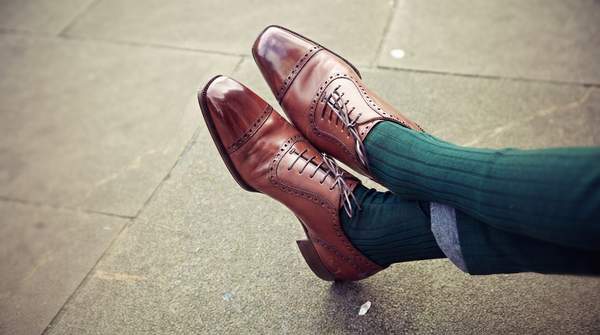
A pair of traditional bespoke shoes is not manufactured so much as grown, stage by stage, around a single client's foot. The process begins with precise measurements and the carving of a personal wooden last, passes through a trial fitting where the design can still be revised, and culminates in hand-welted construction that can be repaired for decades. Shoemakers describe the work in dozens of discrete steps—Italian Shoe Factory puts a single shoe at anywhere from 70 to 300 steps depending on complexity—nearly all of them performed by hand.
The Foundation: Initial Consultation and Last Creation
Every commission starts with a conversation and a set of measurements. At the London workshop of Canons, whose shoemaker Simon Bolzoni has documented the firm's process, the opening appointment with the last-maker typically lasts around one hour, whether held at the workshop or during international trunk shows. During this session the client also selects the shoe's shape, materials, and design, while the artisan records the foot's dimensions.
Those measurements become the raw material for the last: a three-dimensional model of the client's foot that serves as the foundation for the entire shoe. As Bondeno's Charles Kelso explains, the last is the form over which the shoe is built, dictating its final shape, size, and fit. Bespoke shoemakers will often carve a unique last for each client, according to the handmade footwear maker FEIT, and adjust the fit across multiple fittings thereafter. The last is not used once and discarded: it is placed inside the shoe during construction so the shoe can be modelled around it, and consulted again near completion to confirm the finished fit matches the original design.
The Iterative Process: Trial Shoes and Refinement
What separates bespoke work from simpler custom orders is the intermediate fitting. Before final production begins, the client is invited to try on a trial shoe so both parties can see how the design looks and fits on the foot. Italian Shoe Factory describes this as a genuine revision point: the client can request changes to the heel height or the shape at the toe, and the master last-maker takes final measurements while the shoe is being worn.
The scrutiny at this stage is deliberately microscopic. The artisan makes incisions in the trial shoe to check for even the slightest pressure on the foot, because comfort is the governing criterion. This process allows adjustments—however tiny—to be made to the client's last before the real shoes are cut. In effect, the trial fitting converts the last from an educated interpretation of the measurements into a verified, corrected model of how the foot actually sits inside the shoe.
Crafting the Upper: From Pattern to Stitch
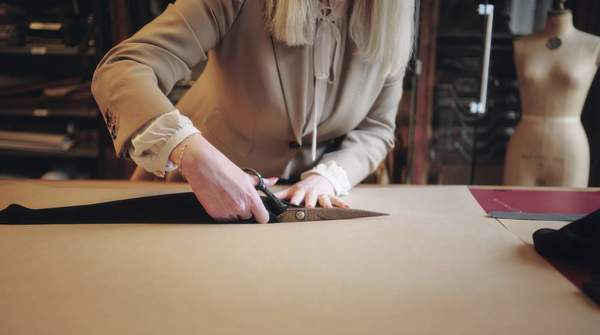
Only once the last is perfected does work begin on the visible part of the shoe. The designer or cutter, working from the measurements and the finished last, first drafts a paper pattern for the chosen style. As Italian Shoe Factory notes, the pattern breaks down into distinct pieces with traditional names: the vamp, cap, tongue, and quarters. These pieces are then cut from the selected leather—a stage known as clicking—and stitched together into the upper.
The upper is where material quality becomes tangible. Bondeno describes the upper as crafted from the finest materials and meticulously stitched together before it ever meets the last. At this point the shoe exists only as a soft, flat assembly of leather panels; it has none of its eventual three-dimensional character. That transformation happens in the next stage, when the upper is stretched over the last and the shoe acquires its form.
The Core Construction: Lasting and Welting
Construction proper begins with the leather insoles, prepared by the shoemaker around the client's lasts. The completed uppers are then shaped and secured over the lasts in the process known as lasting—giving the shoe, in Kelso's phrase, its final form. This is the moment the flat upper becomes a shoe, conforming to the three-dimensional contours recorded in the last.
The structural signature of traditional bespoke work is hand-welting. A leather welt is stitched by hand to the upper and insole using waxed flax thread, forming the foundation to which the outer sole is then attached. The outer soles are fixed to this welt, and the heels are built and shaped by hand with attention to the proportions and intended character of the design. Canons emphasizes the practical payoff: hand-welted construction is durable and repairable, allowing the shoes to be maintained and rebuilt throughout their working life. FEIT adds context on time: in a small workshop, a single pair may take days or weeks to complete because nearly every step is done manually.
The Bespoke Shoemaking Journey: A Detailed Timeline
The stages described across these makers reconcile into a single chronological workflow. Following it from top to bottom shows how each step depends on the one before it—and why the process cannot be shortcut without sacrificing fit.
| Stage | What Happens | Key Purpose |
|---|---|---|
| 1. Consultation & Measurement | An appointment with the last-maker, typically around one hour, records foot measurements; the client selects shape, materials, and design. | The single most important input for the custom shoes. |
| 2. Making the Last | A unique wooden last—a three-dimensional model of the client's foot—is carved. | Foundation of the shoe's shape, size, and fit. |
| 3. Trial Shoes & Fitting | An intermediate trial shoe is fitted; heel height and toe shape can be revised, and the last-maker takes final measurements and checks for pressure points via incisions. | Verifies and corrects the last before production. |
| 4. Pattern Cutting & Clicking | A paper pattern (vamp, cap, tongue, quarters) is drafted and the pieces cut from the chosen leather. | Translates the design onto material. |
| 5. Closing the Uppers | The cut leather pieces are meticulously stitched together. | Creates the shoe's visible exterior. |
| 6. Insoles & Lasting | Leather insoles are prepared; the uppers are shaped and secured over the lasts. | Gives the shoe its three-dimensional form. |
| 7. Welting & Sole Sewing | A leather welt is hand-stitched to upper and insole with waxed flax thread; the outer sole is attached to the welt. | Durable, repairable construction. |
| 8. Heels & Finishing | Heels are built and shaped by hand; the last is consulted again to confirm the final fit matches the design. | Completes proportions, character, and fit verification. |
Read sequentially, the timeline shows the interdependence that defines the craft: the measurements feed the last, the last feeds the pattern, the trial fitting corrects the last, and only then is leather committed to construction. Techniques vary between individual artisans, but the sequence—and the logic behind it—holds across traditional workshops.
Appreciating the Craft: The Enduring Value of Bespoke Footwear
Recognize that bespoke shoemaking is a highly skilled, multi-stage craft that prioritizes individual fit and artisanal quality over mass production. The finished bespoke shoe, perfectly conforming to the wearer's foot and exhibiting superior craftsmanship, serves as a tangible signal of the successful execution of this intricate process. For the client, the measurable proof lies in the fitting itself: a shoe that sits on the foot without pressure points, and a hand-welted sole that can be rebuilt rather than replaced when it eventually wears.
Sources
- Shoemaking Process: How Shoes Are Made — Italian Shoe Factory
- How We Make Our Bespoke Shoes — Canons
- The Art of Lasting in Bespoke Shoemaking: A Detailed Exploration — Bondeno
- Shoe-Making Process: From Raw to Finished Shoe — FEIT