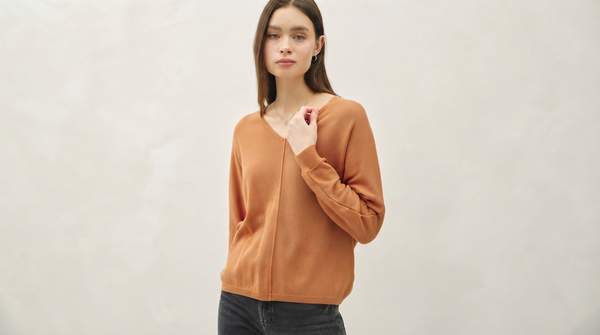
The most reliable sign of a well-made sweater is not the price tag but the way it was shaped and joined. Two construction methods dominate knitwear: fully-fashioned knitting, in which each panel is knitted directly into its final shape and linked together, and cut-and-sew production, in which panels are cut from larger fabric and sewn. As one style commentator put it, in an era of "premium-washing," where brands often charge luxury prices for mediocre materials, understanding the technical nuances of knitwear is essential. The good news for shoppers is that the difference is visible: diagonal fashioning marks and flat, linked seams are the marks of the superior technique.
Fully-Fashioned vs. Cut-and-Sew: The Foundation of Quality
The method used to construct a knit garment is a defining factor in its quality, fit and finish, as luxury knitwear specialist SELVANE explains. Fully-fashioned garments are knitted directly into the right shape—front, back and sleeves—stitch by stitch, rather than cut from a larger piece of knitted fabric. Cut-and-sew production works more like woven garment manufacturing: large fabric panels are knitted first, then garment pieces are cut out and stitched together.
The consequences reach beyond the production floor. Because cut edges are prone to unraveling if not properly finished, and because cut-and-sew seams tend to be bulkier and less flexible, the method affects both comfort and durability. SELVANE's assessment is blunt: while cut-and-sew is a viable construction method, it does not offer the same level of precision, fit, or refinement as the fully-fashioned technique. Fully-fashioned garments, by contrast, achieve a more flexible and natural fit, and because no excess fabric is cut away, there is significantly less material waste—a point the menswear retailer Care of Carl frames as a sign of conscious production.
| Attribute | Fully-Fashioned | Cut-and-Sew |
|---|---|---|
| Construction process | Each garment piece is shaped directly on the knitting machine, stitch by stitch. | Large fabric panels are knitted, then garment pieces are cut from those panels, similar to woven garment production. |
| Fit & flexibility | Garment achieves a more flexible, natural fit. | Less precise fit; seams may lack the natural flexibility of the surrounding knit. |
| Seams & durability | Pieces are joined by linking, producing flat, integrated seams that blend into the knit structure. | Pieces are typically joined by standard sewing, producing bulkier, less flexible seams; cut edges can unravel if not properly finished. |
| Material waste | Minimal yarn waste, since pieces are knitted to shape rather than cut from panels. | The cutting process can lead to significant fabric waste. |
| Visual hallmarks | Characteristic diagonal stitch lines—fashioning marks—along armholes and necklines. | No fashioning marks; look instead for sewn seam lines. |
Read across these rows, the comparison explains why fully-fashioned construction is treated as a hallmark of higher craftsmanship: the garment is shaped by the stitches themselves rather than by a blade, and every subsequent attribute—fit, seam behavior, waste—follows from that choice.