Custom tailoring is not one service but three distinct categories, and the difference between them is not price or prestige alone—it is philosophy. Traditional bespoke creates a unique pattern from scratch for one individual's frame. A newer generation of bespoke houses treats the process as collaborative design. Online made-to-measure adjusts existing patterns to your measurements through digital menus. Understanding which category matches your priorities for fit, personalization, and experience is the single most important decision before choosing a tailor or brand.
Understanding Custom Tailoring: Beyond Off-the-Rack
The category guide maintained by RemoteSuit, an operator within the online custom suit space, draws the boundary lines plainly: an online custom suit is made-to-measure—"not bespoke, not off-the-rack"—and the market splits cleanly in three. Off-the-rack garments are sold in standardized sizes, sometimes with small alterations afterward.
The contrast matters because the categories deliver fundamentally different things. A Worth profile of Savile Row practice notes that a bespoke suit is crafted only for one individual's frame, making it one-of-a-kind, while ready-to-wear pieces—whether bought online or in a store—will likely not fit as immaculately as their bespoke counterparts. Trevor Furbay, a bespoke tailor of over two decades, frames the traditional craft as a benchmark: knowing what an exceptional custom clothing experience looks like helps you judge the online alternatives fairly, even though a digital questionnaire cannot capture a genuinely personal approach.
Traditional Bespoke: The Art of a Unique Fit
True bespoke is more than measurement; it is interpretation. A survey of the world's top bespoke houses describes the tailor reading posture, gesture, and personality, shaping the garment to embody the wearer's character through fabric and form. This is the purest form of bespoke tailoring, and its roots trace back to London's Savile Row, where master houses established the gold standard of structure, discretion, and craftsmanship.
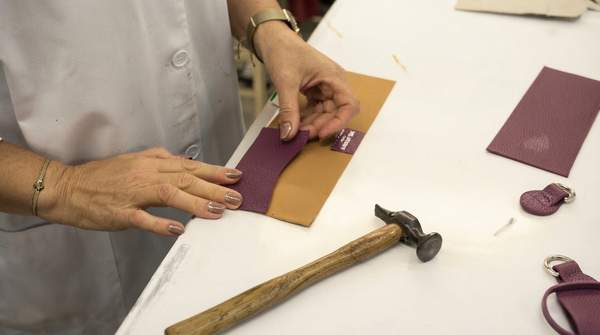
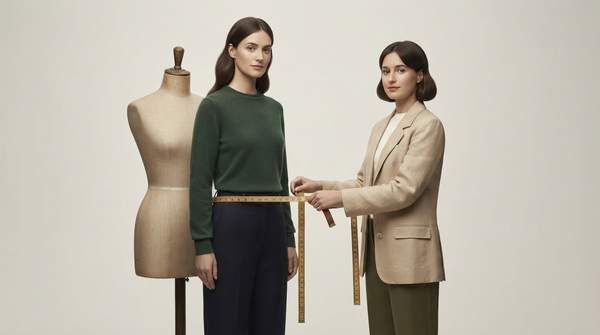
The process is managed by hand, with different craftspeople handling each part from start to finish. As the Worth guide describes it, you have your measurements taken, your own pattern drafted, and fittings to ultimately reach the suit of your specifications. A truly bespoke process begins with dozens of precise measurements to ensure the garment is crafted to your unique body shape. The ideal client here values artisanal handwork and the ultimate ability to craft something individually that no one else will have—what the Savile Row tradition calls the ultimate form of luxury.
Modern Bespoke: Collaborative Craftsmanship
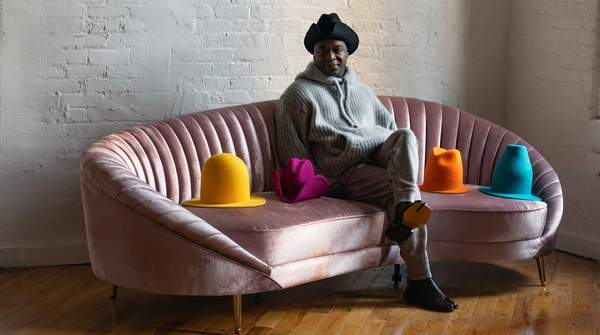
A newer crop of bespoke brands is doing tailoring differently, and Vogue's Christian Allaire profiled one of them, ESQUE/BY, whose approach reframes the craft entirely. In the house's own words, "we see it as a collaborative design process where clothing is designed around the individual—not the other way around." This represents an evolution from the most formal Savile Row style.
What distinguishes this model is problem-solving. ESQUE/BY describes the projects that stay with it most as defined not by a silhouette but by the problems they solve—including a client who came to the house after a life-changing surgery, when traditional garment closures no longer worked comfortably for her body. The focus is on creating a garment that meets the client's specific needs and style, and the experience aims to make custom clothing less intimidating: the client is actively involved in design rather than merely measured and fitted. Beyond tailoring itself, ESQUE/BY even offers classes in patternmaking, draping, and sewing, extending the collaborative relationship into education.
Online Made-to-Measure: Convenience Meets Customization
Online services occupy a different tier entirely. They adjust pre-existing patterns to your individual measurements rather than drafting a unique pattern, which contrasts with the pattern creation at the heart of bespoke. The RemoteSuit guide notes that within its category, measurements are tailor-reviewed, turnaround runs roughly two to three weeks, and brands ship to forty or more countries—an operational profile built for accessibility rather than ceremony.
The appeal is convenience without abandoning the language of classic tailoring. Hangrr's brand comparison, written by a contributor to that custom suit retailer's resources, describes Black Lapel as a strong option for buyers who want the convenience of ordering custom online while still liking the look of classic menswear—without going through a showroom-heavy process. Trevor Furbay's own review acknowledges that online suit companies offer undeniable convenience, even as they cannot replicate the nuance of a true bespoke tailor. The customization is within predefined options rather than a fully unique pattern.
Key Elements of Customization in Tailoring
Whatever the category, customization follows a hierarchy from foundational to fine. It begins with fabric and lining, then moves to the decisions that shape the silhouette: a classic notch lapel or a more formal peak lapel, a single-breasted jacket or a commanding double-breasted one. From there, button placement and pocket design refine the garment's character.
These choices are common to custom services, but their meaning differs by category. In online made-to-measure, they are selected from menus—fabric, lapel style, lining, button color, and pockets—within a standardized framework. In traditional bespoke, because a unique pattern is drafted for your body, the same choices sit atop a foundation of dozens of precise measurements and hand management through multiple fittings. Exceptional fabrics, from Italian wool and English flannel to silk or linen, are described by the bespoke survey as the foundation of the craft itself.
Decision Framework: Choosing Your Custom Tailoring Service
The table below categorizes the three services by their process and philosophy, mapping each to the reader needs it serves best—interpretive fit versus algorithmic adjustment, collaborative design versus self-service customization.
| Service Category | Philosophy of Fit | Customization Level | Client Experience |
|---|---|---|---|
| Traditional Bespoke | Creates a unique pattern from scratch for each client, based on dozens of precise measurements and interpretation of posture and character—the purest form of bespoke. | Complete control over every aspect, from fabric to minute details, because the pattern is drafted individually. | Formal and immersive: measurements, pattern drafting, and multiple fittings, managed by hand by different craftspeople. |
| Modern Bespoke | An evolution of the Savile Row style, combining artistry with a collaborative, problem-solving approach. | Extensive customization through collaborative design, with the tailor acting as a problem-solver for the client's specific needs. | Less formal and more participatory—the client is actively involved in design, making custom clothing less intimidating. |
| Online Made-to-Measure | Adjusts pre-existing patterns to individual measurements, contrasting with bespoke's unique pattern creation. | Customization of fabric, lapel, lining, buttons, and pockets—but within predefined options rather than a fully unique pattern. | Self-service and convenient: online menus, tailor-reviewed measurements, and roughly two-to-three-week turnaround. |
Read the table against your own priorities. If you want a garment interpreted for your body and character and value hand-managed craft, the first row is your category. If your priority is a design partnership—perhaps because standard garments do not work for your body or life—the second row fits. If speed, accessibility, and choosing from defined options matter most, the third row is the honest match.
Making Your Choice: Aligning Needs with Tailoring Philosophy
To choose the right custom tailoring service, evaluate whether your priority is a unique, body-interpreting fit (traditional bespoke), a collaborative design experience (modern bespoke), or convenient, accessible customization (online made-to-measure). This article explains the categories rather than ranking brands or comparing prices, and it focuses on men's suiting, though the principles may apply more broadly.
The measurable indicator of success is simple: the reader can confidently articulate the core differences between bespoke, modern bespoke, and online made-to-measure, and identify which service type best suits their personal requirements for their next custom garment. Before committing to any house or platform, ask one decisive question—who drafts the pattern, and from what—because that single answer places the service in its true category.
Sources
- Online Custom Suits — Compared, Explained, Made to Measure — Remotesuit
- A Tailor's Guide to Suits and the Future of the Bespoke Industry — Worth
- The 7 Best Online Custom Suits (Ranked by Price) — Trevor Furbay Bespoke
- These Four Bespoke Brands Are Doing Tailoring Differently — Vogue
- Best Custom Suits in the USA: Top 10 Brands Compared (2026) — HANGRR
- Top Bespoke Tailoring Brands In The World — Rosie Hong