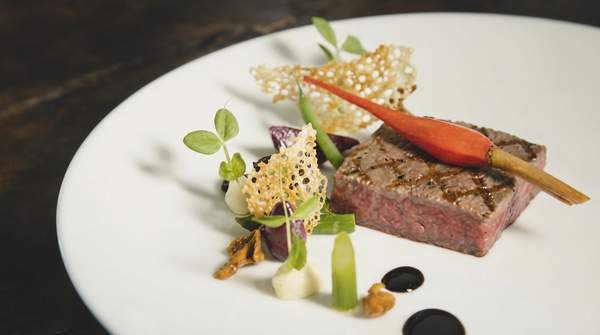
Every restaurant in the Michelin Guide—from a street food stall to a temple of fine dining—is judged against the same five criteria: quality of ingredients, mastery of cooking techniques, harmony of flavors, the chef's personality expressed in the cuisine, and consistency across the menu and over time. What separates a Michelin Star from a Bib Gourmand or a "Michelin Selected" listing is not a different yardstick, but how fully a kitchen meets that yardstick—and, in the Bib Gourmand's case, how it pairs quality with price. Understanding this single framework lets a diner decode what each distinction actually promises on the plate.
The Five Universal Criteria of Michelin Evaluation
Michelin describes its star award simply: the Guide gives stars to restaurants offering outstanding cooking, and outstanding cooking is defined by five universal criteria. In its own words, these are "ingredient quality, harmony of flavors, the mastery of culinary techniques, how the chef's personality shines through their cuisine and, crucially, consistency across the entire menu and over time."
Gwendal Poullennec, international director of the Michelin Guide, spelled out the same five-point test in an interview with Appetito: quality products; harmony of flavors; mastery of cooking techniques; the voice and personality of the chef as reflected in the cuisine; and consistency between each visit and through the menu as a whole. Because starred restaurants are inspected several times a year by different inspectors, consistency is not a one-off triumph but a sustained standard.
The crucial point is that these criteria are universal. They apply to every cuisine, every price point, and every style of establishment the Guide covers worldwide. A noodle shop and a tasting-menu restaurant are measured with the same five questions, which is why format alone can never guarantee—or preclude—recognition.