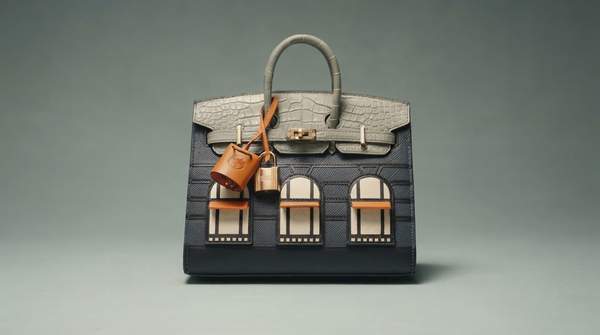
For collectors navigating the exclusive world of Hermès Birkin bags, understanding the factors that drive their secondary market value is crucial for making informed buying and selling decisions. While the primary market for Birkins is characterized by extreme scarcity and limited access, the secondary market offers a dynamic environment where specific attributes significantly influence a bag's price. Key characteristics such as leather type, size, color, condition, rarity, and production period collectively determine a Birkin's market appeal and its potential to command premium prices, often reflected in record-breaking auction sales.
Understanding the Hermès Birkin Secondary Market
The Hermès Birkin bag stands as one of the most valuable luxury accessories globally, with Sotheby's reporting nearly $100 million in Birkin sales since 2021, underscoring immense collector demand. The brand's strict control over production and distribution means only a limited number of Birkins are allocated to boutiques annually, making direct purchases challenging and often requiring a prior purchase history with Hermès. This artificial scarcity, as noted by Rebag, fuels a robust secondary market where buyers seek specific styles and colors that are rarely available directly from the brand.
In this secondary market, a Birkin's resale value is determined by a combination of factors including its condition, size, leather type, color, hardware, and overall rarity, according to Sotheby's. Unlike the opaque primary market, the secondary market offers price transparency, allowing collectors to evaluate bags based on these attributes, along with provenance and market demand, which helps establish confidence and value, as explained by Madison Avenue Couture.
Primary Characteristics Driving Value: Leather, Size, and Color
Several fundamental characteristics play a significant role in determining a Birkin bag's secondary market value:
-
Leather Type: The material of a Birkin is a primary value driver. While classic leathers like Togo, Clemence, and Epsom are popular, exotic leathers such as crocodile and alligator, especially those with diamond hardware, command substantial premiums. Rebag highlights that exotic materials are key contributors to the highest market values. Sotheby's also notes that the specific leather can influence how a color is perceived and valued.
-
Size: Certain sizes are more sought after in the secondary market. Sotheby's indicates that smaller sizes, particularly the Birkin 25 and 30, tend to sell faster and achieve higher prices. For context, in 2026, U.S. retail prices for a Birkin 25 are approximately $13,500, a Birkin 30 is $14,900, and a Birkin 35 is $16,300, though secondary market prices can differ considerably.
-
Color: Classic neutral colors like Black, Gold, and Étoupe consistently attract strong demand. However, lighter neutrals, pastels, and highly sought-after seasonal shades can also achieve strong prices. Sotheby's emphasizes that color alone does not dictate value; its desirability often increases when paired with a specific leather, size, or hardware. For instance, a rare seasonal color in a desirable leather can fetch a premium.
Condition, Rarity, and Special Editions: The Premium Factors
Beyond the basic attributes, a Birkin's condition, rarity, and whether it belongs to a special edition significantly impact its market value:
-
Condition: The physical state of a Birkin bag is paramount. "Store-fresh" or pristine examples consistently command the highest prices in the secondary market, as noted by Sotheby's. Buyers in the secondary market prioritize condition, alongside provenance, rarity, and desirability, when evaluating a bag's value, according to Madison Avenue Couture.
-
Rarity and Special Editions: Limited edition and special order Birkins are highly coveted. These bags often feature unique color combinations, materials, or designs that set them apart from standard production models. Their scarcity drives substantial premiums, as collectors are willing to pay more for items that are difficult to obtain. Sotheby's highlights that specific editions and production periods are key considerations for collectors, with the strongest examples fetching significant premiums.
-
Production Period: Certain bags from specific production periods can become exceptionally rare and valuable. For example, Rebag points to the Metallic Bronze Chevre leather Birkin bags, exclusive to the mid-2000s with very limited production, as a prime example of a highly collectible item that has seen its resale value increase significantly over time.
Record-Breaking Sales: Illustrating Extreme Value
The apex of the Birkin market is often defined by record-breaking auction sales, which highlight the extreme value driven by rarity and unique features. Rebag reports that the current record holder for the most expensive public sale of an exotic Birkin is a 30cm White Himalayan Birkin with Diamond hardware, which fetched the Hong Kong dollar equivalent of $366,250 at a Christie's auction in 2017. This sale surpassed a previous record set by Christie's a year prior for a similar bag at approximately $300,168.
The Himalayan Birkin, particularly with diamond hardware, represents the pinnacle of the market due to its exceptional rarity and desirability. Another notable example of a highly exclusive and collectible Birkin is the Metallic Bronze Chevre leather Birkin bag, which sold at Christie's in 2017 for €100,000, or approximately USD $120,000 at the time. These examples underscore how the combination of exotic materials, diamond embellishments, and extreme scarcity can drive prices far beyond standard retail values.
The Crucial Role of Authentication and Market Transparency
In the secondary market for luxury items like Hermès Birkin bags, authentication and market transparency are indispensable for establishing collector confidence and ensuring value.
-
Authentication: When purchasing a Birkin directly from Hermès, authenticity is inherent. However, in the secondary market, this confidence must be established through rigorous authentication processes, expertise, and careful evaluation, as explained by Madison Avenue Couture. Resellers play a vital role by implementing stringent authentication standards, which are crucial for mitigating risks and providing assurance to buyers.
-
Market Transparency: The modern resale market is characterized by price transparency, a stark contrast to the primary market where inventory and availability are often unknown. This transparency allows buyers to assess specific bags based on their condition, provenance, rarity, and current market demand. Madison Avenue Couture notes that this clarity helps collectors understand not only the cost of a bag but also the underlying factors that drive its value, enabling them to discern why two seemingly similar Birkins might command vastly different prices.
Making Informed Decisions: A Collector's Guide
For collectors, navigating the Hermès Birkin secondary market effectively means understanding the interplay of its key value drivers. The ability to evaluate a bag based on its leather type, size, color, condition, rarity, and specific edition empowers collectors to make more informed decisions. While the primary market offers limited choice, the secondary market provides agency, allowing buyers to actively seek out the exact specifications—be it a classic Black Togo Birkin, a rare seasonal color, or a vintage collector's piece—that align with their preferences, as highlighted by Madison Avenue Couture. By prioritizing rigorous authentication and leveraging market transparency, collectors can confidently acquire Birkin bags that not only meet their aesthetic desires but also represent sound investments within the luxury resale landscape.
Sources
- Complete Guide to Buying and Selling a Birkin — Sothebys.com
- Is The Birkin Worth The Investment? | The Vault — REBAG
- The Complete Guide to Buying a Hermès Birkin Bag (Retail vs. Resale) — Madison Avenue Couture
- Everything You Need to Know About the Hermès Birkin — Sothebys.com
- Latest stories | Christie’s — Christies