An art quilt earns investment-grade status through verifiable attributes, not sentiment. According to guidance from Studio Art Quilt Associates, a leading organization in the field, and gallery-owner Pamela Loewen of Loewen Studio & Gallery, collectors can assess a contemporary art quilt's long-term collectible potential by weighing four value drivers: the artist's provenance and reputation, the quality of workmanship and materials, the exhibition and publication record, and the conceptual strength of the work itself. This article assembles those drivers into a structured decision framework a collector can apply before purchase.
Two boundaries frame the exercise. The framework applies to contemporary art quilts, not antique or traditional functional quilts, and it offers no formula for calculating a specific monetary value, nor any guarantee of returns. What it provides is a repeatable method for distinguishing a decorative piece from one whose characteristics support durable collectible value.
Artist Provenance: The Foundation of Value
Provenance begins with the artist's professional standing. Loewen, who writes from a gallery perspective on quilting's emergence as contemporary fine art, identifies the originality of the composition and the artist's technical skill as primary considerations for collectors. Originality matters because an artist with a distinctive, recognizable vision produces work that curators can champion and the market can remember; derivative work, however competently made, rarely accumulates standing over time.
Practical research follows from this. A collector evaluating a specific quilt should ask whether the artist shows a coherent body of work rather than isolated pieces, whether the composition is genuinely the artist's own, and whether the maker's name appears in juried or curated contexts. These are the verifiable signals that separate an emerging artist with a developing record from a hobbyist whose output will likely remain outside the collecting infrastructure entirely.
Workmanship and Materials: Indicators of Quality
Loewen's collector guidance places the quality and condition of the materials among the core evaluation criteria, alongside the artist's technical skill. For a textile work, material quality is not a cosmetic detail: fabric, thread, and any surface treatments determine how the piece ages, and a collector is buying decades of physical survival, not just a present appearance.
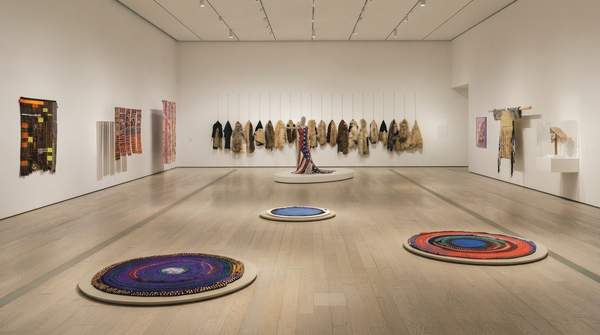
Assessment should be close and physical. Examine stitching density and evenness, the precision of piecing or appliqué, and whether the construction shows complexity of execution or shortcuts. Condition is equally consequential—look for fading, staining, structural stress, or unstable dyes. Loewen also notes that contemporary art quilts are intended to be displayed and cared for like other artworks: many include an integrated hanging sleeve or display system, and they should be protected from excessive sunlight, moisture, dirt, and unstable environmental conditions. A quilt without sound construction and a plausible care regime is a poor candidate for long-term value regardless of its visual appeal.