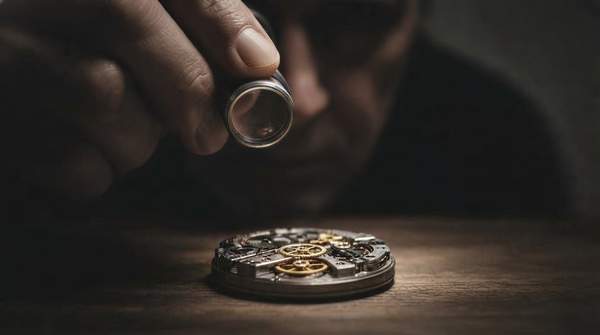
For discerning collectors, understanding how to research and verify the provenance of rare art and antiques is the critical line between a masterpiece and a misstep. The documented history of an object—its chain of ownership from creation to the present day—is the ultimate guarantor of authenticity, legality, and value. As the art market becomes increasingly global and scrutinized, this process has grown more complex. The recent implementation of new regulations, such as EU Regulation 2019/880, which took effect on June 28 to combat the trafficking of cultural goods, underscores the critical importance of meticulous provenance research for any serious acquisition.
What is art provenance and why is it crucial?
Art provenance is the chronological record of ownership for a piece of fine art or an antique. This history is the cornerstone of an object's legitimacy, serving as its biography and providing irrefutable evidence of its authenticity and journey through time. A complete and unbroken provenance can significantly enhance an item's market value, as it assures potential buyers of its genuine nature and legal standing. It separates a veritable masterwork from a clever forgery and a legally held artifact from one with a tainted, illicit past. For the collector, it is not merely a matter of academic interest but a fundamental component of due diligence that protects investment and ensures the ethical stewardship of cultural heritage.
The importance of provenance extends beyond simple authentication. It provides invaluable historical context, linking an object to specific collectors, exhibitions, and historical periods, thereby enriching its narrative and cultural significance. Furthermore, in an era of heightened regulatory oversight, robust provenance is a legal necessity. It demonstrates clear title and compliance with national and international laws governing the trade of cultural property, such as CITES regulations for items containing protected materials and new import laws designed to prevent the circulation of looted antiquities. Without this documented history, an otherwise priceless object can become unsellable, its value compromised by doubt and legal risk.
How to Research and Verify Provenance: Step by Step
The process of authenticating an object's history is a multidisciplinary endeavor, blending traditional connoisseurship with forensic science and legal scholarship. It demands patience, precision, and access to specialized resources. The following steps provide a comprehensive framework for conducting thorough provenance research.
- Step 1: Conduct a Thorough Physical ExaminationThe investigation begins with the object itself. A meticulous physical inspection can reveal critical clues about its history. Document every detail, including signatures, monograms, inscriptions, and dates. Examine the reverse of a painting or the underside of a piece of furniture for collectors’ marks, gallery labels, auction stickers, or inventory numbers. These seemingly minor details are the initial threads that can be pulled to unravel an object's past. High-resolution photography of these markings is essential for subsequent research and comparison with archival records. The condition of the object, its materials, and its construction techniques also provide foundational data for experts to analyze.
- Step 2: Engage in Comprehensive Archival ResearchWith initial clues in hand, the next phase moves to the archives. This involves consulting a wide range of primary and secondary sources to find mentions of the object. Key resources include catalogues raisonnés, which are the definitive, scholarly compilations of an artist's entire body of work. Auction catalogs, exhibition records, and gallery archives can trace an object's public life. For American art, the Smithsonian's Archives of American Art is an indispensable resource. According to New York University's research guides, its holdings contain more than 20 million items, including letters, diaries, and financial records that can place an artwork in a specific time and context. These archives provide the documentary evidence needed to build a chronological chain of ownership.
- Step 3: Employ Objective Scientific AnalysisWhere traditional research presents ambiguity, scientific analysis offers objective, factual data. This approach provides what the forensic analysis firm Microtrace calls an "orthogonal approach" to stylistic examinations. By analyzing the physical composition of an object, scientists can provide unequivocal information that clarifies disputes. For instance, pigment analysis can determine if the materials used in a painting are consistent with the artist's known palette and the historical period. Microscopic analysis of tool marks on a sculpture or the chemical composition of an alloy in a metal object can confirm or deny its purported origins. Such analyses often rely on immense physical reference collections; Microtrace, for example, has analyzed works attributed to Monet and Picasso using a colorant reference collection of over 30,000 samples.
- Step 4: Consult with Subject Matter ExpertsNo single individual can possess all the knowledge required to verify a complex provenance. Assembling a team of experts is crucial. This includes scholars with deep knowledge of the specific artist, period, or region; conservators who can assess the physical condition and age of an object; and specialized researchers who are adept at navigating obscure archives. Firms such as Antiquities Experts perform dedicated provenance research and reconstruction, ensuring that an object’s history is thoroughly vetted. These specialists can interpret subtle clues, identify forgeries, and recognize the tell-tale signs of a fabricated history, providing an essential layer of verification.
- Step 5: Verify Legal and Regulatory ComplianceA complete provenance must also be a legally sound one. This step involves ensuring the object complies with all relevant national and international regulations. As reported by The Art Newspaper, the new EU regulation that took effect on June 28, 2025, requires extensive documentation for the import of cultural goods. For example, an import license is now required for archaeological objects older than 250 years, regardless of their value, and items over 200 years old and worth more than €18,000 need proof of lawful export. Verifying that an object has not been illicitly excavated or stolen during times of conflict (such as the Nazi era) is a moral and legal imperative. This requires checking databases of stolen art, like those maintained by Interpol and the Art Loss Register.
- Step 6: Leverage Modern Digital TechnologiesThe digital transformation is reshaping provenance research. The emergence of blockchain-based certification systems offers a new frontier for creating immutable records of ownership. According to a report from Market.us, this technology is helping to reshape authentication processes. When a transaction occurs, it is recorded on a distributed digital ledger, creating a secure, transparent, and tamper-proof "digital passport" for the artwork. While still gaining traction, this technology has the potential to solve many of the traditional challenges of provenance tracking by providing a single, verifiable source of truth for an object's history from the artist's studio onward.
How to Identify Red Flags in Provenance Records
Even the most detailed provenance can harbor inconsistencies. A discerning collector must learn to recognize the warning signs of a problematic or fabricated history. Identifying these red flags is a critical skill for risk mitigation in the high-stakes world of art and antiques.
- Significant Gaps in Ownership History: Long, unexplained periods where the object's whereabouts are unknown are a major concern. These gaps can conceal a history of theft, looting, or illicit trade. While not every gap is sinister, any significant lacuna requires rigorous investigation and a plausible explanation.
- Vague or Unverifiable Documentation: Provenance that relies on anecdotal evidence, such as "from a private European collection," without specific names, dates, or supporting documents, should be treated with extreme caution. Legitimate documentation is precise and verifiable through independent sources.
- Documents from Discredited Sources: Be wary of certificates of authenticity or historical records provided by individuals or galleries with a known history of dealing in fakes or unethically sourced items. The reputation of every entity in the chain of ownership matters.
- Inconsistencies with Scientific Findings: If scientific analysis reveals that the materials used in an object post-date its supposed creation, the provenance is immediately called into question. For example, the presence of a pigment like Titanium White (invented in the 20th century) in a painting supposedly from the 18th century is definitive proof of a forgery or misattribution.
Advanced Considerations for Verifying Provenance
For the sophisticated collector, basic due diligence is only the starting point. Deeper nuances and advanced techniques can provide a more complete and resilient verification of an object's history. These considerations move beyond the standard checklist and into the realm of expert-level connoisseurship.
One such area is the deeper analysis of dealer records and collector's marks. The stamps, labels, and handwritten inventory numbers affixed to an object over its lifetime are a form of physical provenance. Cross-referencing these marks with archival dealer records—such as the stock books of renowned galleries—can pinpoint an object's location at a specific moment in time, helping to close gaps in its history. Furthermore, the use of oral histories, such as those collected by the Archives of American Art, can provide invaluable context. While not documentary proof, these firsthand accounts from artists, dealers, and collectors can offer leads for further investigation and add rich, qualitative detail to an object's story.
Navigating the complexities of international law also represents an advanced challenge. The new EU regulations, for instance, include subtle but critical distinctions; the exemption for temporary loans from museums outside the EU does not apply to private non-EU lenders, creating significant administrative hurdles for private collectors wishing to loan works for European exhibitions. Understanding these legal intricacies is essential for ensuring an object can be moved, loaned, and sold across borders without impediment. Finally, embracing emerging technologies like artificial intelligence and advanced imaging can offer new insights. AI can analyze vast datasets of auction results and stylistic features to assess authenticity, while techniques like infrared reflectography can reveal underdrawings and compositional changes, offering a glimpse into the artist's creative process and helping to confirm their hand.
Frequently Asked Questions
What is the first step in researching an antique's provenance?
A thorough physical examination of the object is the first, fundamental step. Before consulting external archives or databases, meticulously document every detail found on the item itself: signatures, dates, inscriptions, manufacturer's marks, gallery labels, or any other identifying features. This initial data collection provides essential clues, guiding all subsequent research.
How does scientific analysis help verify provenance?
Scientific analysis provides objective, empirical data to support or refute an object's claimed history. Experts examine the elemental composition of materials like paint, ink, metal, or wood to determine consistency with the piece's purported age and origin. This scientific evidence, independent of stylistic opinion or historical documents, provides unequivocal factual information, resolving authenticity disputes.
Are digital records like blockchain reliable for provenance?
Digital transformation, specifically through blockchain-based systems, introduces a new standard of provenance reliability. These technologies create a secure, transparent, and immutable digital ledger of an object's ownership history. Each transaction is cryptographically sealed, preventing fraudulent alterations. While still an emerging application in the art market, this offers a powerful solution to the perennial problems of forged documents and incomplete records.
Why is provenance so important for market value?
A strong, well-documented provenance directly correlates with market value because it minimizes risk and enhances an object's desirability. It serves as ultimate proof of authenticity, assuring buyers they are acquiring a genuine work. Furthermore, a history including ownership by prominent collectors or inclusion in significant exhibitions adds prestige and historical importance, elevating an object's value beyond its intrinsic aesthetic or material worth.
The Bottom Line
Verifying the provenance of rare art and antiques is a meticulous process that synthesizes historical research, forensic science, and legal diligence. For the discerning collector, mastering these steps is not merely a procedural task; it is the fundamental practice of safeguarding a significant investment and preserving a piece of cultural history. The essential next action for any serious collector is to cultivate a network of trusted experts—from archivists and scholars to forensic scientists and legal advisors—to assist in this crucial and rewarding endeavor.