A vintage timepiece, a signed first edition, or a piece of sports memorabilia at auction often possesses undeniable allure, but its history can be opaque. For discerning collectors, this opacity demands meticulous scrutiny. The process to verify authenticity is critical, as an unverified story can mean the difference between a priceless artifact and a worthless facsimile. Provenance, the documented history of ownership, serves as the foundational pillar for an item's authenticity and ultimate value, transforming a mere object into a tangible piece of history.
What Is Collectible Authentication?
Collectible authentication is the rigorous, evidence-based process of verifying an item's genuineness, origin, and history. It is a multi-faceted investigation that moves far beyond a simple visual inspection, employing a combination of historical research, forensic analysis, and expert evaluation to confirm that an object is what it purports to be. The goal is to establish an unbroken chain of custody and evidence, from the item's creation to its present day ownership. A Certificate of Authenticity (COA), for example, is intended to be an official document that acts as a formal guarantee of this process, though the credibility of such a document is itself subject to intense examination.
Authentication protects collectors from the pervasive threat of increasingly sophisticated forgeries. As online marketplaces expand access to collectibles, they have also, according to a report from Zatap.io, heightened the risk of encountering counterfeit items. Therefore, authentication is an essential act of due diligence that safeguards an investment, preserves historical accuracy, and provides collectors with confidence in acquiring legitimate artifacts.
How to Verify Authenticity of Rare and Valuable Collectibles: Step by Step
Confirming a collectible's authenticity follows a systematic path. Each step builds upon the last, creating a comprehensive dossier that either validates the item's claims or exposes inconsistencies. Following this structured methodology is essential for serious collectors navigating this complex terrain.
- Step 1: Conduct Foundational Research and Physical Examination
Before delving into an item's specific history, one must understand its general context. This involves researching the typical characteristics of similar objects from the same creator or era. For an autographed item, this means studying the known signature style of the individual during the specific period it was allegedly signed. According to insights from Awesome Artifact, this research should include a close look at logos, materials, and manufacturing techniques. A physical examination is then conducted to search for anachronisms. Are the materials consistent with the claimed date of origin? Does the construction method align with the technology of the time? Any inconsistency—a modern Phillips-head screw on an 18th-century cabinet, for instance—is a significant red flag that warrants deeper investigation.
- Step 2: Investigate the Seller and Sales History
The credibility of the source is a crucial piece of the authentication puzzle. A reputable auction house, a long-standing gallery, or a dealer with impeccable references provides an initial layer of confidence. Investigate the seller’s history, professional affiliations, and client testimonials. Scrutinize the item’s recent sales history as well. Has it appeared at other auctions? If so, what were the results? An item that has been repeatedly withdrawn from sale or has failed to meet its reserve price may have underlying issues with its authenticity that other experts have already identified.
- Step 3: Assemble and Scrutinize the Provenance
Provenance is the soul of a collectible. It is the documented, chronological record of ownership that traces the item back to its origin. This documentation is the most powerful tool for establishing authenticity. Ideal provenance includes original sales receipts, letters from the artist or original owner, photographs of the item with its owner, and previous auction catalogs or museum exhibition records. Each document should be examined for its own authenticity. Are the letterheads and signatures consistent with the period? Do the dates align logically? A complete, unbroken chain of ownership, particularly one that includes notable collectors or institutions, significantly enhances an item's value and confirms its legitimacy.
- Step 4: Validate the Certificate of Authenticity (COA)
A Certificate of Authenticity can be a valuable component of an item's documentation, but it is only as trustworthy as its issuer. A COA provided by the seller themselves holds little to no weight in the serious collecting world. A guide from Personified Collectibles specifies that a credible COA must include several key features: a unique identification number, a detailed description of the item, the date of issuance, and the full identity of the issuing authority. To verify a COA, one must research the issuer. Are they a recognized, independent, and respected third-party authenticator in their field? Many top-tier authenticators maintain online databases where a COA's unique ID can be verified. Furthermore, the COA should be examined for security features like holograms or watermarks that prevent duplication.
- Step 5: Engage Independent, Third-Party Experts
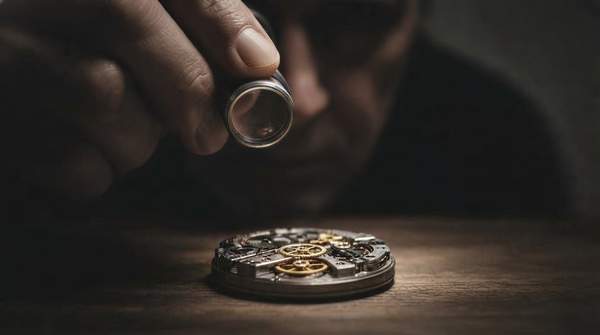
For any collectible of significant value, the opinion of an independent expert is non-negotiable. This step involves submitting the item and all its accompanying documentation to a recognized authority in the specific field—be it a horologist for a vintage Patek Philippe, an art historian for an Old Master drawing, or a specialized memorabilia authenticator for a game-worn jersey. These professionals possess the deep, nuanced knowledge and technical equipment required to make a definitive judgment. They can identify subtle signs of forgery, conduct material analysis, and compare the item against known authentic examples. A positive assessment from a leading, unbiased expert can cement an item’s authenticity and substantially increase its market value.
- Step 6: Leverage Modern Authentication Technologies
In recent years, technology has introduced new tools to the authenticator's arsenal. While not applicable to all collectibles, these methods offer powerful ways to secure and track an item's identity. For contemporary pieces, some creators embed Near Field Communication (NFC) chips or other digital tags that can be scanned to verify authenticity. For establishing immutable provenance, blockchain technology is emerging as a solution. By creating a decentralized, unalterable digital ledger of an item's ownership history, blockchain can provide a modern, high-security equivalent to the traditional paper trail. Discerning collectors of modern and future collectibles should be aware of these advancements as they become more integrated into the market.
Common Pitfalls in Collectible Authentication
Authentication presents potential missteps that can lead to costly errors. Awareness of these common pitfalls is the essential first step toward avoiding them and ensuring a collection is built on a foundation of certainty.
- Placing Blind Faith in a Certificate of Authenticity. The most frequent mistake is assuming any COA is a guarantee of authenticity. Countless forgeries are sold with worthless certificates, often issued by the forger or an unknown entity. A COA is a piece of evidence, not a final verdict. It must be scrutinized with the same rigor as the item itself, with the issuer's reputation being the paramount consideration.
- Neglecting the Importance of Condition. An item may be authentic but may have undergone significant restoration, repair, or alteration that is not disclosed. These interventions can drastically reduce a collectible's value. A thorough examination must include looking for signs of modern repairs, mismatched materials, or cleaning that has damaged the original patina. Authenticity and originality are related but distinct concepts, and both are vital to an item's integrity.
- Accepting a Story Without Documentation. A compelling narrative about an item's history is captivating but, without proof, it is simply a story. Verbal histories or anecdotal claims of ownership ("this was owned by my great-uncle, who received it from the artist") are not provenance. True provenance is a paper trail. An item with a fantastic story but no documentation will, according to Personified Collectibles, almost always sell for less than an equivalent item with a verified history, and may be impossible to sell at reputable venues.
- Underestimating the Sophistication of Forgeries. Modern forgers are highly skilled artisans and historians in their own right. They use period-correct materials, study original manufacturing techniques, and artificially age their creations to deceive even experienced collectors. The challenge of authenticating sports memorabilia, for instance, is reportedly compounded by the sophistication of modern forgeries. Believing one can spot a fake with an untrained eye is a dangerous assumption that can lead to significant financial loss.
Advanced Tips for the Discerning Collector
Beyond the fundamental steps, a higher level of connoisseurship involves a deeper engagement with the object and its context. For those who view collecting as both a passion and a serious investment, certain advanced considerations can provide a critical edge. One such consideration is the use of scientific analysis. For high-value items, methods such as infrared spectroscopy to analyze paint composition, X-ray fluorescence to determine metal alloys, or radiocarbon dating for organic materials can provide definitive, objective data that supports or refutes an item's claimed origin. This level of forensic detail is often the standard at major auction houses for seven-figure sales.
Furthermore, it is essential to build a network of trusted experts. Cultivating relationships with specialist dealers, auction house curators, and independent authenticators provides access to a wealth of knowledge and a valuable sounding board for potential acquisitions. These experts often share information and can provide early warnings about sophisticated new forgeries or problematic items circulating in the market. Finally, think like an archivist. For every piece in your collection, maintain a meticulous file. Preserve all purchase receipts, COAs, expert appraisals, and any research you have conducted. This diligent record-keeping not only solidifies the provenance for a future sale but also enriches your own connection to the piece, transforming you from a mere owner into a custodian of its history.
Frequently Asked Questions
What makes a collectible rare?
A collectible's rarity is determined by a combination of scarcity and historical significance. Scarcity refers to the limited number of items in existence, such as a limited-edition watch or a print from a small production run. Historical significance relates to an item's connection to a major event, a famous person, or a pivotal moment in culture. An object that possesses both high scarcity and profound historical importance is considered exceptionally rare.
Is a Certificate of Authenticity (COA) enough to prove an item is real?
No, a COA by itself is not definitive proof of authenticity. Its credibility is entirely dependent on the reputation and independence of the entity that issued it. A valid COA from a world-renowned, third-party authenticator is strong evidence, but a COA from an unknown source or the seller should be considered with extreme skepticism. It should be one part of a larger body of evidence, not the sole basis for an acquisition.
How does provenance affect a collectible's value?
Provenance has a direct and often dramatic impact on a collectible's value. A documented history of ownership connecting an item to a notable figure or institution can increase its value exponentially compared to an identical item with no known history. This documented proof, whether through paperwork or photographs, establishes the item's story and historical context, which is often what collectors are paying a premium for.
Can I authenticate a collectible myself?
A collector can and should perform initial due diligence, including researching the item, examining it for obvious flaws, and scrutinizing the seller and documentation. However, for any item of significant financial or historical value, this self-assessment should be considered a preliminary step. The final verdict on authenticity should always be rendered by a qualified, independent, third-party professional with specific expertise in that category of collectible.
The Bottom Line
Authenticating rare and valuable collectibles is a meticulous and demanding discipline, but it is the bedrock of responsible collecting. The process hinges on a relentless pursuit of verifiable facts, with provenance serving as the ultimate arbiter of an item's legitimacy and worth. Approach every potential acquisition not as a simple transaction, but as an investigation, and entrust the final judgment to proven, independent expertise.