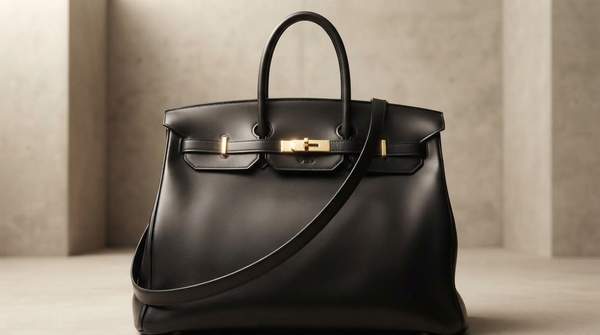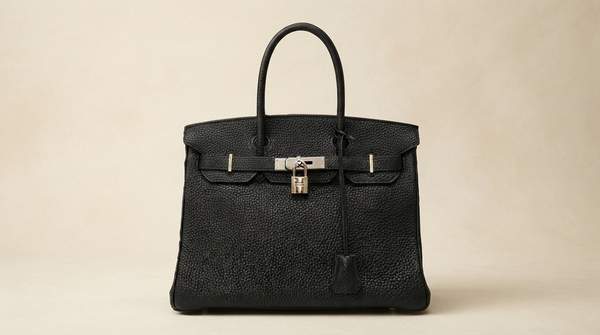
For collectors weighing luxury handbags as alternative assets, the honest answer is that the three most-cited investment bags earn their reputations for entirely different reasons. The Hermès Birkin is a scarcity play whose secondary market demand is engineered by tightly controlled distribution. The Chanel Classic Flap is a heritage asset whose resale strength persists even as its pricing strategy draws criticism. The Row N/S Park Tote is the minimalist outlier whose understated aesthetic has translated into some of the strongest reported value retention in the market. This comparison breaks down each bag's investment thesis, the numbers behind its reputation, and the risks a buyer accepts.
Hermès Birkin: The Blue-Chip Scarcity Play
The Birkin's case as an investment asset recently received a concrete, if narrow, proof point. A luxury investment fund reported a 24% return on a portfolio of 56 highly sought-after Hermès bags, purchased through secondary-market dealers and resold via luxury marketplaces and auction channels, according to a report in The Wall Street Journal relayed by citybiz. The same report noted that the fund's performance significantly outperformed Hermès shares, which fell more than 33% over the same period.
The mechanics behind that return reveal how the Birkin market actually works. The fund, operated by a firm called Luxus, treats handbags purely as financial assets, aiming to profit from the gap between purchase cost and resale price. It buys authenticated Hermès bags—frequently through Japanese wholesalers—at prices typically 5% to 10% above original retail. In other words, even the entry point for investment-grade Birkins is already above boutique price, because the primary market is not freely accessible.
That inaccessibility is the investment thesis. Hermès tightly controls distribution, and the resulting scarcity sustains high secondary-market demand. The reported outperformance of the bags over the company's own shares during a period when those shares dropped sharply illustrates the divergence between the brand's equity and its products as stores of value. The caveat is equally important: this conclusion rests on reported fund performance and observed market dynamics, not on any statement of strategy from Hermès itself, and a single fund's result is one data point rather than a guaranteed pattern.
Chanel Classic Flap: The Heritage Asset with Pricing Nuances
The Chanel Classic Flap Medium is the most contested pick on any investment-bag list, and the controversy is entirely of Chanel's making. One 2026 market analysis prices the Classic Flap Medium at $10,800 and estimates its resale value at 75% to 90% of retail. Those are strong numbers by most standards—but the same analysis is blunt about how they were achieved: Chanel has raised prices so aggressively, with increases of roughly $400 every few months, that the resale market has not kept pace.
The critique is worth quoting directly. A bag purchased in 2019 for $5,800 is "worth more" today only because retail now sits at $10,800—but, as the analysis puts it, "that's not real appreciation. That's price manipulation." The distinction matters enormously for investors. If a bag's paper gain comes primarily from the brand repricing new inventory rather than from genuine secondary-market demand, the appreciation is fragile: it depends on Chanel continuing to raise prices, and on buyers continuing to accept them.
So why does the Classic Flap remain on investment lists at all? The analysis answers with three factors: more than 40 years of heritage, near-universal brand recognition, and—most importantly—persistent desire. "People still WANT it," the analysis notes, and demand is what ultimately drives resale. The Flap's profile is therefore that of a heritage asset with an asterisk: strong liquidity and recognition, paired with a value-retention figure that reflects brand pricing strategy as much as organic market appreciation. The "controversial" label is an interpretation of market behavior, not a position Chanel has articulated.
The Row N/S Park Tote: The Minimalist High-Performer
The most striking data point in this comparison belongs not to a heritage house but to The Row, the quiet-luxury label whose N/S Park Tote has become the minimalist movement's flagship style. Rebag reports 146% value retention for the bag, meaning it resells for more than its retail price—a figure that puts it ahead of both the Classic Flap's estimated range and, on this metric, in rarefied company generally. Fashionphile, meanwhile, recorded 445% year-over-year growth in follows for the style, a demand indicator rather than a price figure, but one that signals accelerating interest.
The tote retails at $2,600, a fraction of the Flap's or Birkin's entry price, which changes the investment calculus in both directions. The capital required is far lower, and the reported retention is exceptional; but the bag lacks the decades of heritage that underpin the other two, and its performance is tied to a design trend—minimalism—that Vogue's market coverage describes as showing "no sign of slowing" while acknowledging it is a movement nonetheless. The Park Tote's strength is that understatement has, in Vogue's framing, "become one of the most profitable plays on the market." Its risk is that trend-driven demand can reverse faster than heritage-driven demand.
Investment Handbag Comparison Matrix
The matrix below compares the three bags across the dimensions that matter to an investor: the core thesis driving value, the reported resale figures, and the model-specific risks. Use it to match a bag to your risk tolerance and goals—stable scarcity-backed value, heritage liquidity, or high-growth trend exposure.
| Handbag Model | Investment Thesis | Reported Value Retention / Resale | Key Risks & Considerations |
|---|---|---|---|
| Hermès Birkin | Extreme scarcity and tightly controlled distribution sustain high secondary-market demand; a dedicated fund profited from the purchase-resale gap. | A 56-bag fund portfolio returned 24%, outperforming Hermès shares, which fell more than 33% in the same period, per a Wall Street Journal report. | Entry already costs 5–10% above retail via secondary dealers; single-fund result is one data point, not a guaranteed pattern. |
| Chanel Classic Flap Medium | 40+ years of heritage, near-universal recognition, and persistent demand sustain resale strength despite aggressive brand repricing. | Estimated resale of 75–90% of the $10,800 2026 retail price, per one market analysis. | Appreciation partly reflects repeated retail price increases (~$400 every few months) rather than organic demand—criticized as "price manipulation." |
| The Row N/S Park Tote | Flagship of the minimalist luxury movement; understatement has become a highly profitable market segment. | Rebag reports 146% value retention; Fashionphile recorded 445% year-over-year growth in follows. | Performance tied to a design trend with a shorter track record; $2,600 retail lowers capital at risk but lacks heritage depth. |
Read together, the matrix points to three distinct investor profiles. The Birkin suits those seeking scarcity-backed value retention and willing to pay above retail for access. The Classic Flap suits investors who prioritize liquidity and brand recognition and accept that part of the paper gain is pricing-strategy-driven. The Park Tote suits those seeking the strongest reported retention multiple at the lowest entry cost, with a higher tolerance for trend risk.
The Risks Beyond the Price Tag
Whatever the model, handbag investing carries structural risks that equities do not. Liquidity is the first: a bag must find a buyer, and resale platforms and auction houses take their toll in the process. Authentication is the second—the Luxus fund's model depends on purchasing authenticated pieces precisely because provenance is the asset's integrity; a fake or a bag without documentation can lose most of its value. Maintenance and storage are ongoing costs that erode returns, since condition directly affects resale price. Finally, market volatility applies to fashion as much as finance: the same Vogue market coverage that celebrates The Row's momentum also tracks which styles are rising and cooling, a reminder that demand indicators shift year to year.
Making Your Investment Decision: Aligning Bags with Goals
Affluent collectors should select investment-grade luxury handbags based on a careful assessment of each model's unique investment thesis, reported value retention, and specific risks, aligning these factors with their personal risk tolerance and portfolio diversification strategy. The Birkin offers scarcity-backed stability at a premium entry price; the Classic Flap offers heritage liquidity with a pricing caveat; the Park Tote offers the strongest reported retention multiple but a shorter track record. This article is not financial advice, and the figures here are drawn from publicly available resale data and commentary that can change over time.
The observable signal for a successful investment decision will be the sustained or increased secondary market value of the chosen handbag model, verifiable through reputable resale platforms' pricing data over time. Before buying, check current listings for your specific model on major resale platforms, retain all authentication documentation, and monitor whether resale values hold as new retail prices and trends evolve.