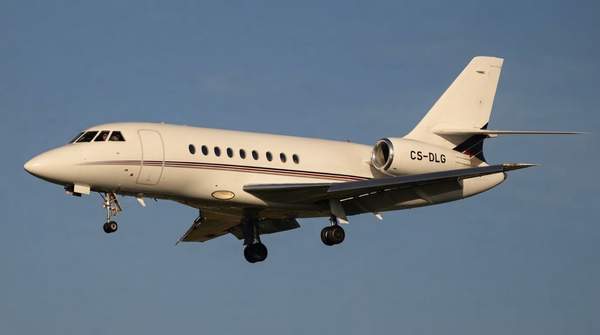
The right private aviation program is decided less by brand prestige than by two variables: how often you fly and what cabin you need. NetJets, VistaJet, Flexjet, and Wheels Up all sell access to private aircraft, but through materially different models — fractional shares, prepaid jet cards, memberships, and on-demand charter — with very different commitments. A 25-hour midsize jet card, for context, runs roughly $200,000 to $400,000 depending on provider, while heavy-jet cards push toward $400,000 before surcharges. Here is how the models work, how the four major players compare, and how to match one to your travel pattern.
Understanding Private Aviation Access Models
Every private aviation offer you will encounter — from any provider — is built on one of three access models, sometimes blended together. Understanding which one you are buying is the first step, because it determines your upfront commitment, your hourly cost structure, and how much flexibility you retain when plans change.
On-demand charter is the simplest model: you pay per trip, choose the aircraft for each flight, and carry no ongoing obligations. A guide by Jettly notes the essential safeguard here — book only through properly certified Part 135 charter companies, the U.S. regulatory standard for commercial charter operations. Charter suits the occasional traveler who wants private aviation without upfront investment, though per-trip pricing offers no rate protection in peak periods.
Jet cards are prepaid blocks of flight hours — typically 25 to 200, in the ranges Jettly describes — that lock in a fixed hourly rate and guarantee access to a specific aircraft type or category. A 2026 jet card comparison by Elevate Jet frames the trade-off precisely: a jet card buys access at a set hourly rate without the capital commitment of fractional ownership, but programs differ widely on rates, callout times, peak-day rules, and refund terms if plans change. Cards suit frequent flyers who want predictable pricing and guaranteed availability.
Memberships and fractional ownership sit at the committed end of the spectrum. Memberships, per the Jettly guide, blend fractional-style predictability with charter-style flexibility: annual fees plus pay-as-you-fly pricing, often with peak-day access and concierge service. Fractional ownership itself means owning a share of a specific aircraft, with all the capital commitment that implies. These models reward travelers flying enough hours that guaranteed access and consistent aircraft matter more than upfront cost.
One hybrid worth knowing: empty legs, the repositioning flights operators sell at significant discounts when an aircraft must travel to its next booking anyway. Jettly highlights them as savings for flexible travelers, though availability depends entirely on other customers' itineraries.
Private Jet Program Comparison Matrix
The table below compares the four providers across service model, fleet and coverage focus, pricing approach, and what to verify on safety. The pricing figures are general 2026 ranges; specific program costs vary considerably by provider and aircraft category, and each company quotes programs individually.
| Company | Primary Service Models | Fleet & Coverage Highlights | Pricing Model | What to Verify on Safety |
|---|---|---|---|---|
| NetJets | Fractional ownership and jet card programs | Access spans light through ultra-long-range jets | 25-hour midsize card: $250,000 to $400,000+ before surcharges; heavy-jet card about $400,000, with net hourly rates of $17,000 to $20,000+ once fuel and fees are included | ARGUS, Wyvern, or IS-BAO certification; accident history; fleet maintenance standards and pilot training |
| VistaJet | Programs positioned between one-off charter and fractional or full ownership; also sells on-demand charter | Focus on large-cabin and ultra-long-range jets; access to over 250 leased, owned, and managed aircraft in the Vista Members fleet | Program-based subscription pricing quoted individually; sister brand XO sells dynamic-pricing memberships in the U.S., Europe, and the Middle East | ARGUS, Wyvern, or IS-BAO certification; accident history; fleet maintenance standards and pilot training |
| Flexjet | Fractional ownership alongside its own jet card and membership programs | Fractional fleet across multiple cabin categories | Share and card pricing quoted individually by aircraft category | ARGUS, Wyvern, or IS-BAO certification; accident history; fleet maintenance standards and pilot training |
| Wheels Up | Membership models and jet card programs | Membership-based access across charter operator networks | Annual membership fees plus pay-as-you-fly or card pricing, quoted individually | ARGUS, Wyvern, or IS-BAO certification; accident history; fleet maintenance standards and pilot training |
The differentiation this comparison produces is structural: NetJets and Flexjet anchor the fractional end, VistaJet builds subscriptions for long-range large-cabin flying, and Wheels Up leans on membership access. On safety, Elevate Jet's 2026 evaluation framework treats operator certifications such as ARGUS, Wyvern, and IS-BAO, accident and incident history, fleet maintenance standards, and pilot training requirements as measurable criteria — ask each provider directly for its current standing on each before signing.
Leading Private Jet Providers: A Comparative Overview
NetJets operates the most familiar dual model: fractional shares for owners and prepaid cards for flyers who want guaranteed access without a capital stake. Its pricing is also the most publicly benchmarked of the four. Jettly's 2026 cost analysis puts a 25-hour midsize card at $250,000 to $400,000+ before surcharges, and a heavy-jet card at about $400,000 — with net hourly rates climbing to $17,000 to $20,000+ once fuel and fees are included. Because NetJets provides access from light jets through ultra-long-range aircraft, the card can scale with your missions as they lengthen.
VistaJet takes a deliberately different position. The provider profile at Private Jet Card Comparisons describes its programs as filling the gap between one-by-one charter and fractional or full ownership of large-cabin and ultra-long-range jets, with customers drawing on more than 250 leased, owned, and managed aircraft in the Vista Members fleet. VistaJet also sells on-demand charter, and its sister brand XO offers dynamic-pricing memberships in the U.S., Europe, and the Middle East, plus instant online charter booking and jet-sharing options. For intercontinental flying on a subscription rather than a share, it is the clear candidate.
Flexjet and Wheels Up round out the field. Flexjet competes directly with NetJets in fractional ownership and offers its own jet card programs, making it the natural second quote whenever a fractional or card structure fits. Wheels Up builds around membership — annual fees plus pay-as-you-fly pricing, the model that blends fractional predictability with charter flexibility. Jettly's 2026 rankings, built on 2023 through mid-2026 data covering flight hours, departures, fleet size, safety ratings, and geographic reach, place all four among the market's benchmark names.
Matching a Provider to Your Travel Needs
Once you know the model, the decision turns on factors beyond the headline hourly rate — and the cheapest quote is rarely the best one. Jettly's NetJets card analysis warns that some providers publish lower headline hourly rates but add higher repositioning fees, minimum daily charges, or more restrictive blackout rules. Elevate Jet's comparison makes the same point from the buyer's side: picking the right program means comparing terms line by line, not brand names.
Three factors deserve particular attention. First, route and airport access: a provider's fleet means little if the aircraft category you need is not based where you fly, and repositioning costs appear on your invoice. Second, passenger and baggage requirements: midsize and heavy cabins differ sharply in cabin height, range, and luggage volume, so match the category to your actual manifest rather than upgrading reflexively. Third, operational flexibility: callout times, peak-day rules, and refund terms if plans change vary widely across programs and determine real-world value far more than the printed rate.
A rough mapping follows from the models themselves. Flying fewer than roughly 25 hours a year with irregular patterns points toward on-demand charter, used only with certified Part 135 operators. Twenty-five to 100 hours of predictable flying points toward a jet card — where the $150,000 to $350,000 range for light and midsize cards, in BlackJet's 2026 market data, sets expectations. Heavy intercontinental schedules point toward VistaJet's subscription model or fractional shares with NetJets or Flexjet, while membership programs suit travelers who value peak-day availability and concierge handling without a share's capital commitment.
Concierge service, it should be noted, appears across these programs as an included or optional feature, but its depth and quality are not directly comparable from published terms alone — it is worth testing with a specific itinerary during the sales conversation.
Choosing Your Ideal Private Jet Program
The decision is this: select a private jet program by first identifying your typical travel frequency and budget, then prioritizing operational flexibility, airport access, and specific passenger and baggage needs over the lowest quoted price. The jet card benchmark — roughly $250,000 to $400,000+ for 25 midsize hours at the premium end of the 2026 market — tells you the scale of commitment before you sign anything.
The measurable indicator to hold any program against is a program's ability to consistently meet specific routing, passenger, and baggage requirements without unexpected surcharges or operational limitations. Ask each provider for its published surcharge schedule, peak-day rules, and current ARGUS, Wyvern, or IS-BAO standing, then test the answers against your most demanding realistic itinerary — that is where the marketing ends and the comparison begins.
Sources
- Top 5 Private Jet Companies in 2026 — JETTLY
- Best Private Jet Charter Companies of 2026 — Elevatejet
- How Much Does a 25 Hour NetJets Card Cost in 2026? | Private Jet Insights & Travel Tips — JETTLY
- Jet Card Comparison: Elevate Jet vs. NetJets vs. Magellan Jets vs. Wheels Up (2026) — Elevatejet
- Essential Jet Card Provider Comparison: Choose the Best Option for You — Blackjet