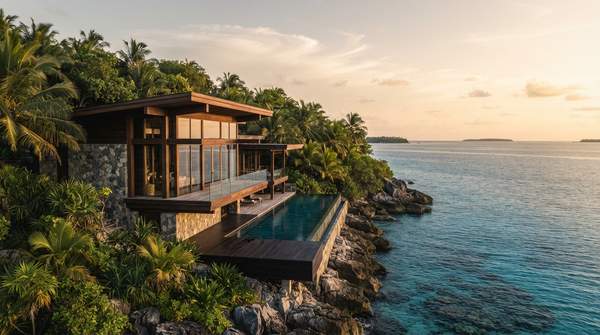
Wellness wings in today's luxury homes have ballooned from a single oversized shower to entire dedicated rooms, often spanning 600 to 1,200 square feet, complete with their own HVAC and water management systems, according to Ashtin Group. The significant expansion of wellness wings signals a profound investment in personal health infrastructure within the private residence.
While luxury once emphasized grand, public-facing opulence, it now increasingly prioritizes deeply private, personalized, and integrated wellness spaces. The shift in luxury priorities moves beyond communal showpieces towards intimate, self-contained sanctuaries.
The luxury residential market will increasingly value properties that offer a holistic, integrated lifestyle experience, compelling developers to innovate beyond traditional high-end finishes and generic amenities.
The Evolving Definition of Luxury Living
The luxury home of 2026 prioritizes warmth, wellness, and longevity over the cool modernism and "modern farmhouse" styles prevalent in previous years, according to Ashtin Group. The foundational re-evaluation of what constitutes true luxury extends to the very materials chosen for a residence. High-end homes often feature superior materials such as premium hardwood floors, marble countertops, top-brand appliances, and artisan fixtures, according to Teamcampusliving. The use of superior materials indicates a move beyond transient design trends, focusing instead on enduring quality and values that resonate with a more integrated, personal living experience.
Architectural Innovations Redefining Space
Sliding pocket doors spanning 20 to 40 feet are being specified for indoor-outdoor living spaces in luxury homes, according to Ashtin Group. The specification of sliding pocket doors reflects a desire for adaptable, aesthetically pleasing environments that seamlessly blend indoor-outdoor living and cater to evolving family structures.
Expansive Sliding Pocket Doors
Best for: Residents seeking seamless integration of indoor and outdoor living spaces.
These doors span 20 to 40 feet, creating wide, unobstructed openings between interior rooms and exterior environments. They allow for an organic flow, blurring traditional boundaries and enhancing natural light within the home, according to Ashtin Group.
Strengths: Maximizes natural light, enhances air circulation, creates adaptable living areas. | Limitations: High installation cost, requires significant structural support, potential for complex maintenance. | Price: Premium investment.
Wellness-Focused Design
Best for: Individuals prioritizing health, relaxation, and self-care within their private residence.
Design now includes dedicated saunas, cold plunges, fully-equipped home gyms, meditation rooms, and spa-like primary bathrooms. Wellness wings frequently measure 600 to 1,200 square feet, often with dedicated HVAC and water management systems, according to Veranda and Bluestone Construction.
Strengths: Promotes health and well-being, offers ultimate privacy for relaxation, increases home value. | Limitations: Requires substantial dedicated space, significant initial investment in specialized equipment. | Price: Substantial investment.
Integrated Smart Home Technologies
Best for: Tech-savvy residents desiring effortless control and optimized living environments.
Beyond basic automation, these systems include smart appliances, sophisticated energy management, advanced security monitoring, and refined lighting and sound controls. AI-enabled features are discreetly integrated, with hidden speakers and automated controls that anticipate needs.
Strengths: Enhances convenience and security, optimizes energy consumption, creates personalized ambiance. | Limitations: Can be complex to set up, requires reliable internet, potential for system obsolescence. | Price: High initial cost for advanced systems.
Curved Architecture
Best for: Buyers seeking unique aesthetics and a departure from rigid, rectilinear designs.
Incorporating arched doorways and rounded hallways into new luxury builds, this architectural style softens interiors and fosters a more organic, fluid sense of space, according to Ashtin Group. It moves away from cooler modernism towards warmth and longevity.
Strengths: Creates unique visual appeal, promotes a sense of natural flow, softens interior lines. | Limitations: More complex construction, potentially higher building costs, challenges with standard furniture placement. | Price: Moderately higher construction costs.
Bespoke Elements
Best for: Discerning individuals who demand unique, personalized craftsmanship in their home.
Luxury residences feature custom-built kitchens, designer bathrooms, and integrated smart home technologies tailored to specific tastes and needs, according to Teamcampusliving. Custom-built kitchens, designer bathrooms, and integrated smart home technologies ensure a home is truly one-of-a-kind.
Strengths: Reflects personal style, ensures perfect fit and function, enhances exclusivity. | Limitations: Higher cost and longer timelines for design and fabrication, difficult to change later. | Price: Significant premium.
Upscale Community Amenities
Best for: Residents who value a vibrant social life and access to shared, high-end facilities.
Luxury living communities often provide a range of upscale amenities, including state-of-the-art fitness centers, private cinemas, spas, indoor and outdoor swimming pools, and exclusive resident lounges, according to Teamcampusliving. Upscale community amenities extend the luxury experience beyond the private residence.
Strengths: Access to diverse facilities, fosters community, reduces need for in-home duplication. | Limitations: Shared access, potential for crowded spaces, monthly fees. | Price: Included in HOA/community fees.
Concierge Services
Best for: Busy professionals and residents who desire seamless assistance with daily tasks and special requests.
These services cater to everyday needs and special requests, including reservations, transportation arrangements, and managing deliveries, according to Teamcampusliving. They offer an effortless living experience where assistance anticipates every need.
Strengths: Saves time and effort, enhances convenience, provides personalized assistance. | Limitations: Additional cost, reliance on third-party services, varying levels of service quality. | Price: Monthly or on-demand fees.
Multigenerational and Dual-Primary Floor Plans
Best for: Families requiring adaptable living arrangements for multiple generations or co-primary residents.
Multigenerational and dual-primary floor plans are becoming more common in luxury custom homes, according to Ashtin Group. They accommodate complex family structures by providing multiple private suites and shared common areas, supporting diverse needs under one roof.
Strengths: Supports diverse family needs, provides privacy for all residents, adaptable to changing family dynamics. | Limitations: Requires larger home footprint, more complex design considerations. | Price: Higher construction cost due to increased size and complexity.
Sustainable Luxury Features
Best for: Environmentally conscious buyers seeking eco-friendly and energy-efficient residences.
Luxury homes increasingly feature engineered wood over traditional hardwood floors, energy-efficient systems, locally sourced materials, and discreetly integrated solar panels. Mentions of zero-energy-ready homes increased by 70% on Zillow, according to Bluestone Construction. The increase in mentions of zero-energy-ready homes reflects a growing demand for eco-conscious design.
Strengths: Reduces environmental footprint, lowers utility costs, appeals to green-minded buyers. | Limitations: Higher upfront investment for some technologies, limited availability of certain materials. | Price: Variable, often higher initial cost with long-term savings.
Private Living Features
Best for: Residents prioritizing tranquility, exclusivity, and an undisturbed personal sanctuary.
Residential houses are designed with soundproofing, private elevators, and private gardens or terraces, according to Teamcampusliving. Soundproofing, private elevators, and private gardens or terraces ensure residents enjoy maximum privacy and seclusion within their home.
Strengths: Enhances privacy and security, reduces noise, creates exclusive personal spaces. | Limitations: Adds to construction complexity and cost, may require larger property size. | Price: Significant premium.
Superior Materials
Best for: Homeowners valuing enduring quality, aesthetic appeal, and long-term durability.
Premium hardwood floors, marble countertops, top-brand appliances, and artisan fixtures are standard in luxury residences, according to Teamcampusliving. These materials form the foundation of high-end design and contribute to a home's lasting value and appearance.
Strengths: Enhances aesthetic appeal, provides durability and longevity, contributes to resale value. | Limitations: Higher initial cost, requires specific maintenance for some materials. | Price: Baseline luxury cost.
Multifunctional Spaces
Best for: Adaptable residents who require flexible areas that can serve multiple purposes.
Home offices are transforming into guest suites, and media rooms are doubling as virtual fitness studios, according to Bluestone Construction. This maximizes efficiency and utility within the home, catering to diverse needs without increasing footprint.
Strengths: Optimizes space utilization, offers flexibility for changing needs, enhances home functionality. | Limitations: Requires thoughtful design, may involve convertible furniture, potential for compromise on primary function. | Price: Moderate design and furnishing costs.