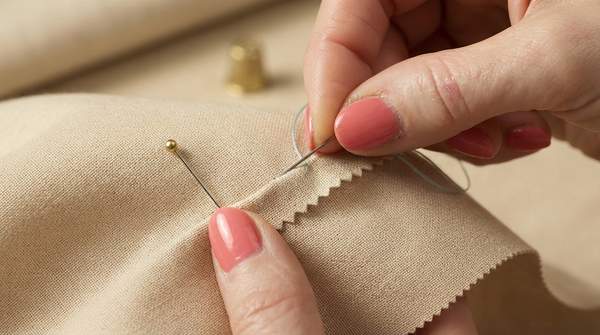
Haute couture finishing techniques are the specialized hand-sewing and embellishment skills—precision embroidery, featherwork, Luneville beading, hand-worked buttonholes, and hand-set sleeves and hems—that transform a garment into a one-of-a-kind, made-to-measure piece. Far from being a single mysterious craft, "couture technique" describes a range of manual skills applied to different parts of a garment, from invisible internal stitches to elaborate surface decoration. Understanding what these techniques are, and what each achieves, explains both the extraordinary labor behind a couture piece and why the designation itself is protected.
What Defines Haute Couture?
The term haute couture is not a marketing label but a formal designation rooted in the Parisian fashion system. The Fédération de la Haute Couture et de la Mode (FHCM) acts as a selective professional organization for its members and coordinates Paris Fashion Week and Haute Couture Week, bringing together the most emblematic French and international fashion houses. Membership is not open to anyone who sews beautifully; it is earned against defined criteria.
According to couture house Julien Fournié, a house must satisfy four cumulative conditions to earn the title: maintain an atelier in Paris with a minimum number of qualified artisans, present collections on a regular basis, offer creations made exclusively to measure for a private clientele, and employ and train the "petites mains"—the skilled hands who keep rare crafts alive. Retail Dogma's industry analysis similarly describes haute couture as made-to-order pieces for private clients, created by houses meeting specific criteria that qualify them as official members of the Chambre Syndicale de la Haute Couture.
Two principles anchor the definition. First, each garment is custom-made for a specific client, distinguishing couture fundamentally from ready-to-wear. Second, construction is primarily by hand, carried out in the atelier by technical staff whose expertise is the very substance of the designation. The specific membership requirements and collection schedules have evolved over time, but the core principles of craftsmanship and bespoke production remain central.
The Art of Hand-Sewing in Haute Couture
What surprises many observers is how elementary the individual couture stitches actually are. As sewing educator Amy of Closet Core Patterns notes after a couture workshop and study trip to Paris, most couture and bespoke tailoring techniques "actually use some of our oldest and simplest skills, and most can be accomplished with nothing more than a hand sewing needle and spool of thread." The mystique lies not in exotic tools but in precision, patience, and integration into a custom garment.
The division of labor between machine and hand is telling. A practitioner interviewed on the sewing community site Pattern Review, who worked in a high-end haute couture atelier, described the workflow: only straight seams were ever sewn by machine, while everything else—from buttonholes to setting sleeves to hemming—was done by hand. She also observed less emphasis on pattern making and more on draping, which makes sense for garments fitted to one individual body rather than a standardized size.
While some of these basic techniques may appear in ordinary home sewing, their application in haute couture is distinguished by precision, hand-execution, and integration into a custom garment. A hand-set sleeve, for instance, can be eased and shaped to the client's shoulder in a way a machine attachment cannot replicate; a hand-finished hem can be nearly invisible from the face of the fabric. The evidence available describes this hand-versus-machine division generally, without cataloging every structural stitch by name.
Exquisite Embellishments: Surface Decoration Techniques
Surface embellishment is where couture's decorative vocabulary becomes most visible. The curriculum of Polimoda's fashion school, which teaches haute couture embellishment as a discipline, identifies the core skills: precision hand embroidery techniques for luxury textiles, professional featherwork application and finishing, and hand beading with a needle alongside advanced demonstrations of the Luneville hook—a tambour-style hook used to attach beads and sequins from the fabric's reverse side.
Each technique serves a distinct purpose in the garment. Hand embroidery builds texture and dimensional design directly onto luxury textiles. Featherwork adds volume, movement, and an organic lightness that structured fabric alone cannot achieve. Beading—whether by needle or Luneville hook—introduces weight, reflectivity, and pattern at a scale of detail impossible to machine-apply evenly.
Polimoda's program emphasizes that these are not merely decorative gestures. Students learn material recognition and selection for high-end embellishment, traditional finishing techniques that ensure longevity and durability, and an understanding of how embellishment enhances garment silhouette and movement. In other words, surface work in couture is structural in effect: it shapes how a garment hangs, catches light, and moves with the wearer, while problem-solving skills are required to interpret a designer's concept into tactile embellishment solutions.
Finishing Touches: Fastenings and Details
The final test of couture craftsmanship is often at the closures. The National Gallery of Victoria in Melbourne, whose Dior exhibition spans seven decades of couture work, has taught a dedicated course on haute couture finishing techniques guiding participants through three key finishing techniques used to complete fastenings on garments—evidence of how substantial a discipline fastening work is on its own. The course notes that prior hand-stitching experience is advantageous, even for a one-day introduction.
Fastenings matter because they are both functional and visible. A hand-worked buttonhole, executed stitch by stitch with matching silk thread, sits flush within the garment's design rather than appearing as a machine-cut interruption. The atelier practitioner's account confirms that buttonholes belong firmly on the hand-work side of the couture ledger, alongside sleeve setting and hemming.
Key Haute Couture Techniques and Their Purpose
Classifying the named techniques by their role in garment creation shows that "couture techniques" span the whole garment—from invisible internal construction to external decoration—rather than describing any single skill.
| Technique Category | Specific Examples | Purpose in Garment Construction |
|---|---|---|
| Structural hand-sewing | Hand-set sleeves; hand-stitched hems; draping on the individual client | Shapes the garment to one body; only straight seams are machine-sewn, per an atelier practitioner's account |
| Surface embellishment | Precision hand embroidery; professional featherwork; hand beading with needle or Luneville hook | Adds texture, dimensional design, and visual richness; enhances silhouette and movement, per Polimoda's curriculum |
| Fastening techniques | Hand-worked buttonholes and other closure finishes | Creates secure closures seamlessly integrated into the design, taught as a distinct discipline at the NGV |
| Finishing for durability | Traditional finishing techniques on embellished textiles | Ensures longevity and durability of decorative work, per Polimoda |
The framework this classification yields is straightforward: each category addresses a different part of the garment, and each demands hand-execution because the garment exists for one client. The list is illustrative rather than exhaustive, and this article does not provide step-by-step instruction in performing any of these techniques.
Appreciating the Craft: Why Haute Couture Endures
Readers should recognize haute couture garments as unparalleled examples of craftsmanship, distinguished by their bespoke nature, extensive hand-construction, and the specialized skills of Parisian ateliers. The measurable indicator of that craftsmanship is the presence of intricate, hand-executed details, a perfect custom fit, and the use of specialized embellishments in a garment. When you next examine a couture piece—or a photograph of one—look for the hand-worked buttonhole, the individually attached bead or feather, and the fit that could only come from draping on a single body. Those are the visible signatures of the hours of skilled labor the designation exists to protect.
Sources
- Haute Couture Finishing Techniques: One-Day Course — NGV
- What Exactly is a ‘Couture Technique’? — pattern scissors cloth
- What Haute Couture is — Julien Fournié Haute Couture, Luxury Bags and Luxury Accessories
- Haute Couture: Definition, Criteria & Members — Retail Dogma
- Couture Seam Finishes & Hand Stitches You Should Know — Closet Core Patterns
- Haute Couture Embellishment Techniques Course - Short — Polimoda Fashion School