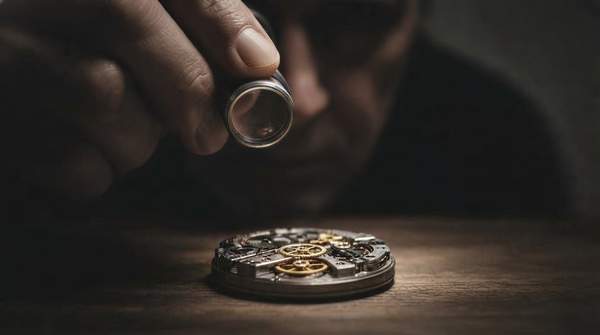
The rigorous authentication process for rare collectibles involves a visual examination, provenance research, scientific analysis, and a mysterious fourth step that remains undisclosed to the public. This multi-faceted approach, critical for establishing an item's legitimacy and market value, often requires collectors to submit their prized possessions to a series of meticulous evaluations. The undisclosed nature of one crucial stage introduces an element of uncertainty into what should be a transparent validation.
Collectors seek clear, definitive proof of authenticity, but the process itself is opaque and its costs are highly variable and complex to determine. This fundamental disconnect creates a significant challenge for individuals navigating the specialized market for high-value items, where investment security depends on verifiable claims.
Collectors who fail to thoroughly research authentication procedures and pricing structures risk significant financial missteps, potentially undermining the very value they seek to confirm.
Understanding the Layers of Collectible Authenticity
Authentication for rare collectibles, such as autographed sports memorabilia, demands a comprehensive evaluation of an item's history and physical characteristics. Beckett Authentication details a complex fee structure for autograph authentication, calculating costs based on the individual signer and the total number of signatures on an item. This granular, item-specific pricing model stands in stark contrast to the methodological opaqueness surrounding a critical 'unspecified fourth step' in the authentication process, as reported by TheRealest. This fundamental imbalance means collectors gain detailed insight into what they pay, but remain largely uninformed about the complete validation methodology. The industry, therefore, implicitly asks for a degree of trust that belies its otherwise meticulous approach to financial transparency.
Navigating the Collectible Authentication Process
The authentication journey typically begins with a thorough visual examination. Experts scrutinize signatures, materials, and potential alterations, searching for inconsistencies. Following this, provenance research establishes the item's documented history, tracing ownership and verifying its origins. Scientific analysis might then employ non-invasive techniques to confirm material composition or age, further solidifying legitimacy. Despite these detailed stages, TheRealest reports that the entire process includes a critical 'unspecified fourth step,' which remains undisclosed to the public. This deliberate opacity introduces a fundamental element of mystery and potential subjectivity into a process designed for definitive proof. It ultimately challenges the very notion of transparent, verifiable validation collectors seek, effectively demanding blind faith in a market where investment security hinges on clarity.